
July 9
Saints of the day
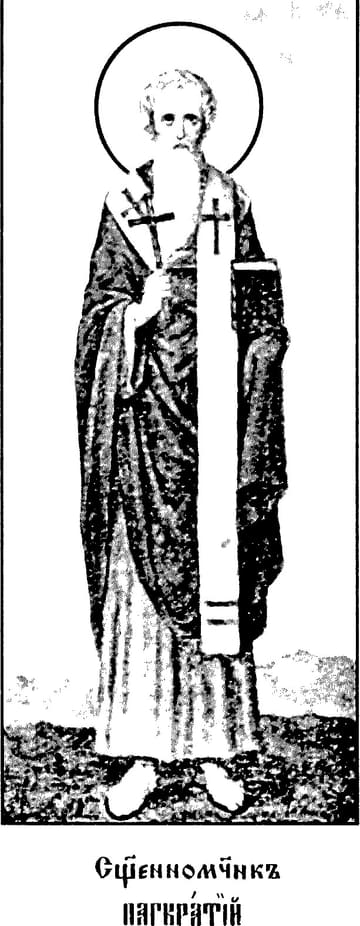

Hymn of Praise
Pancratius the saint, from his childhood
Warmed himself in the sunlight of Christ's holy face,
And summer after summer passed
But that face remained in his memory.
Day and night it shone wondrously before him,
And therefore he cast away all that dimmed that light:
He left behind his wealth and his parents' home
And turned from every deceiving desire.
The earthly pleasures that delight the hearts of men,
He fled into the desert, into solitude,
That until the final day of his earthly life
He might drink the sweetness of the face of God.
Thus did Pancratius, but the Lord willed otherwise:
A shining lamp cannot so easily be hidden.
The land of Sicily was pagan, far from light;
It needed the radiance of holy Pancratius.
It needed a witness of the face of Christ the Lord,
It needed the blood of an honorable martyr.
All that it needed, Pancratius offered freely;
As a martyr he fell, but his light was not extinguished.
And the light remained above the land of Sicily,
The light of that face, warming it through the ages.
Reflection
Many ask why God takes from this life young men, young women, and children, and why He does not let all grow old and only then pass through death to the other world. This is God's plan of divine economy; it is the holy will of His Providence. But there are some examples in the vast experience of the Church where God sometimes acts thus at the wish and prayer of His servants in the other world, or of their relatives. Saint Ader (in monasticism Athanasius) appeared to his wife, whom he had suddenly left with three children and gone to a monastery, where he also died. When his wife came to despair (partly from care for her small children and partly from worry about her husband, for she did not know where he was), then her husband appeared to her in a dream from the other world, with a radiant face and a white and shining garment, and said to her: "Cease weeping and crying out against me; behold, I shall take our children (two of them) to myself, and thou, if thou desirest, take care for the salvation of thy soul." At the same time and in the same manner he appeared also to Theodosius the Stylite and said to him: "In three days an aged woman ascetic who lives in the nearby monastery will depart to the Lord; place my wife in her stead, that she may labor as a nun in that cell. Let the youngest child remain with her until it grows up: the child shall follow in my footsteps and shall be the heir of the apostolic throne in Jerusalem." And in truth all of this came to pass as it was said. The aged woman ascetic died on the third day, and likewise the two older children of Ader died, and his wife took the cell of that elder, together with the youngest son, who when he grew up became Patriarch of Jerusalem.
Contemplation
Contemplate the miraculous victory over Amalek (Exodus 17), namely:
- How the people conquered Amalek so long as Moses with upraised hands prayed to God;
- How Moses with upraised hands at prayer prefigures the victorious Crucifixion of Christ;
- How by the power of the Cross and by prayer I too can conquer the dark passions, which Amalek represents.
Homily
On the Judgment of God upon the Righteous
For the time is come that judgment must begin at the house of God; and if it first begin at us, what shall the end be of them that obey not the Gospel of God?
I Peter 4:17
When the judgment of God comes upon the house of the righteous, let not the unrighteous gloat but rather let him tremble with fear. If the righteous man and the unrighteous man are neighbors, and the hand of God falls upon the righteous man, it has fallen upon both: upon the first to refine him, upon the second to admonish him. And when bitter suffering befalls the righteous man (and it does not befall him without the will of God), let not the unrighteous man rejoice, for that suffering is more for his sake than for the sake of the righteous man, namely: that he might see what the wrath of God is like and hasten to change his spirit and amend his deeds. Let him also ask himself: if the wrath of God is so great upon the righteous man, how great will it be upon me? Know, brethren, that righteousness is strength and unrighteousness is weakness. Which can endure more without being broken under the burden: strength or weakness? Without doubt, strength. Therefore a heavy burden is laid upon the righteous man. Let not the unrighteous man mock when he sees the righteous man under a heavy burden, and let him not say: my unrighteousness is better than his righteousness! Rather let him look upon the burden of the righteous man with awe and trembling, and let him say to himself honestly: that burden is mine, but I am too weak to bear it; therefore it has been cast upon his back, upon the back of the righteous man. That I might see and repent of my ways, and through repentance be strengthened for the burden that awaits me. From the house of God judgment begins; this is the immeasurable mercy of God toward sinners, toward the weak ones enfeebled by sin: let them open their eyes and read the script of the wrath of God! From the house of God judgment begins, for the house of God is strong, and the house of God is the righteous man, in whom dwells the Spirit of God. When the wind shakes a stone tower, let the builders of huts fortify their huts.
O my brethren, how fateful and terrible are those apostolic words for the sinner! O Lord Jesus, righteous and merciful, merciful and righteous, have mercy on us and save us. To Thee be glory and praise forever. Amen.
From the Prologue from Ochrid, translated by Marcian Sakarya, OCHRID.COM. CC BY-SA 4.0.
The Prologue, every day
Axios! brings the day’s Hymn of Praise, Reflection, Contemplation and Homily to Today, with the saints, the feasts and the saying of the day, on iPhone, iPad and Android.