
June 30
Saints of the day
Also commemorated
The Synaxis of the Holy, Glorious, and All-Praised Apostles
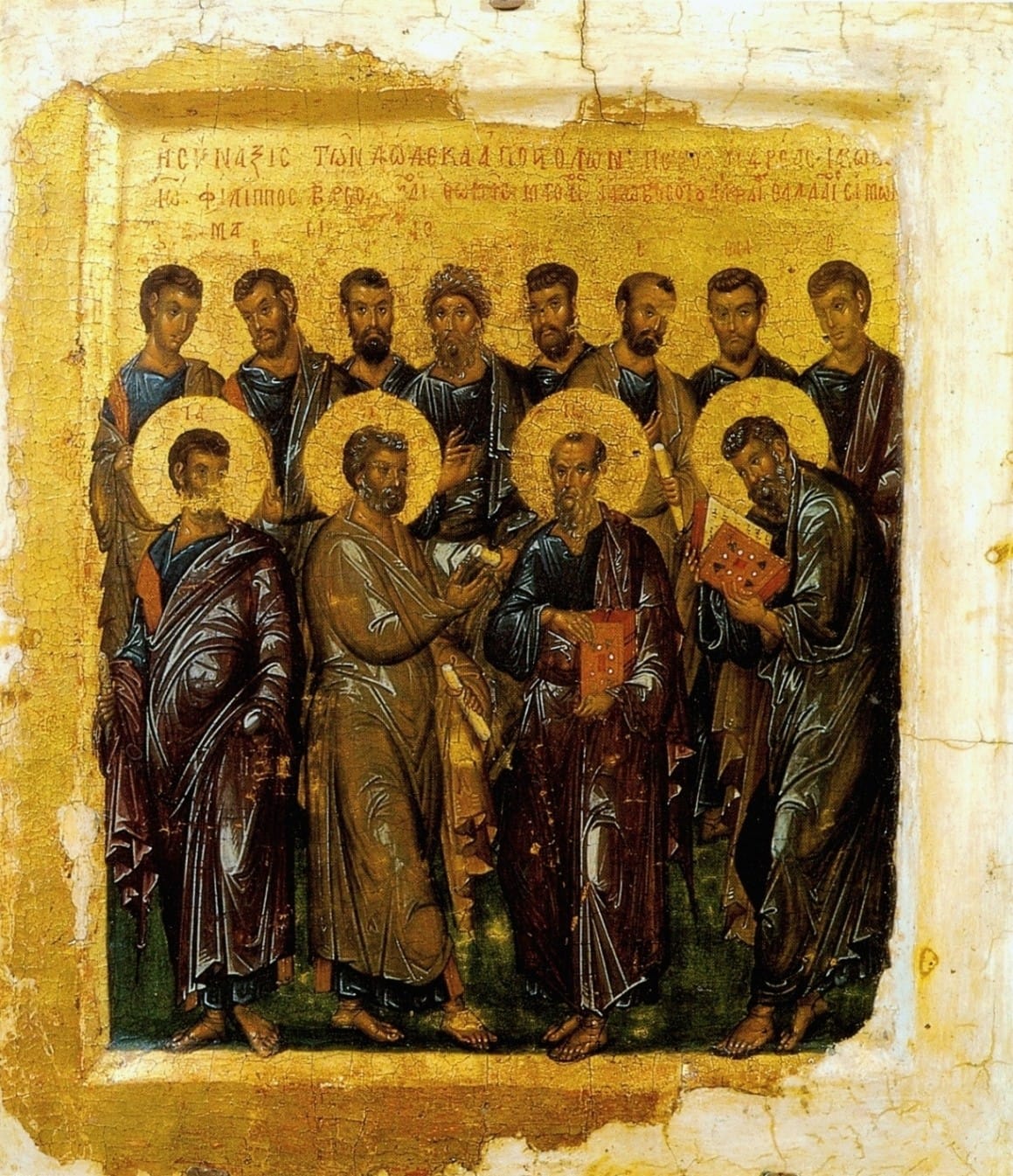
Although each of the twelve great Apostles has his own particular day of celebration during the year, the Church has designated this day as the synaxal feast of all of them together, and with them Paul. These are the names and these are the days of the special celebration of the holy Twelve: Peter, June 29 and January 16; Andrew, November 30; James the son of Zebedee, April 30; John the Theologian, September 26 and May 8; Philip, November 14; Bartholomew, June 11 and August 25; Thomas, October 6; Matthew the Evangelist, November 16; James the son of Alphaeus, October 9; Thaddaeus (or Jude of James), June 19; Simon the Zealot, May 10; Matthias, August 9; Paul, June 29. Let us also mention here how each of these most holy and most beneficial men in the history of the world ended his earthly life: Peter, crucified upside down; Andrew, crucified; James the son of Zebedee, beheaded; John the Theologian, reposed miraculously; Philip, crucified; Bartholomew, crucified, then flayed and beheaded; Thomas, pierced with five spears; Matthew, burned by fire; James the son of Alphaeus, crucified; Thaddaeus, crucified; Simon the Zealot, crucified; Matthias, stoned, then after death beheaded with an axe; Paul, beheaded.
Hymn of Praise
The whole world was like a dry desert:
Through it flew the chariots of the Spirit,
The holy Apostles, of fiery appearance:
Through them the Most Holy Spirit rebuilt the universe.
Rivers of wondrous grace began to flow,
The dead desert turned to life.
The wondrous Apostles, rain-bearing clouds,
Simple men become sages, fishermen become heroes!
From the Ganges to the Thames they bore the torch,
From the Nile to the Pontus they proclaimed holiness,
From colorful Persia to rich Gaul,
Wherever feet walk or galleys sail,
Everywhere they bore the miracle of the Incarnate God,
Everywhere they proclaimed the name of the Risen Christ,
Without complaint and fear, without any confusion:
Mountains and seas were no hindrance to them.
The sword did not frighten them, nor persecution turn them back,
Nor all the hellish fire that blazed against them.
Truth led them, not a lying fable:
Christ is our life, and death a splendid gain!
So they spoke. What can be done to such men?
Crucify their bodies? Flay their skins?
This the world did indeed, but what harm did it do them?
That they reign forever! so God decreed.
Reflection
Concern for the good of all men! That concern filled the exalted spirit and noble heart of the holy Apostles. Writing about the Apostle Paul, Chrysostom calls him "the common father of the world." "As if," says Chrysostom, "he himself had given birth to the whole world, so he was anxious, labored, and strove to bring all into the Kingdom." Truly, this title "common father of the world" is exceedingly lofty, but if it could be applied to anyone after God, it could be applied only to the Apostles of Christ. By their parental care for the whole world they were in truth the "common fathers of the world." There are many mothers in the world who care less about the good of their children than the Apostles cared about the good of their persecutors and enemies. His fiercest opponent, Simon the Sorcerer, the Apostle Peter saved from death twice: once when the people wanted to burn him and a second time when a dog was about to tear him apart. And consider how the world repaid these benefactors! As the greatest robbers and criminals. O how true are the words of Saint Cyprian, who says: "As long as we are in the body, everything that happens to us Christians is the same as to the pagans; the difference is only in spirit."
Contemplation
Contemplate the miraculous repentance of the robber on the cross (Luke 23:40), namely:
- How the wise robber in his torment feels the nearness of God, repents, and prays to God for salvation, while the torment of the foolish robber leads him to blaspheme God,
- How I too am a robber because of sin, and must be like that wise robber whom torment did not distance from God but brought nearer to God, to God and to salvation.
Homily
On the Power and Effect of Good Deeds
For so is the will of God, that with well doing ye may put to silence the ignorance of foolish men
I Peter 2:15
It is hard, brethren, to argue with the ungodly; hard to converse with the foolish; hard to persuade the embittered. The ungodly and the foolish and the embittered you will hardly convince with words. You will sooner convince them with deeds. Let them see your good works and glorify God (I Peter 2:12). To those who wish to argue with you, do a good deed, and you will win the argument. One deed of mercy will more quickly bring the foolish to their senses and soften the embittered than many hours of conversation. If ungodliness and foolishness and malice come from ignorance, that ignorance is like madness, which is most quickly restrained by beneficence. If you argue with the ungodly in his own mad manner, you strengthen the madness of ungodliness. If you converse with the foolish by mockery, the darkness of foolishness increases. If you think to convince the malicious by anger, you kindle the fire of malice all the more. A gentle and kind deed is like water on a fire. Always remember the holy Apostles and their successful manner of dealing with men. If the ungodly provokes you, it is not a man who provokes you but the devil; man is by nature pious. If the foolish reviles you, it is not a man who reviles you but the devil; man is by nature rational. If the embittered persecutes you, it is not a man who persecutes you but the devil; man is by nature kind. The devil provokes you to long disputes and fruitless conversations, but from a good deed he flees. Do a good deed in the name of Christ, and the devil will flee, and then you will at last have to deal with men, with real men: pious, rational, and kind. But whatever you do, do it in the name of the Lord.
O Most Gracious Lord, help us to do good and by good to conquer in Thy name. To Thee be glory and praise forever. Amen.
From the Prologue from Ochrid, translated by Marcian Sakarya, OCHRID.COM. CC BY-SA 4.0.
The Prologue, every day
Axios! brings the day’s Hymn of Praise, Reflection, Contemplation and Homily to Today, with the saints, the feasts and the saying of the day, on iPhone, iPad and Android.