
March 15
Saints of the day
Hymn of Praise
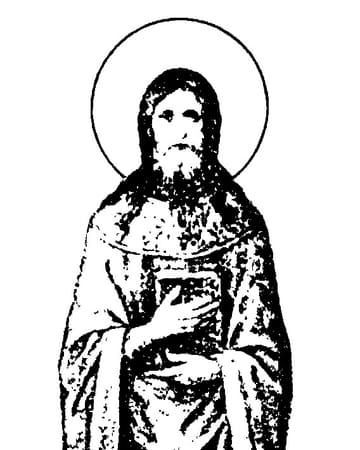
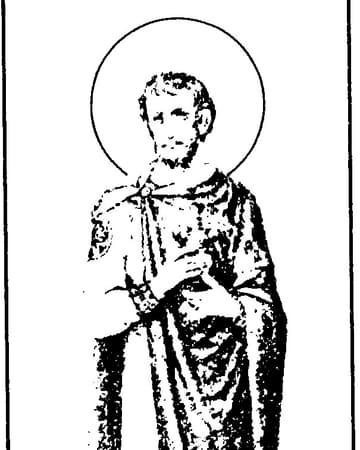
Holy Martyrs Agapius, Alexander, and Nicander
From every rank and station the Lord gathers His army,
Everyone in whom the flame of love and faith burns:
From physicians and sages, laborers and workmen,
From emperors and fishermen, an army of martyrs!
The sword struck; the Lord received the wise Alexander,
The sword struck; the Lord took the compassionate Nicander.
The sword struck eight wondrous, youthful blossoms,
Beneath the sword the all-holding Hand received them.
What the world drives out from its fold and discards
The Lord gathers with a tender hand like the finest flowers.
The first citizen, thrown out like a weed,
Agapius the Lord receives as His own son.
A company of ten martyrs and glorious men
Now sings in the angelic choir in eternity.
It is not all the same for what one dies, to die:
Some who have died are blessed, and others accursed.
He who dies for Christ's sake, blessing is with him,
He who dies persecuting Christ, a curse is with him.
Reflection
Love for anyone or anything, even for oneself, can in time grow cold in a man, or be entirely lost, or even turn to hatred. But a man's love for God, once gained and confirmed, grows cold only with difficulty, unless one has already lost his mind. In the first case a man diminishes or erases his love either because of changes in himself or because of changes in the object of his love. In this second case a man can diminish his love for God solely and only because of changes in himself, and in no way because of changes in God. All this has been expressed more beautifully and clearly by Saint Isaac the Syrian, who says: "There is a love like a stream from rainfall, which ceases soon after the rain stops. But there is a love like a spring welling up from the earth, which never ceases. The first is human love, and the second is divine." And Saint Symeon the New Theologian speaks of that divine love: "O holy love! Thou art the end of the law. Thou dost take hold of me, thou dost warm me, thou dost inflame my heart toward the boundless love of God and of my brethren... Out of love God became man. Out of love He endured all His life-giving sufferings, to deliver man from the bonds of Hades and raise him to heaven. Out of love the apostles finished their unceasing race. Out of love the martyrs shed their blood, only that they might not lose Christ."
Contemplation
Contemplate the Lord Jesus when Pilate brings Him out before the Jews, namely:
- How the Lord is first scourged by the Roman soldiers;
- How afterward He is mocked by them: they placed a crown of thorns upon His head and clothed Him in a scarlet robe;
- How Pilate presents Him to the Jews, saying: Behold the man!
Homily
On the prophecy of the house left desolate
Behold, your house is left unto you desolate
Matt. 23:38
Why was the Lord silent at the trial before the Jews and before Pilate? Because He had already said everything that needed to be said. He had declared and foretold how the Jewish elders would deliver Him to the pagans and how they would kill Him. He had foretold many times what would personally happen to Him. And His apostles had heard this and remembered it well. But He had also foretold the terrible punishment that the Jews would bring upon themselves by their crime against the Son of God. And the Jews heard this too, and forgot.
Behold, your house is left unto you desolate! That is what the Lord foretold to the Jews. And the Jews heard it, and forgot. But many later remembered these prophetic words (many even of those who had taken part in the Great Crime) when the Romans destroyed Jerusalem, plundered it, burned it, scattered its inhabitants throughout the whole world, and cut down, strangled, starved, or crucified many of them.
The Jews by intimidation and harassment compelled the Roman Pilate to raise his hand against the Lord Jesus. Afterward the Roman Empire rose against the Jews. On the day when the Lord's prophecy was to be fulfilled, the Roman Empire, once represented in Jerusalem by Pilate, raised its hand with a most sharp sword against Jerusalem and her children. When Emperor Hadrian rebuilt Jerusalem, he gave it another name, Aelia Capitolina, and forbade Jews under pain of death from settling in Jerusalem. Behold, your house is left unto you desolate! And Jerusalem from then until today has indeed been left desolate of Jews as a people. The children of the wicked ancestors who killed Christ have until now been everywhere, except in their own home.
O Lord Almighty, forgive us our sins. To Thee be glory and praise forever. Amen.
From the Prologue from Ochrid, translated by Marcian Sakarya, OCHRID.COM. CC BY-SA 4.0.
The Prologue, every day
Axios! brings the day’s Hymn of Praise, Reflection, Contemplation and Homily to Today, with the saints, the feasts and the saying of the day, on iPhone, iPad and Android.