
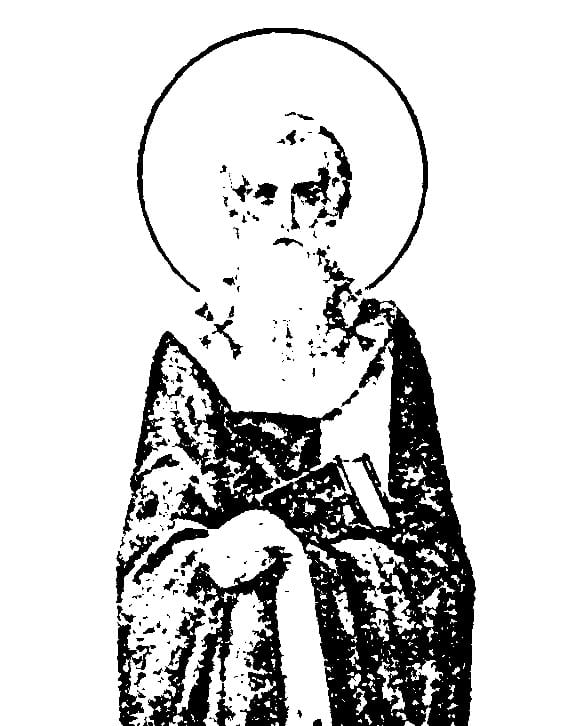
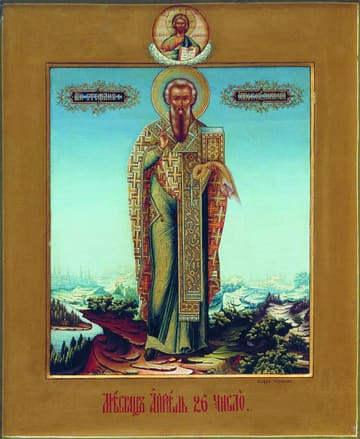
St. Basil of Amasea
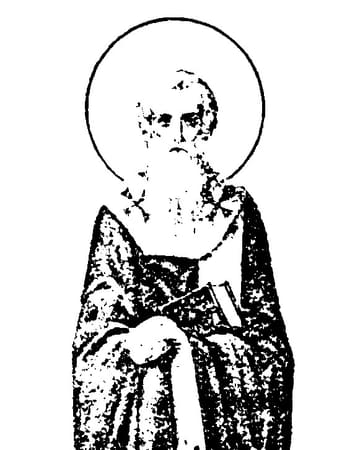
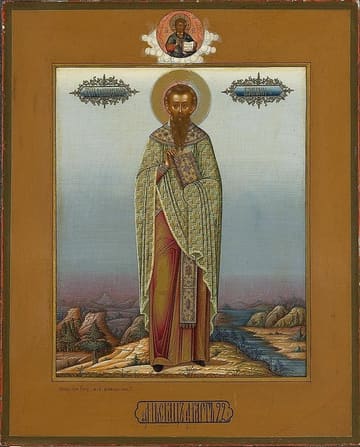
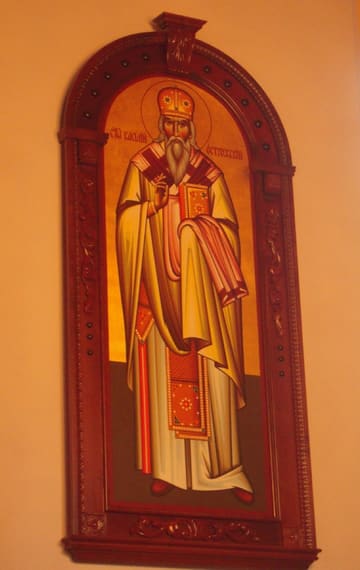
Licinius, the son-in-law of Emperor Constantine, whose sister he had married, pretended before the great emperor to be a Christian, but when he received from the emperor the governance of the entire East, he began first secretly and then openly to persecute Christians and to establish idolatry. His wife grieved greatly on account of this, but could not turn her husband away from impiety. Having given himself over to idolatry, Licinius surrendered himself without measure to every passion, and most of all to lust for women. In an attack of this impure passion he sought to defile the virgin Glaphyra, who served in the empress's household. Glaphyra complained to the empress, and the empress secretly sent her from the imperial palace in Nicomedia to the region of Pontus. The maiden reached the city of Amasea, where she was warmly received by Bishop Basil and the other Christians. Glaphyra was exceedingly joyful that God had preserved her virginity, and wrote of this to the empress. The empress too rejoiced and sent her money for the church of Amasea. But one of Glaphyra's letters, addressed to the empress, fell into the hands of a court eunuch, who showed it to Emperor Licinius. Learning where Glaphyra was, the emperor immediately sent orders that both she and the bishop be brought to Nicomedia. In the meantime Glaphyra died, and so the soldiers brought only Basil, bound. After tortures and imprisonment this blessed man was beheaded and cast into the sea, in the year 322. His clergy, by the direction of an angel of God, found his body near the city of Sinope, drew it from the water with the help of fishing nets, and transferred it to Amasea, where they honorably buried him in the church that he himself had built by his own labors. Emperor Constantine raised an army against Licinius, defeated him, captured him, and sent him into exile in Gaul, where he ended his God-hating life.
From the Prologue from Ochrid, translated by Marcian Sakarya, OCHRID.COM. CC BY-SA 4.0.
Sources
- The Prologue from Ochrid, April 26, translated by Marcian Sakarya, OCHRID.COM (https://ochrid.com), CC BY-SA 4.0
No recorded sayings. Read the Life to meet this saint.
Troparion · Tone 4
Partaker of the apostles' ways and successor to their thrones, you found in action, O God-inspired one, the way up to contemplation. Therefore you rightly handled the word of truth and contended also for the faith to the point of bloodshed, O Hieromartyr Basil. Intercede with Christ our God that our souls may be saved.
Translated for Axios! from the Greek General Menaion (the common troparion of a hieromartyr)
Kontakion · Tone 4
Having shone in piety among the priests and run the road of martyrdom to its end, you quenched the worship of idols, becoming the champion of your flock, O godly-minded one. And so the flock honors you and cries to you in mystery: From dangers deliver me at all times by your intercessions, O our father Basil.
Translated for Axios! from the Greek General Menaion (the common kontakion of a hieromartyr)
Saints around April 26
Get the full library

770+ saints, in your pocket
Their Lives, sayings and prayers, A to Z and by feast, with search. The Church calendar, the holy icons, and the saying of the day on your Home Screen. All in Axios! for iPhone, iPad and Android.