
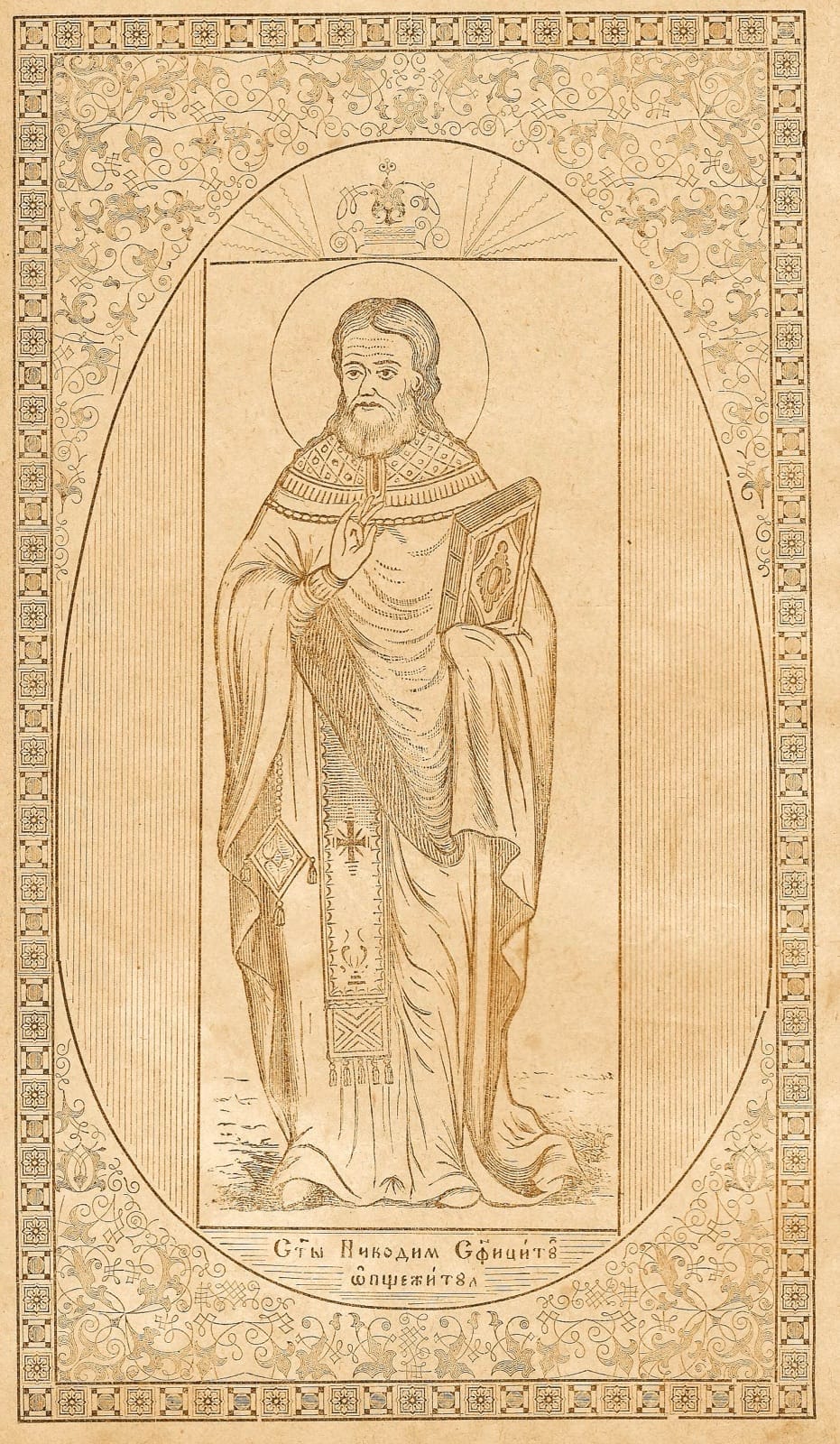
St. Nicodemus of Tismana
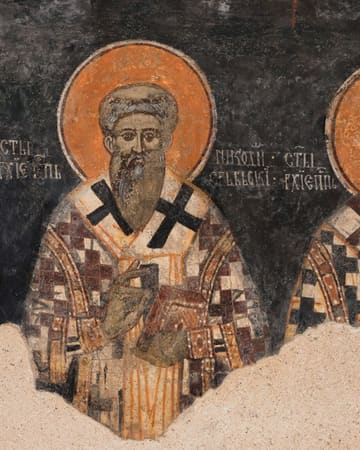
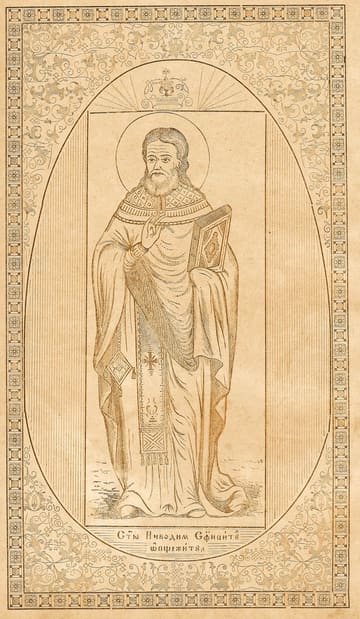
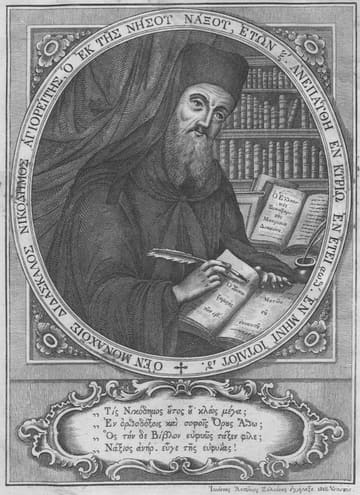
St. Nicodemus of Tismana, called the Sanctified, is the father of organized monastic life in the Romanian lands. A monk of Mount Athos, he crossed the Danube in the 14th century, founded the monasteries of Vodita and Tismana in Wallachia and, by tradition, Prislop in Transylvania, and gave them the rule of the Holy Mountain.
He was born about 1320, by most accounts at Prilep in Macedonia; Serbian sources of his own century call him a Greek, and later tradition makes his father a Greek and his mother a Serb. As a young man he went to the Holy Mountain and lived in obedience to the elder Isaiah of Serres at the Serbian monastery of Hilandar, where he was tonsured in 1338 and ordained priest in 1343; tradition says he later became its abbot. About 1365 he left Athos for the Danube near Kladovo, where the Hungarian conquest of Vidin had brought pressure on the Orthodox. A tradition recorded in the 17th century by Paul of Aleppo tells that he went to Buda to call King Louis of Hungary to Orthodoxy and walked unharmed through fire with the Gospel in his hands.
By 1370 he was in Wallachia, where Prince Vladislav I built the monastery of St. Anthony at Vodita on his counsel and made him its abbot. Its founding charter, the oldest surviving monastic rule of the Romanian lands, gave the brethren the Athonite right to choose their own abbot. In 1375 he joined the elder Isaiah's embassy to Constantinople that reconciled the Serbian Church with the Patriarchate.
When the Hungarians retook Severin he moved north to the valley of the Tismana, where Prince Radu I founded a monastery of the Theotokos; later princes, Mircea the Elder among them, enriched both houses, and St. Lazar of Serbia and his son Stefan endowed them with lands. St. Euthymius of Tarnovo answered his questions on the faith in letters, and in 1404-1405 Nicodemus copied and adorned a Slavonic Gospel book, the first dated manuscript of Wallachia.
He reposed at Tismana on December 26, 1406. Healings at his grave led the monks to place his relics in a shrine; tradition says he later asked in a dream that they be hidden from thieves, and the place was forgotten, so that only a finger, in a reliquary of 1671, remains at Tismana. The Romanian Church formally glorified him in October 1955, the Serbian Church also venerates him, and both keep his memory on December 26.
Sources
- Pravoslavnaya Entsiklopediya, 'Nikodim Tismansky' (quoting the Vodita charter of about 1374 and later princely charters)
- OCA, Lives of the Saints: Venerable Nicodemus of Tismana (December 26)
No recorded sayings. Read the Life to meet this saint.
Troparion · Tone 8
In you, O Father, God's image was preserved to perfection; for you took the cross upon yourself and followed Christ, and in your conduct you taught that one should think little of the flesh, for it is fleeting, and take care of the soul, a thing that does not die. And so, O venerable Nicodemus, your spirit exults together with the angels.
Translated for Axios! from the Greek General Menaion (the common troparion of a venerable father)
Kontakion · Tone 2
Armed in godly fashion with the soul's purity and wielding ceaseless prayer as a lance, you mightily cut through the battle lines of the demons, O Nicodemus, wonderworker, our father, interceding without ceasing for us all.
Translated for Axios! from the Greek Menaion (the common kontakion of a venerable father)
Saints around December 26
Get the full library
770+ saints, in your pocket
Their Lives, sayings and prayers, A to Z and by feast, with search. The Church calendar, the holy icons, and the saying of the day on your Home Screen. All in Axios! for iPhone, iPad and Android.