
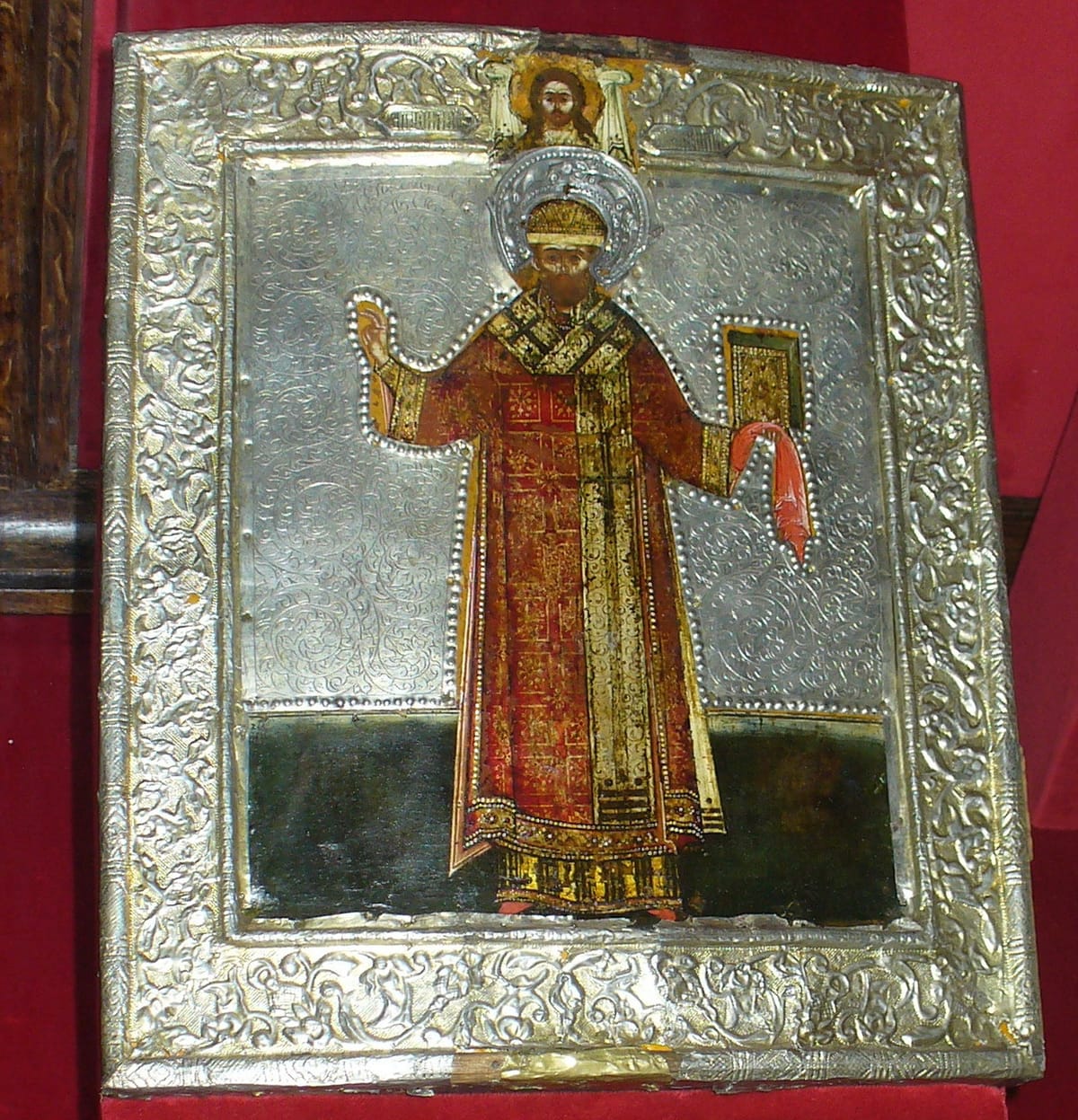
St. Philip of Moscow
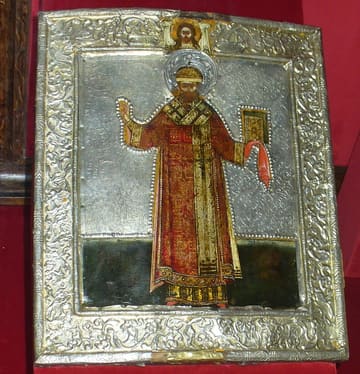
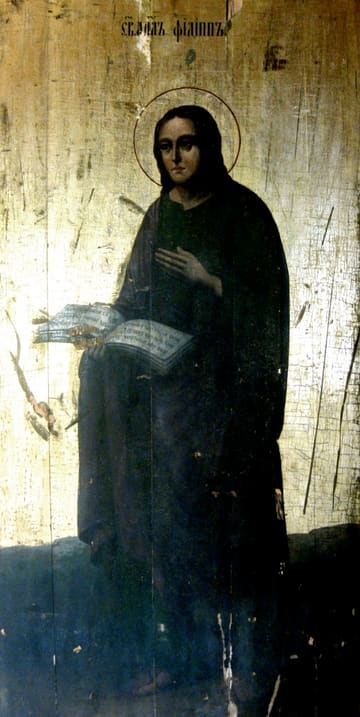
St. Philip of Moscow, Metropolitan of Moscow and All Russia from 1566 to 1568, is honored as a hieromartyr because he dared to rebuke Tsar Ivan the Terrible.
As abbot he made the Solovetsky Monastery on the White Sea flourish; as primate he spoke for the victims of the oprichnina, the tsar's reign of terror, and in 1569 he paid for it with his life.
He was born Fyodor Kolychev on February 11, 1507, into a leading boyar family, and grew up at the court of Grand Prince Vasily III. In 1537 he left Moscow in secret, poorly dressed; his Life says he tended sheep for a time in a village on Lake Onega before reaching Solovki. After a year and a half of hard labor he was tonsured with the name Philip about 1539, and he worked in the forest, the bakery and the smithy.
In the mid-1540s the brethren chose him as abbot. Under his care the island became a great northern monastery: he built the stone churches of the Dormition and the Transfiguration, linked its lakes so that water flowed to the monastery, set up mills, and dug his own grave on the north side of the Transfiguration church, where his relics would later be laid.
In 1566 Tsar Ivan IV called him to be metropolitan. Philip asked for the oprichnina to be abolished; at last he signed a promise not to interfere in it or in the tsar's household, and he was consecrated in July 1566. But as executions multiplied he would not keep silent: in 1568 he refused the tsar his blessing in the Dormition Cathedral and rebuked him publicly for shedding innocent blood.
Charges were gathered against him, some from monks of Solovki, and in November 1568 a council deposed him. Oprichniki seized him during the Liturgy, tore off his vestments and carted him off to prison. Many of the Kolychevs were killed, and the head of his kinsman Ivan was sent to his cell.
He was exiled to the Otroch Monastery in Tver. On December 23, 1569, as Ivan marched against Novgorod, the oprichnik Malyuta Skuratov entered his cell; according to the Life he asked a blessing for the campaign, and when Philip refused, he smothered him with a pillow. He was buried behind the altar of the monastery church.
His relics were taken to Solovki in 1591, where he had been honored as a saint since his death, and in 1652 to Moscow, where they rest in the Dormition Cathedral of the Kremlin. Since 1660 his memory has been kept on January 9; the Church also keeps the translation of his relics on July 3 and the Synaxis of the Moscow hierarchs on October 5.
Sources
- Life of Metropolitan Philip, Short redaction (Solovki, 1591-1597)
- Prince Andrei Kurbsky, History of the Grand Prince of Moscow (about 1573)
- I. A. Lobakova, introduction to the Life of Metropolitan Philip, Biblioteka literatury Drevnei Rusi, vol. 13
- Church Slavonic Menaion, January 9
- OCA, Lives of the Saints, January 9: Hieromartyr Philip, Metropolitan of Moscow and All Russia
No recorded sayings. Read the Life to meet this saint.
Troparion · Tone 8
Heir of the first primates, pillar of Orthodoxy and defender of the truth, new confessor, O hierarch Philip, who gave your soul for your flock: as one who has boldness before Christ, pray for the city and for the people who honor your holy memory as is fitting.
Translated for Axios! from the Church Slavonic Menaion, January 9
Kontakion · Tone 3
Let us praise the guide of Orthodoxy and herald of truth, the zealous follower of Chrysostom, the luminary of Russia, Philip most wise, who wisely fed his children with the food of his words; for with his tongue he sang praise, and with his lips he uttered song, as one initiated into the grace of God.
Translated for Axios! from the Church Slavonic Menaion, January 9
Saints around January 9
Get the full library
770+ saints, in your pocket
Their Lives, sayings and prayers, A to Z and by feast, with search. The Church calendar, the holy icons, and the saying of the day on your Home Screen. All in Axios! for iPhone, iPad and Android.