
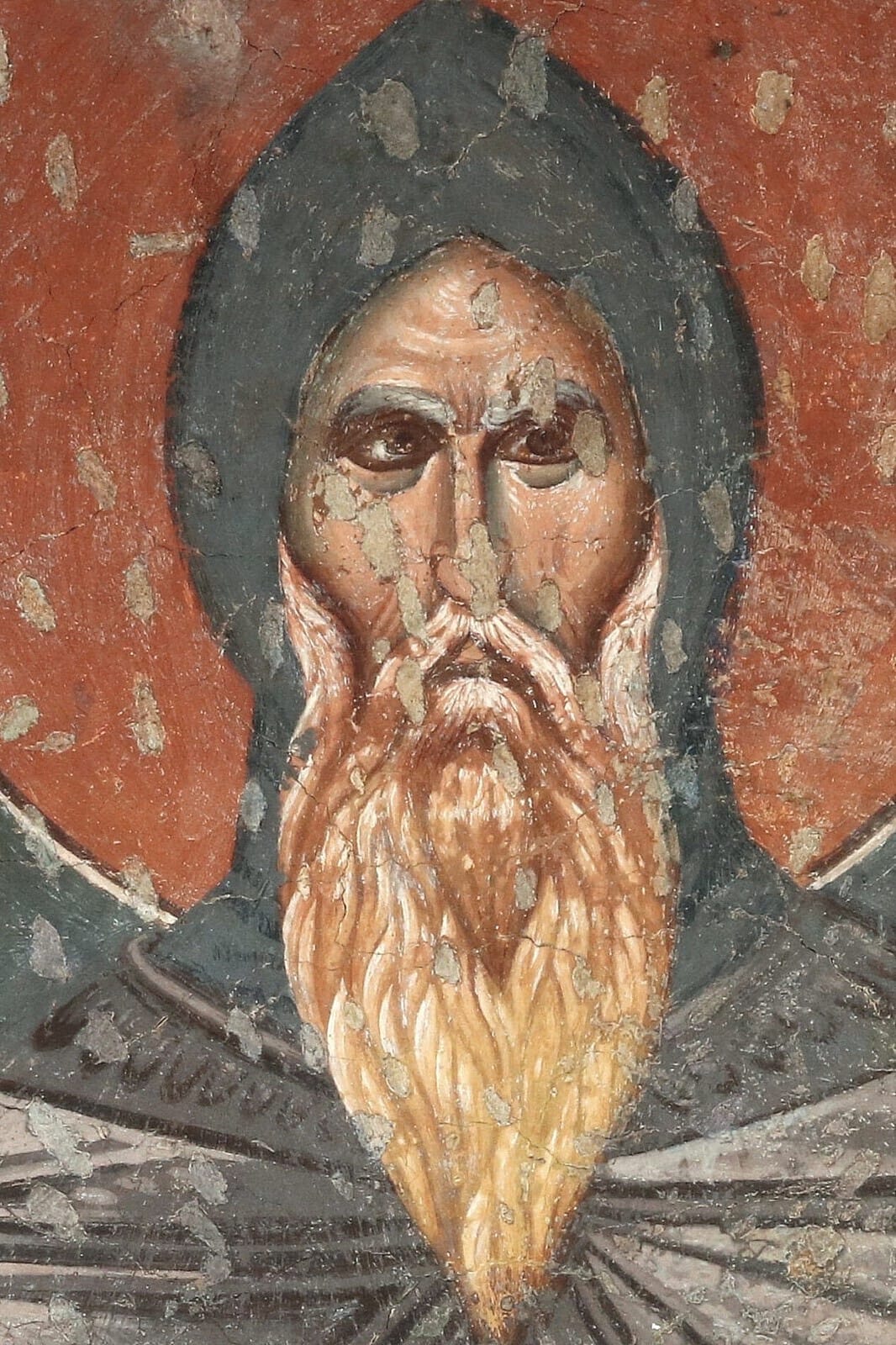
St. Simeon the Myrrh-streamer
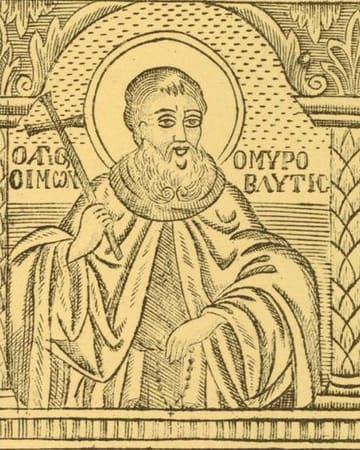
St. Simeon the Myrrh-streamer, known in the world as Stefan Nemanja, is the founder of the medieval Serbian state and of its holy dynasty, and the father of St. Sava.
Grand Zupan of Serbia for some thirty years, he laid down his power in old age, became a monk and, on Mount Athos, restored the monastery of Hilandar with his son. The Church calls him Myrrh-streamer for the fragrant myrrh that flowed from his relics, and the Lives and service his sons wrote for him stand at the beginning of Serbian literature.
He was born in 1113 or 1114 at Ribnica, where Podgorica in Montenegro stands today, the youngest son of the zupan Zavida. His Life tells that his brothers once imprisoned him in a cave near Ras and that he vowed a church to St. George if he were freed, a vow he kept by building the monastery of Djurdjevi Stupovi. Grand Zupan from the 1160s, he joined Zeta, the coast around Kotor and lands in Kosovo to his realm, called a council against the Bogomil heresy, and built many churches, above all Studenica, the "mother of Serbian monasteries," which he chose for his grave.
On the feast of the Annunciation in 1195 he handed the throne to his middle son, Stefan, and became the monk Simeon; his wife Anna, venerated as St. Anastasia, also took monastic vows. On November 2, 1197, he came to Mount Athos to live with his youngest son, the monk Sava, at Vatopedi. In June 1198 Emperor Alexios III Angelos, Stefan's father-in-law, granted them the ruined monastery of Hilandar, and father and son rebuilt it as a home for Serbian monks. In his charter for it, Simeon writes that all the beauty of this life came to seem to him like smoke.
St. Sava, at his side, describes his end. In February 1200 the old monk blessed his sons once more, bidding them love one another, asked for the icon of the Theotokos, and had himself laid on a mat on the floor in his burial habit, with a stone beneath his head. Early on February 13, his face shining, he spoke the words of the psalm, "Praise God in His saints," and reposed, and Greek, Georgian, Russian, Bulgarian and Serbian monks sang over him in turn.
About 1207 Sava found his body incorrupt and brought it to Serbia, reconciling over it his quarreling brothers, Stefan and Vukan. The relics rest at Studenica in the marble tomb Simeon had prepared, and at Hilandar, tradition holds, grapes from the vine beside his first grave help childless couples. The Serbian, Russian and Greek Churches keep his memory on February 13, the day of his repose.
Sources
- St. Sava of Serbia, Life of St. Simeon (in the Studenica Typikon, 1208)
- Charter of Hilandar of St. Simeon and St. Sava (1198)
- Pravoslavnaya Entsiklopediya, 'Simeon Mirotochivy'
- Church Slavonic Menaion, February 13: services to St. Simeon the Myrrh-streamer
- OCA, Lives of the Saints: Venerable Stephen (in monasticism Simeon), the Myrrhgusher and Prince of Serbia (February 13)
No recorded sayings. Read the Life to meet this saint.
Troparion · Tone 3
Illumined by divine grace, you show forth even after death the radiance of your life, for you pour out fragrant myrrh on those who hasten to the shrine of your relics; and you have guided your people to the light of the knowledge of God. O Simeon our father, entreat Christ God to grant us great mercy.
Translated for Axios! from the Church Slavonic Menaion, February 13
Kontakion · Tone 6
Having loved the angelic life on earth, you left worldly dominion and the world, O Simeon, and followed Christ by fasting; and like an apostle you guided to Him those who love you, crying: Love God, as He has loved us.
Translated for Axios! from the Church Slavonic Menaion, February 13
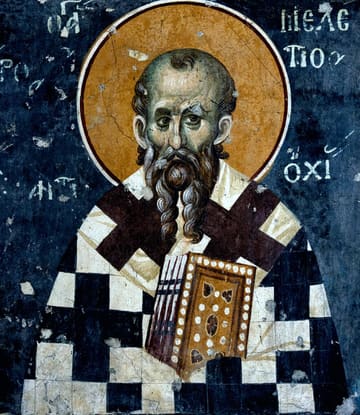
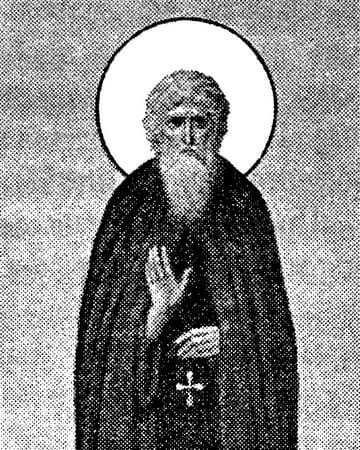
Saints around February 13
Get the full library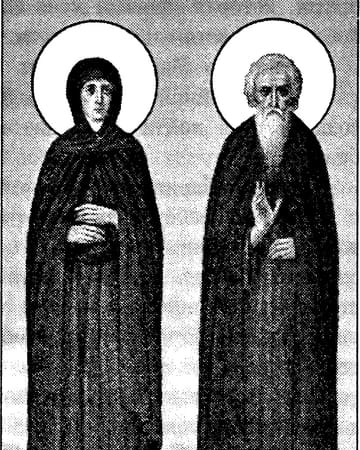
770+ saints, in your pocket
Their Lives, sayings and prayers, A to Z and by feast, with search. The Church calendar, the holy icons, and the saying of the day on your Home Screen. All in Axios! for iPhone, iPad and Android.