
June 23
Saints of the day
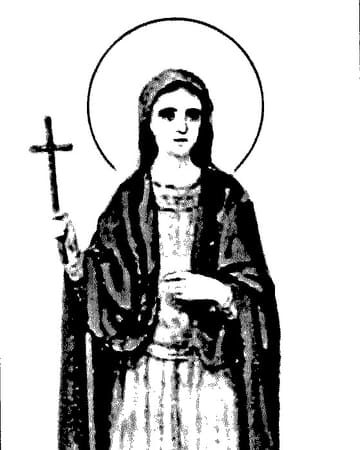
Also commemorated
Commemoration of the Vladimirskaya Icon of the Most Holy Theotokos
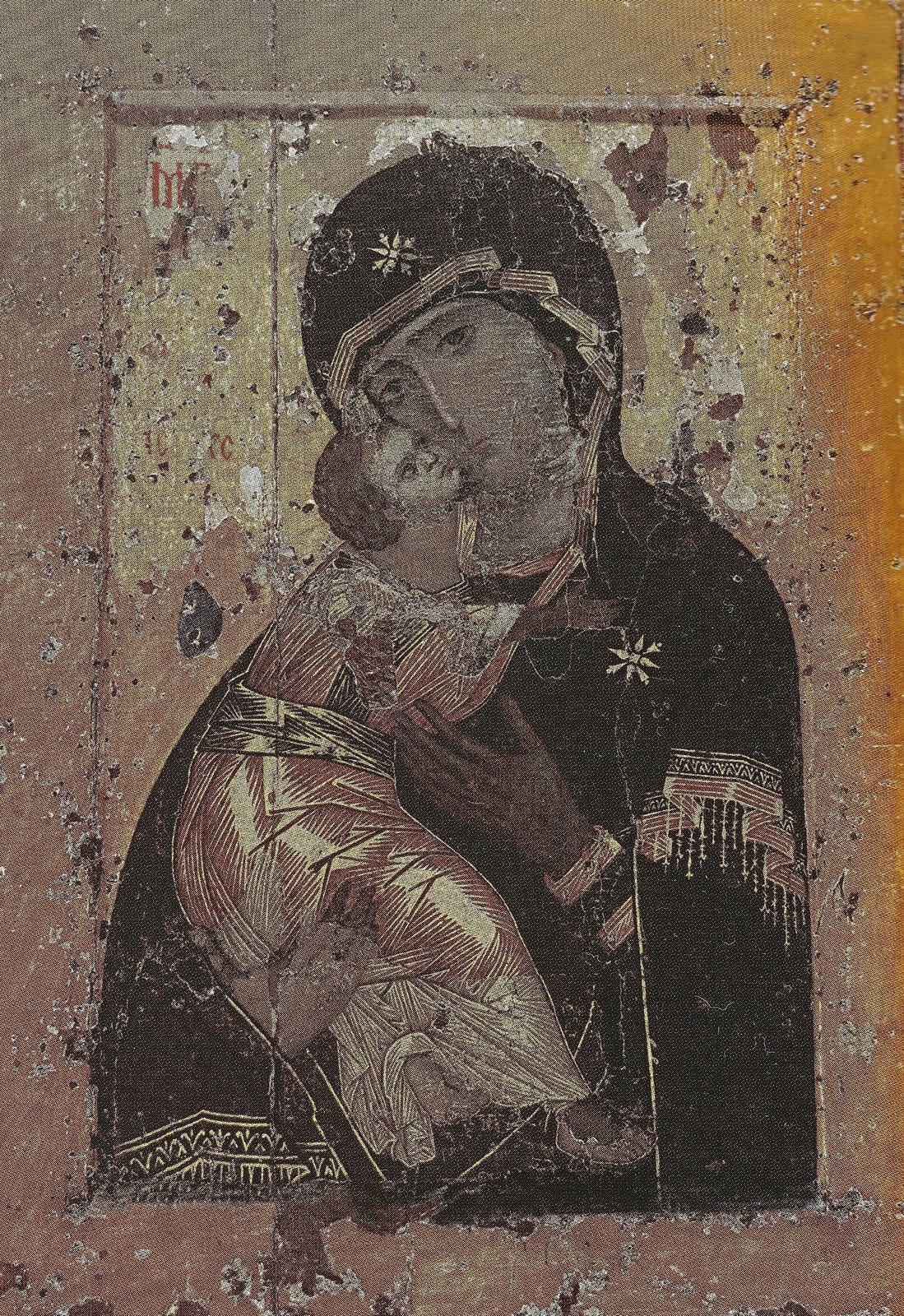
When the Tatar Khan Ahmet surrounded Moscow, Prince Ivan Vasilievich set out with an army to defend the city. Although the army of this prince was small and weaker than the Tatar army, it nevertheless emerged victorious. For suddenly an indescribable fear fell upon the Tatars, and they were thrown into confusion and scattered. This unexpected success was attributed by all to the icon of the Most Holy Theotokos, before which the people had prayed for deliverance from the Tatars. Because of this, June 23 was designated in Russia as a commemoration of this miracle.
Hymn of Praise
Agrippina, purer than a lily,
The betrothed of the Son of God,
Her soul brighter than a flame,
And her faith firmer than stone.
Under the rod she prayed to the Lord,
In her wounds she chanted psalms,
She forgave all, she blessed all,
Like a bloody pillar she stood at the trial.
When her bones were crushed,
An angel descended; her wounds were healed!
But when new torments pressed upon her,
Agrippina's strength gave way,
Agrippina gave up her spirit to God,
Her soul departed, her body remained.
The holy relics of holy Agrippina
Are the defense of the land of Sicily,
A remedy for the suffering and the sick,
And a protection from warlike hordes.
By the prayers of holy Agrippina
May many a misfortune pass us by.
Reflection
Guileless endurance: that is Christian endurance; but endurance with impotent malice differs little from vengeance. Our saints are great in every Gospel virtue, but O how great and magnificent they are in guileless endurance! Probably they seem greatest to us in this virtue because we are smallest in it. When the desert fathers were once gathered around John Colobos to hear his teaching, a certain envious man called out: "Thy vessel, John, is full of poison!" to which the guileless John immediately replied: "Thou hast said that seeing only the outside; but what wouldst thou say if thou couldst see the inside?" And when Saint Cyprian, Bishop of Carthage, was led out to be beheaded, he ordered that after his death twenty-five gold pieces be given to his executioner for his trouble.
Contemplation
Contemplate the miraculous healing of Zechariah from muteness (Luke 1:64), namely:
- How Zechariah was struck mute for not believing the angel of God,
- How he spoke as soon as he fulfilled the angelic command (Luke 1:63),
- How the muteness will also fall from my soul as soon as I begin to fulfill the commandments of God, and how my soul will be full of speech and wisdom according to God.
Homily
On How One Should Not Envy Sinners
Be not thou envious against evil men
Prov. 24:1
Does anyone envy a leper? No one envies him. Why then does someone envy the wicked, when wickedness is a greater disease than leprosy? Leprosy is a disease of the body, while wickedness is a disease of the soul. A leper may be inwardly healthy while outwardly sick; a wicked man, on the other hand, may be outwardly healthy, but his inside is sick: his heart is sick. A tree that is outwardly ailing but has a healthy core is of greater value than a tree that is outwardly healthy but has a rotten core. So leprosy is a lesser evil than wickedness, that is, than sin. For by evil the Wise Man meant sin.
Does a physician envy a patient? He does not. Neither does the righteous man envy the sinner. If you do not know whether you are righteous, examine your heart: do you envy the sinner? If you envy, then you are not righteous; but if you do not envy, then rejoice, O righteous one of God.
A sick man can envy another sick man; a sick man can envy a healthy man; but a healthy man does not envy a sick one. Neither does a righteous man envy a sinful one. A physician recognizes a mortal disease in his patient, and knowing, he has compassion on him, but does not envy him. And the righteous man recognizes the disease of sin, horrible and mortal, and does not envy the sinner but has compassion on him.
O good and compassionate Lord, root out envy from our hearts and root in love. To Thee be glory and praise forever. Amen.
From the Prologue from Ochrid, translated by Marcian Sakarya, OCHRID.COM. CC BY-SA 4.0.
The Prologue, every day
Axios! brings the day’s Hymn of Praise, Reflection, Contemplation and Homily to Today, with the saints, the feasts and the saying of the day, on iPhone, iPad and Android.