
March 13
Saints of the day
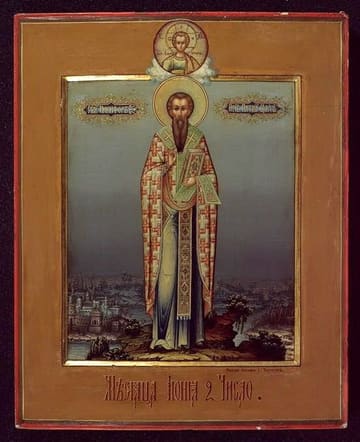
Hymn of Praise
Constantinople
O Constantinople, wondrous city by the blue Bosphorus,
Whose glory can be measured against thine?
Thou hast been the fearsome arena of spiritual warriors,
Of blaspheming heretics and of God's saints.
Like a sieve thou hast through long ages
Both revealed the apostates and manifested the servants of God,
Defiled by many a sin and sinful carrion,
Sanctified by the overflowing blood of martyrs.
Who could count the spiritual heroes,
And all the heavenly visions and all thy mysteries?
The angels of God often descended upon thee,
And men rose up like angels toward heaven.
The Mother of God appeared in thee many times,
To deliver the oppressed, to heal the sick.
Wondrous flocks of saints hover above thee,
And the prayers of thy children are raised to the Most High.
O how many saints were thy children!
As many lilies beside lilies, and saint beside saint!
Thou hast written history and the calendar in red,
By thy labor even the great Creed was written.
And of thee too this can be said:
Among the many cities, thou art a red letter.
Thou hast enlightened the world with the holy faith,
Thou hast healed the world from paganism and heresy.
Much tormented, yet unslain, thou hast not yet passed away,
Both upon earth and in heaven thy glory resounds:
Every baptized soul owes thee great gratitude.
Reflection
The great Christians are those who have great love for Christ. O how truly great Christians the God-bearing fathers and martyrs were! In our time many cannot even conceive of this. Behold what one of them, Saint Symeon the New Theologian, confessed before all the monks in his monastery. Speaking from his own experience of how the words of the Lord had been fulfilled in him, "My yoke is easy, and My burden is light," he says: "Believe me, when I fled to God my Savior I encountered nothing grievous, heavy, or unbearable... The only great and unbearable grief I had was that I could not find sufficient cause to die for love of Christ." Are not such souls like flames enclosed in vessels of clay? Flames forever erect and straining toward heaven! Only lift the lid, and the flame leaps upward.
Contemplation
Contemplate the Lord Jesus at the trial before Herod, namely:
- How Herod was at first very pleased to see Jesus, not from any spiritual need, but from curiosity;
- How Herod hoped to see some miracle from Jesus, but was disappointed in this, for the Lord was silent at all his questionings;
- How Herod with his men mocked the Lord, and how they clothed Him in a white garment.
Homily
On the reconciliation of the wicked for the sake of wickedness
And the same day Pilate and Herod were made friends together: for before they were at enmity between themselves
Luke 23:12
Even in his shame and humiliation the righteous one does good to his enemies. He reconciles them. True, in this case their reconciliation did not signify joint labor on some good work, but the joint persecution of the righteous one. But at least the flame of their mutual hatred was being quenched and extinguished. And that is a reward for the righteous one. Pilate and Herod were enemies. But on that day, when the Savior was brought to trial before each of them, they were reconciled. The Prince of Peace brought peace between those at enmity, a peace that helped fashion the cross for Him. But He came precisely to be a willing sacrifice for the sins of many.
Even today, mutual opponents are reconciled when it comes to attacking and condemning the Lord. There are many who are at each other's throats until you mention the name of the Lord. And the moment they hear that name, they gradually reconcile with one another in order to attack that holy name. An unjust man more easily tolerates an unjust man than a just one. An unjust man more easily comes to terms and makes peace with an unjust man than with a just one.
Even parties in certain states, the most mutually hostile, make peace when it comes to deciding what place to give the Lord Jesus Christ in the state: whether first (as befits Him) or last. On such a question blood enemies make peace with one another, just to assign the Lord the last place. So also in those days the warring parties of the Pharisees and Sadducees made peace and joined forces against Christ. And why should the Purest and Most Necessary One be in the last place? Because, in their reckoning, the first places would then remain for themselves. That same motive of reconciliation applied to the Pharisees and Sadducees, blood enemies, when they needed to seek the killing of Christ. That same motive brought about the reconciliation between Pilate and Herod, when it was necessary to sentence Christ to death.
O my brethren, let us never seek peace with injustice against justice. But let us always seek peace with God, and with our conscience. O God, help us always to have such peace. To Thee be glory and praise forever. Amen.
From the Prologue from Ochrid, translated by Marcian Sakarya, OCHRID.COM. CC BY-SA 4.0.
The Prologue, every day
Axios! brings the day’s Hymn of Praise, Reflection, Contemplation and Homily to Today, with the saints, the feasts and the saying of the day, on iPhone, iPad and Android.