
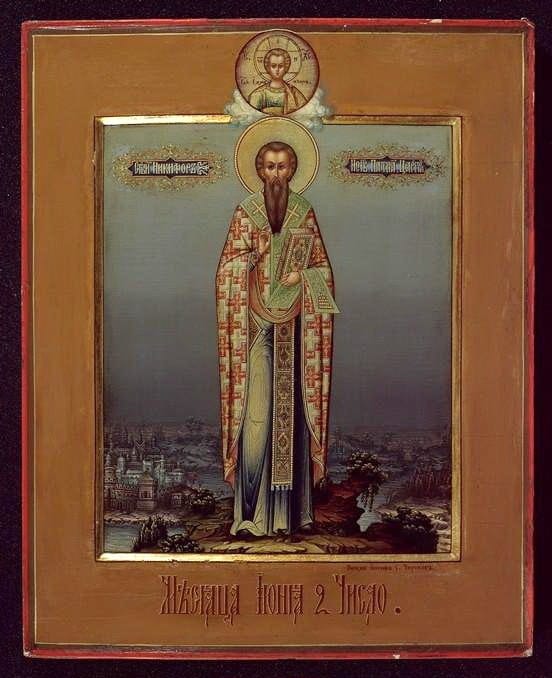
St. Nicephorus the Confessor
Also commemorated
- March 13Translation of the relics
St. Nicephorus the Confessor, Patriarch of Constantinople from 806 to 815, was the leading defender of the holy icons when Emperor Leo V the Armenian revived iconoclasm.
Deposed and exiled for refusing to abandon the faith of the Seventh Ecumenical Council, he spent his last years writing the treatises that gave the Church its fullest answer to the iconoclasts.
He was born in Constantinople around 758, the son of Theodore, an official of the imperial chancery whom Emperor Constantine V twice sent into exile, his Life says, for venerating the icons. Nicephorus received a fine secular education and became an imperial secretary; at the Seventh Ecumenical Council in 787 he read aloud the letter of Pope Hadrian I to the rulers. Later he left the court for the Asian shore of the Bosphorus, where he founded monasteries and gave himself to prayer and the Scriptures, and under Emperor Nicephorus I he returned to the capital to direct its houses for the poor.
After the repose of St. Tarasius he was chosen patriarch while still a layman and consecrated on April 12, 806. His first years were troubled by the Studite monks, who objected to his swift elevation and to his readmission of the priest who had married Constantine VI; St. Theodore the Studite was reconciled with him under Emperor Michael I. When Leo V turned against the icons, Nicephorus gathered bishops and monks, the Studites among them, at the patriarchate in December 814 and refused to debate what the Church had already settled. In March 815, condemned by a synod of iconoclast bishops, he was forced from his throne and exiled to the island of Proconnesus.
In exile on the island of Proconnesus, he was honored by the faithful as their lawful patriarch. There he wrote his Great Apology, his three Refutations of Emperor Constantine V and a refutation of the iconoclast council of 815. He taught that the Son of God, uncircumscribed as God, became truly circumscribed as man through His Mother, and that an icon differs from an idol because it portrays what truly exists.
Before his patriarchate he had also written a Short History of the empire from 602 to 769. He reposed in exile in 827.
After the Triumph of Orthodoxy, St. Methodius proclaimed his memory eternal in the Synodikon of Orthodoxy and brought his relics to Constantinople, where they were laid in the Church of the Holy Apostles on March 13, 847. The Church keeps his feast on June 2 and the translation of his relics on March 13.
Sources
- St. Nicephorus, Antirrhetici and Apologeticus minor (PG 100)
- Pravoslavnaya Entsiklopediya, vol. 49, 'Nikifor I'
- Greek Menaion, June 2 and March 13
- OCA, Lives of the Saints: Saint Nikephoros the Confessor, Patriarch of Constantinople
An icon is a likeness of an archetype, bearing impressed in itself the whole form of what it depicts through resemblance, and differing from it only by the difference of its substance, that is, its material.
First Refutation (Antirrheticus I) against Constantine V (PG 100, 277) (translated for Axios! from the Greek)
An icon is a likeness and an impression of things that exist and are real; but an idol is a fashioning of things that do not exist and have no being... In this way an icon and an idol are distinguished from one another.
First Refutation (Antirrheticus I) against Constantine V (PG 100, 277) (translated for Axios! from the Greek)
Since God the Father is uncircumscribed, Christ too, as God and one in essence with Him, is declared uncircumscribed. But since His Mother is circumscribed, being human like us, Christ too, as man and of one nature with her, is confessed circumscribed.
First Refutation (Antirrheticus I) against Constantine V (PG 100, 265) (translated for Axios! from the Greek)
From the beginning and from of old, by the tradition of the apostles and the Fathers, the holy icons have existed and been venerated down to this day, as the ancient churches proclaim and testify, and the sacred vessels made by pious emperors and other lovers of Christ.
Apologeticus minor 2 (PG 100, 836) (translated for Axios! from the Greek)
Troparion · Tone 4
A rule of faith and an image of meekness, a teacher of self-restraint: so the truth of things showed you to your flock. Therefore by humility you won the heights, by poverty wealth. O Father and Hierarch Nicephorus, intercede with Christ our God that our souls may be saved.
Translated for Axios! from the Greek Menaion, June 2
Kontakion · Tone 4
As one who has received today from God the crown of victory from heaven, O Nicephorus, save those who honor you with faith as hierarch and teacher alike.
Translated for Axios! from the Greek Menaion, June 2
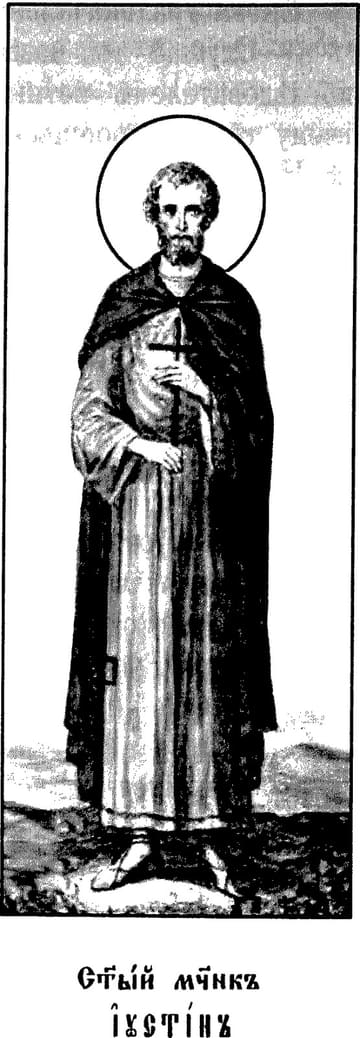
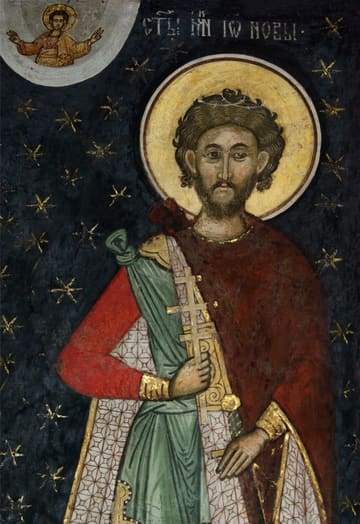
Saints around June 2
Get the full library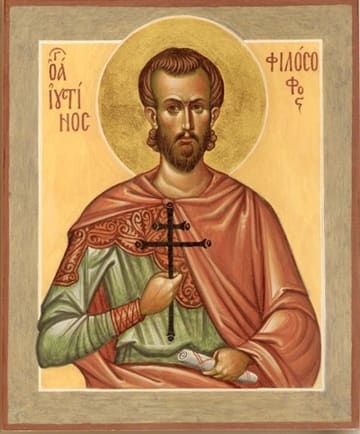
770+ saints, in your pocket
Their Lives, sayings and prayers, A to Z and by feast, with search. The Church calendar, the holy icons, and the saying of the day on your Home Screen. All in Axios! for iPhone, iPad and Android.