
September 16
Saints of the day
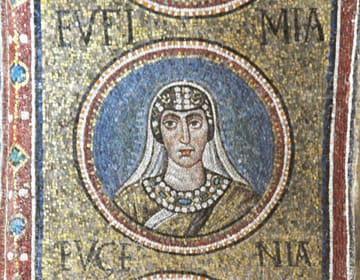
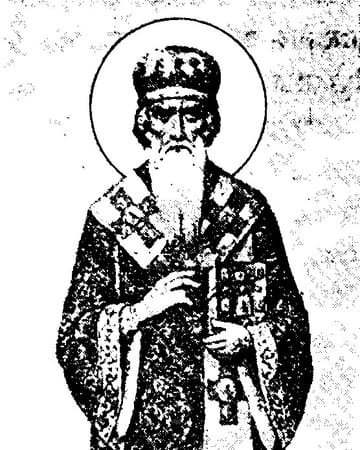

Hymn of Praise
All-blessed Euphemia,
Holy virgin,
She gave herself as a sacrifice to God,
A lamb of God;
She neither gasped nor cried out
Nor did she grieve,
But on her torments
She warmly gave thanks to God.
Angels appeared to her
In the flames,
And with heavenly cool dew
They quenched the fire;
O such is our faith,
Unconquerable!
O such is love for God,
Unquenchable!
O Euphemia, wise virgin,
Virgin of Christ,
For thy sufferings, Christ the Lord
Bestowed kingdoms upon thee.
Thou hast access to the Mother of God
And to Christ God,
And thy holy prayers
Have power to help.
O pray, Euphemia,
For all sinners,
Convert them, O saint,
Into penitents.
Reflection
Calamities often befall us unexpectedly, and we ask ourselves in vain: why? Only the Church of Christ knows how to explain the cause of every calamity. All calamities the Church classifies principally into two groups: those which befall the sinner on account of old unrepented sins, and those which assail the righteous and serve, in the words of Chrysostom, "as a cause for gaining crowns, as in the case of Lazarus and Job." Empress Eudocia secretly sympathized with the heresy of Eutyches, following in this the advice of the cunning eunuch Chrysaphius. But a calamity befell her unexpectedly. One day her husband, Emperor Theodosius, brought the empress an apple of extraordinary size. The empress sent the apple to the ailing senator Paulinus; and he, out of love for the emperor, sent that very same apple to Emperor Theodosius. This gave the emperor grounds for suspecting an illicit relationship between his wife and the senator. Then the emperor asked the empress where that apple was. The empress lied and said: "I ate it!" This further increased the emperor's suspicion, and he banished Eudocia to Palestine. In time, Eudocia was healed of heresy and, on the counsel of the great spiritual fathers of Palestine, returned completely to Orthodoxy. The empress's misfortune did not come because of any illicit relationship with Paulinus (in that the empress was completely innocent) but because of her heretical disposition. Another and different case: Emperor Marcian, while still a general, was traveling near Philippopolis and saw the corpse of a murdered man on the road, and out of pure compassion he dismounted from his horse and began to bury the corpse. Just then someone came by and saw him, and reported the general to the court as a murderer. Marcian would have been sentenced to death had not the true murderer been soon revealed through a divine disclosure. This misfortune belongs to that second group: "the gaining of crowns." General Marcian was soon after elected emperor.
Contemplation
Contemplate the wondrous judgments of God concerning men (I Kings 14), namely:
- How the son of Jeroboam fell ill and died as punishment for his apostate father and for his own salvation;
- How the rest of Jeroboam's household perished and were devoured by dogs in the city or by birds in the field.
Homily
On the Lord who has authority
I have power to lay it down, and I have power to take it again
John 10:18
The divine power of our Lord Jesus Christ has been shown also in His complete authority over Himself. If divine power could be separated from divine love, then it could be said of Christ: He could have become incarnate, and He could have chosen not to become incarnate; likewise: He could have died, and He could have chosen not to die. But He became incarnate out of His divine love for mankind; and by that same inexpressible love He gave Himself over to death, as the Good Shepherd for His flock. Man, who kills himself, has no authority over his own soul, and does not kill himself by his own authority but by the authority of sin, or of the devil, or by the force of some terrible circumstances. Likewise a man whom others kill has no authority over his own soul, nor can he say of his soul before his murderers: I have power to lay it down, for he must lay it down even against his will. Only the Lord Jesus could say this in the presence of the Jews, His murderers: I have power to lay it down. Having that authority, He could by a single miracle, easy for Himself, have caused all the Jews to perish before they crucified Him. But He looked ahead and saw the salvific fruits of His death, and therefore He willingly gave Himself up to be killed. And I have power to take it again. By these words He foretells His resurrection. By His divine authority, therefore, the Lord both died and rose again.
O Almighty and man-loving Lord, how wondrously Thou hast arranged the salvation of men by Thy divine power and love. Help us, O help us only to appropriate that salvation. To Thee be glory and praise forever. Amen.
From the Prologue from Ochrid, translated by Marcian Sakarya, OCHRID.COM. CC BY-SA 4.0.
The Prologue, every day
Axios! brings the day’s Hymn of Praise, Reflection, Contemplation and Homily to Today, with the saints, the feasts and the saying of the day, on iPhone, iPad and Android.