
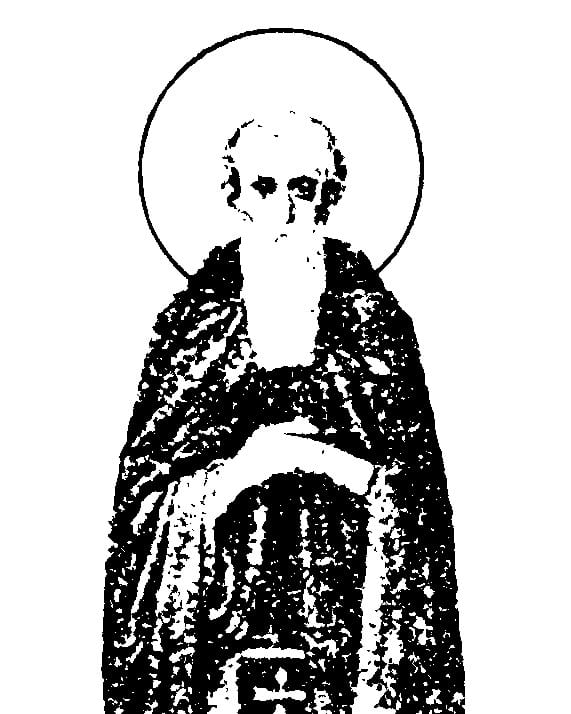
St. Benedict of Nursia
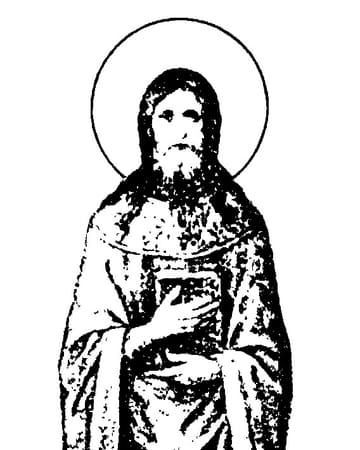
Benedict was born in the region of Nursia in Italy in the year 480, of wealthy and distinguished parents. He did not remain long at school, for he himself saw that through bookish learning he might lose "the great understanding of his soul." And he left school "an unlearned sage and a knowing ignoramus." He fled to a certain monastery where the monk Roman tonsured him, after which he withdrew to a steep mountain where he remained in a cave for more than three years in great labor over his soul. Roman brought him bread and lowered it down the sheer cliff face on a rope to before the cave. When he became known throughout the region, he withdrew from that cave in order to avoid human glory. He was very severe with himself. Once when an unclean spirit of bodily lust seized him, he stripped himself naked and rolled in nettles and thorns until he had driven away from himself every thought of a woman. God endowed him with many spiritual gifts: he saw into hidden things, healed the sick, cast out evil spirits, raised the dead, and appeared to others both in waking and at a distance in dreams. Once he perceived that a cup of wine had been served to him with poison in it. He made the sign of the cross over the cup, and the cup shattered. He founded twelve monasteries, each with twelve monks at the outset. Afterward a particular order of Benedictines was established, which exists to this day in the Roman Catholic Church. Six days before his death he ordered that his grave, prepared in advance, be opened, for the saint had foreseen that his end was near. He gathered all the monks, counseled them, and gave his spirit to the Lord, Whom he had faithfully served in poverty and purity. His own sister, Scholastica, lived in a women's monastery, and following her brother's example she also struggled greatly in the ascetic life and attained great spiritual perfection. When Saint Benedict gave up his soul, two monks, one on the road and another in some distant cell at prayer, simultaneously beheld the same vision: a path from earth to heaven covered with costly fabrics and lit on both sides by rows of people; at the summit of that path stood a man of indescribable beauty and light, who told them that that path had been prepared for Benedict, the beloved of God. Through that vision those two brethren learned that their good abbot had departed from this world. He reposed peacefully in the year 543 and departed to the eternal Kingdom of Christ the King.
From the Prologue from Ochrid, translated by Marcian Sakarya, OCHRID.COM. CC BY-SA 4.0.
Sources
- The Prologue from Ochrid, March 14, translated by Marcian Sakarya, OCHRID.COM (https://ochrid.com), CC BY-SA 4.0
No recorded sayings. Read the Life to meet this saint.
Troparion · Tone 8
In you, O Father, God's image was preserved to perfection; for you took the cross upon yourself and followed Christ, and in your conduct you taught that one should think little of the flesh, for it is fleeting, and take care of the soul, a thing that does not die. And so, O venerable Benedict, your spirit exults together with the angels.
Translated for Axios! from the Greek General Menaion (the common troparion of a venerable father)
Kontakion · Tone 2
Armed in godly fashion with the soul's purity and wielding ceaseless prayer as a lance, you mightily cut through the battle lines of the demons, O Benedict, wonderworker, our father, interceding without ceasing for us all.
Translated for Axios! from the Greek General Menaion (the common kontakion of a venerable father)
Saints around March 14
Get the full library
770+ saints, in your pocket
Their Lives, sayings and prayers, A to Z and by feast, with search. The Church calendar, the holy icons, and the saying of the day on your Home Screen. All in Axios! for iPhone, iPad and Android.