
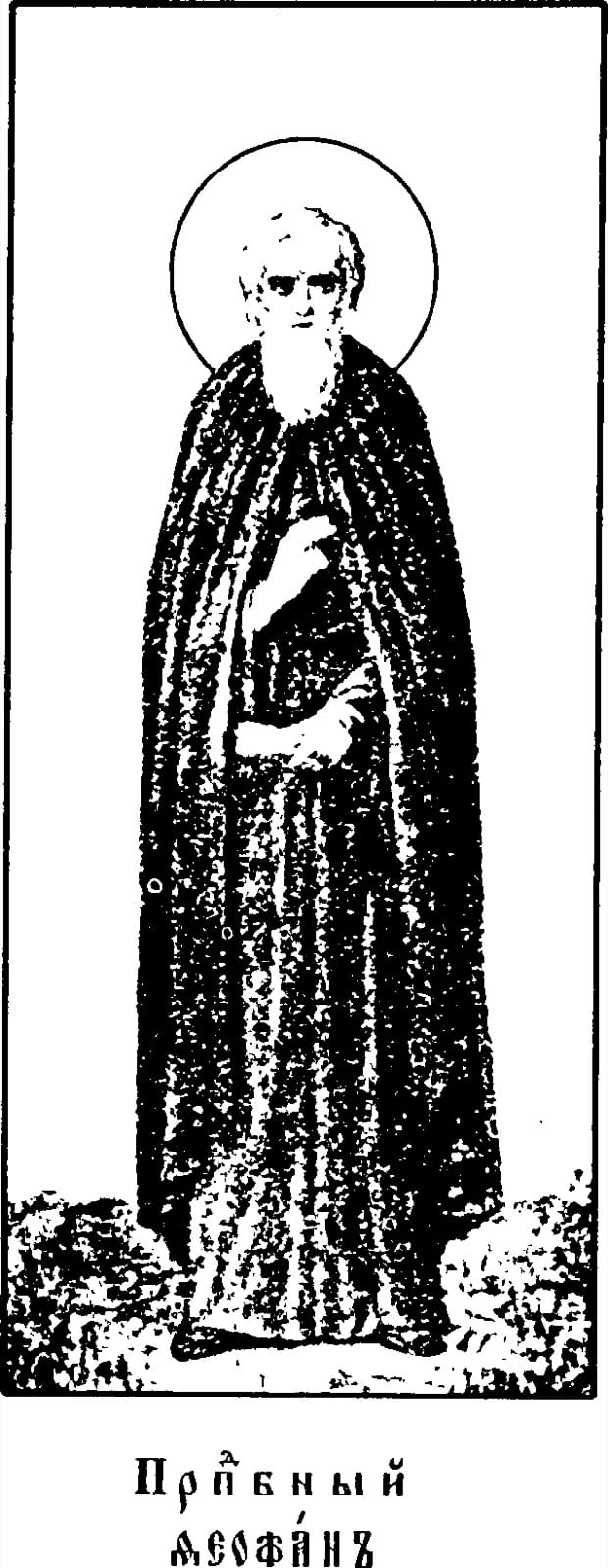
St. Theophanes the Confessor
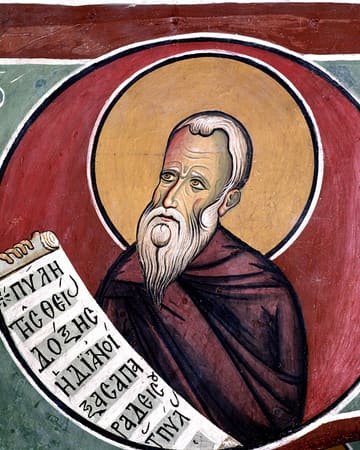
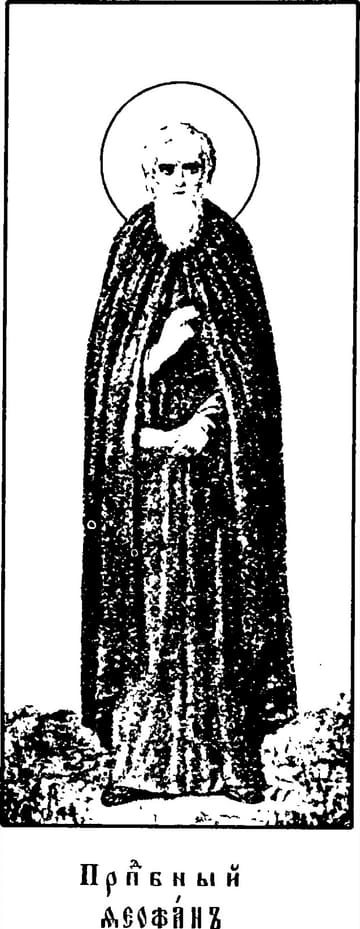
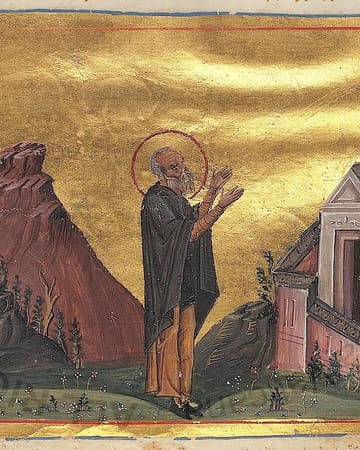
St. Theophanes the Confessor, abbot of Megas Agros on the Sea of Marmara, is honored as a confessor of the holy icons and remembered as the author of the Chronographia, one of the most important Byzantine chronicles.
Born to wealth near the imperial court, he chose poverty and prayer, and in old age he endured prison and exile rather than abandon the faith of the Seventh Ecumenical Council.
He was born at Sigriane around 760 to Isaac, governor of the Aegean islands and a kinsman of the Isaurian emperors, and to Theodote. His father died when he was three, and he grew up under the protection of the court. Married young, he persuaded his bride that they should live as brother and sister, and when her father died they agreed to part and enter monasteries. He was tonsured on Mount Sigriane near Cyzicus, founded a monastery on his family estate and later withdrew to the island of Kalonymos, where he copied books by hand.
Shortly before 787 he returned to Sigriane and founded the monastery of Megas Agros, the Great Field, which he governed as abbot and where he kept a scriptorium. According to his Lives, he came to the Seventh Ecumenical Council at Nicaea in 787 riding a poor donkey and dressed in patched clothes. His Lives speak of his simplicity, his love of labor and his patience in a long and painful illness. At the request of his friend George Synkellos, who died before finishing his own chronicle, Theophanes continued it from 284 to 813, setting down the events of each year; his work remains a chief source for the history of Byzantium and of the iconoclast struggle.
When Emperor Leo V revived iconoclasm in 815, he summoned the old and sick abbot to Constantinople and tried to win him over with promises and threats. Theophanes refused. He was kept two years in prison and scourged, and was then exiled to the island of Samothrace, where he reposed a few weeks later, on March 12, 817 or 818.
After Leo's death his disciples restored their burned monastery, and in 822 his relics were brought back to Megas Agros, where many miracles were reported. St. Methodius, the future patriarch, wrote his Life.
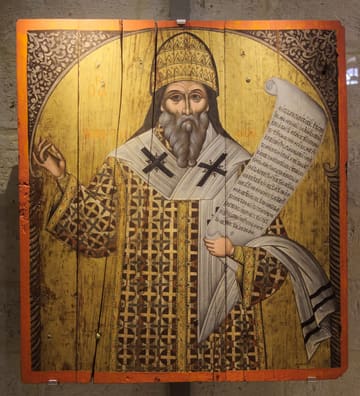
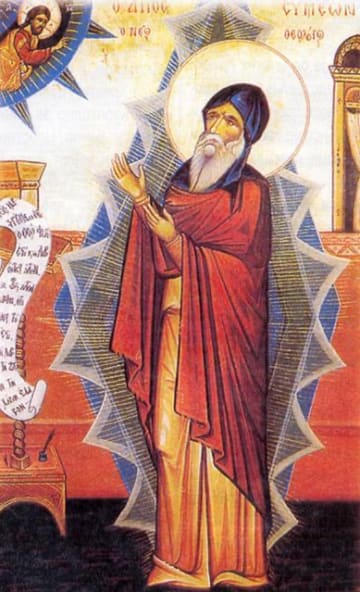
The Church keeps his feast on March 12, the same day as St. Gregory the Dialogist and St. Symeon the New Theologian.
Sources
- St. Theophanes, Chronographia, preface (ed. C. de Boor, 1883)
- Greek Menaion and Synaxarion, March 12 (Venice, 1863)
- St. Dimitri of Rostov, Lives of the Saints, March 12
- Pravoslavnaya Entsiklopediya, 'Olimp' (the monasteries of Sigriane and Megas Agros)
- Catholic Encyclopedia (1913), 'St. Theophanes'
- OCA, Lives of the Saints: Venerable Theophanes the Confessor of Sigriane
Knowing our own lack of learning and the poverty of our speech, we declined to do it, since the undertaking was beyond us. But he begged us earnestly not to shrink from it and leave the work unfinished, and he compelled us to take it up.
Chronographia, preface (translated for Axios! from the Greek)
We have composed nothing of our own, but have gathered from the ancient historians and writers and set the events of each year in their proper place, arranging them without confusion, so that readers may know in what year of each emperor each deed was done.
Chronographia, preface (translated for Axios! from the Greek)
One who reads the deeds of the ancients reaps, I think, no small benefit.
Chronographia, preface (translated for Axios! from the Greek)
If anyone finds anything profitable in this labor of ours, let him give fitting thanks to God and pray for us, the unlearned and sinful, for the Lord's sake... For what is done according to one's strength is dear to God.
Chronographia, preface (translated for Axios! from the Greek)
Troparion · Tone 8
In you, O Father, God's image was preserved to perfection; for you took the cross upon yourself and followed Christ, and in your conduct you taught that one should think little of the flesh, for it is fleeting, and take care of the soul, a thing that does not die. And so, O venerable Theophanes, your spirit exults together with the angels.
Translated for Axios! from the Greek General Menaion (the common troparion of a venerable father)
Kontakion · Tone 2
Having received the divine revelation from on high, you went out in haste from the midst of the world's tumult, and living as a monk, O venerable one, you received the working of miracles and the gift of prophecy, deprived of wife and wealth.
Translated for Axios! from the Greek Menaion, March 12
Saints around March 12
Get the full library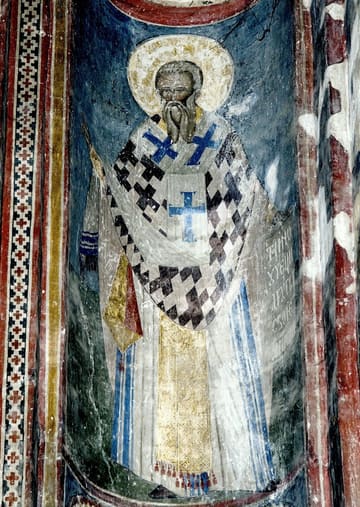
770+ saints, in your pocket
Their Lives, sayings and prayers, A to Z and by feast, with search. The Church calendar, the holy icons, and the saying of the day on your Home Screen. All in Axios! for iPhone, iPad and Android.