
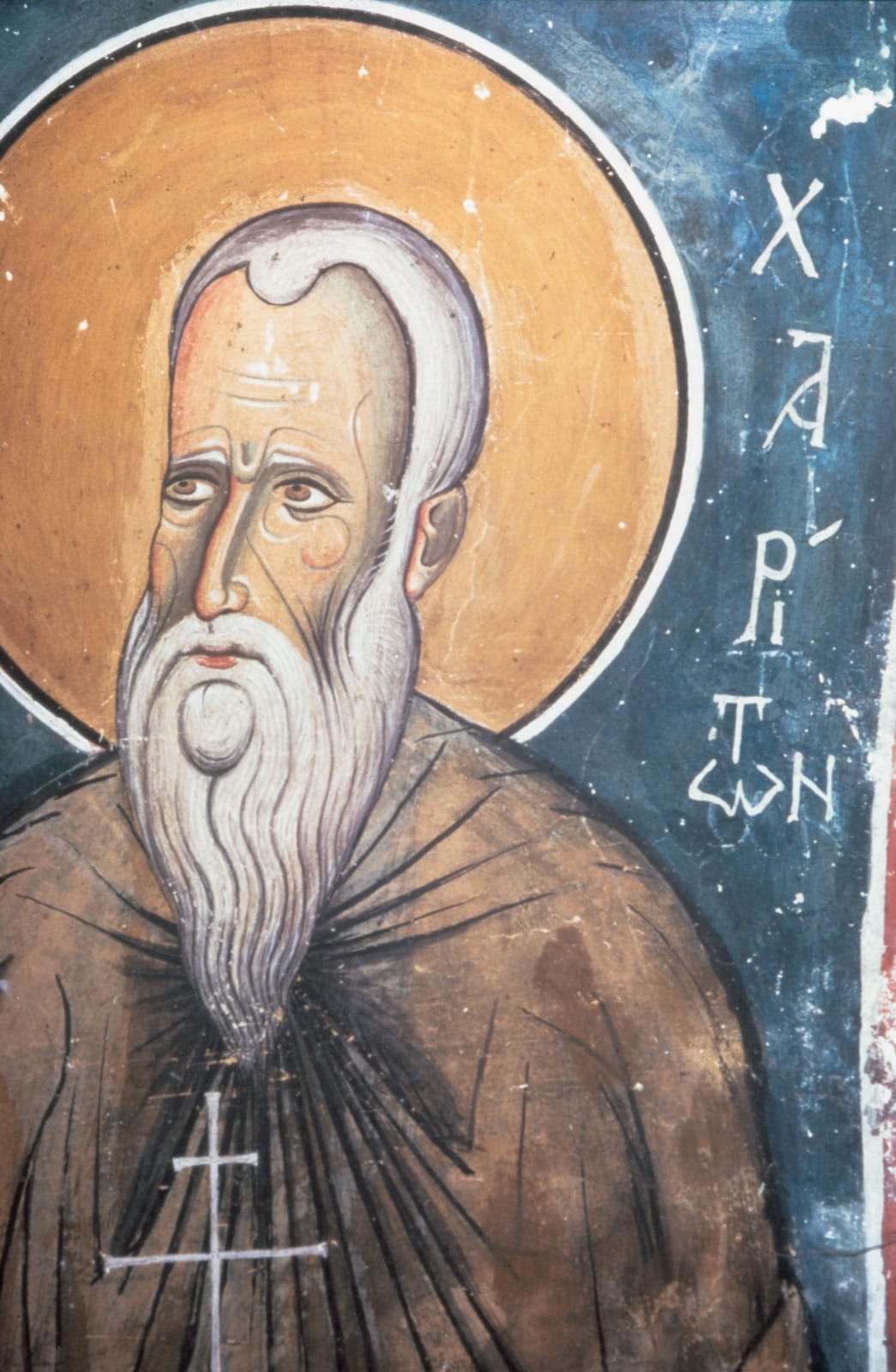
St. Chariton the Confessor
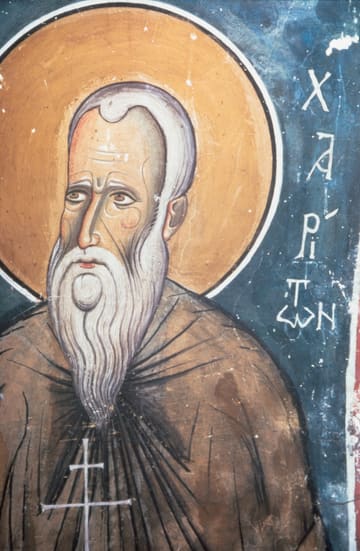
St. Chariton the Confessor suffered for Christ in a persecution before the peace of Constantine and then became the father of monastic life in the Judean desert.
The three lavras he founded, Pharan, Douka and Souka, gave Palestine the pattern of the lavra, a community of hermits living in separate cells around a church, which St. Euthymius the Great and St. Sabbas the Sanctified later spread through the wilderness.
He came from Iconium in Lycaonia, the city of St. Thekla, whose disciple he called himself. According to his Life, under Emperor Aurelian (270-275) he was brought before the governor, refused to sacrifice to the idols, and was flogged and tortured, declaring that he would rather die ten thousand times for his Savior than deny Him. He survived and was set free when the persecution ended after the emperor's death, and so the Church honors him as a confessor.
He then went on pilgrimage to Jerusalem. On the way, according to his Life, robbers seized him and carried him to their cave in the valley of Pharan, northeast of the city, meaning to kill him; but they drank wine that a snake had poisoned and died, and Chariton gave their plunder to the poor and made their den a church. Disciples gathered around him, and the Lavra of Pharan, the first in Palestine, grew up there; St. Euthymius would later begin his own desert life in it. Seeking solitude, Chariton founded the Lavra of Douka near Jericho and the Lavra of Souka near Tekoa, later called the Old Lavra, and in old age lived in a cliff cave reached only by a ladder, where, the Life says, water sprang from the rock at his prayer.
Knowing that his end was near, he called the monks of all three lavras to Pharan and gave them his last counsels: to care for their souls while there is time, to judge no one, to take up fasting, prayer, tears, the remembrance of death and above all humility as their weapons, and to forgive one another. He reposed in great old age, around 350, and was buried in the cave church at Pharan. Tradition also credits him with the service of monastic tonsure. His feast is September 28 in the Greek and Slavic Menaia.
Sources
- Life of St. Chariton (Greek, 6th century), in the version of Symeon Metaphrastes (PG 115, 899-918)
- Cyril of Scythopolis, Life of Euthymius (Euthymius at the Lavra of Pharan)
- Greek Menaion and Synaxarion, September 28
- OCA, Lives of the Saints: Venerable Chariton the Confessor, Abbot of Palestine
No recorded sayings. Read the Life to meet this saint.
Troparion · Tone 8
By the outpouring of your tears you tilled the barren ground of the desert, and with deep-drawn sighs you made your labors yield fruit a hundredfold, and became a light-giver to the world, gleaming with wonders, O Chariton, our venerable father. Intercede with Christ our God that our souls may be saved.
Translated for Axios! from the Greek Menaion, September 28
Kontakion · Tone 2
The ascetic of self-control and the athlete of piety let all of us faithful crown today with hymns and acclaim with praises: Chariton, shepherd and teacher, and martyr of Christ, named for grace, the luminary of all the world.
Translated for Axios! from the Greek Menaion, September 28
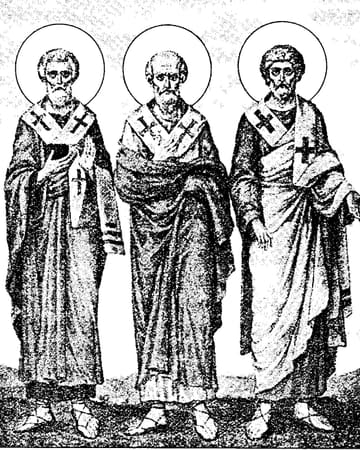
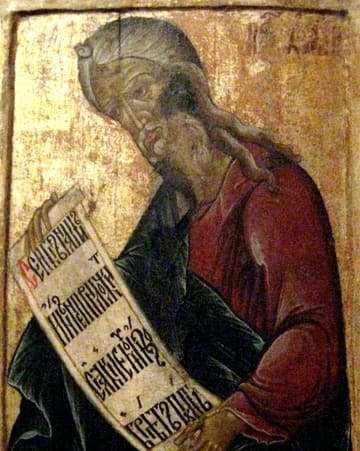
Saints around September 28
Get the full library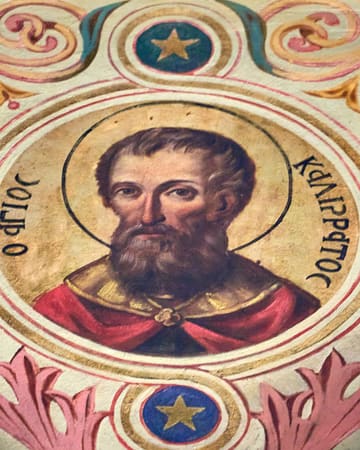
770+ saints, in your pocket
Their Lives, sayings and prayers, A to Z and by feast, with search. The Church calendar, the holy icons, and the saying of the day on your Home Screen. All in Axios! for iPhone, iPad and Android.