
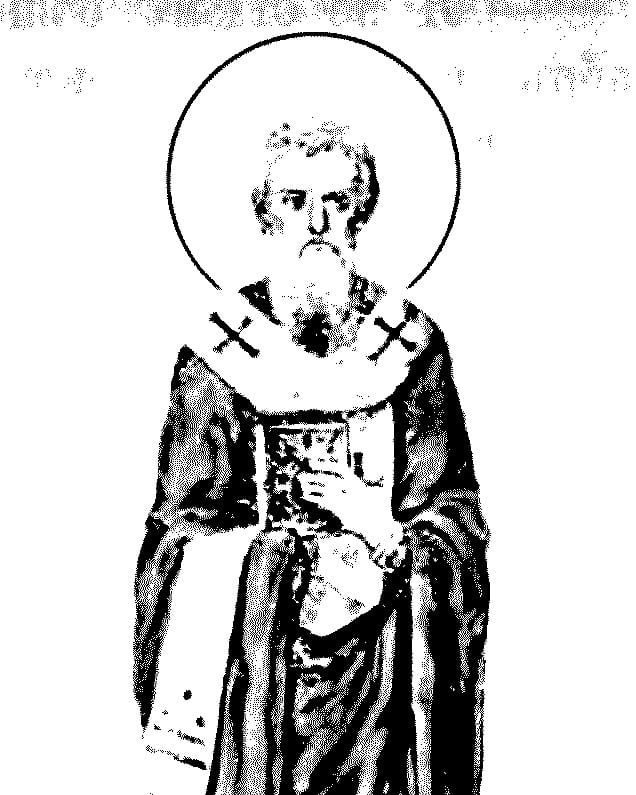
St. Eusebius of Samosata
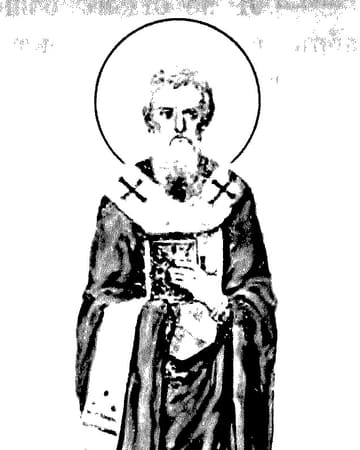
A great denouncer of Arianism. When the Antiochian throne became vacant, through his efforts Meletius was elected patriarch, Meletius, a great luminary of the Church, who after his death was deemed worthy of great praise from Saint John Chrysostom. But the Arians quickly exiled this Meletius from Antioch. When the wicked son of Constantine, Constantius, died, one worse than he came to the throne: Julian the Apostate. During Julian's persecution of Christians, Saint Eusebius removed his priestly vestments and dressed in military garb, and under the guise of a soldier he visited the persecuted churches in Syria, Phoenicia, and Palestine, everywhere strengthening the Orthodox faith and appointing needed priests, deacons, and other clergy, and in some places even bishops. After the notorious death of Julian, Saint Eusebius counseled Meletius to convene a council in Antioch in the year 361, at which twenty-seven hierarchs were present, and at which the Arian heresy was once more condemned and the Orthodox faith proclaimed as it had been expressed at the First Ecumenical Council. Besides Meletius and Eusebius, Saint Pelagius of Laodicea was especially notable at this council, a renowned virgin and ascetic. That council was held in the time of the pious Emperor Jovian. But this emperor soon died, and the wicked Valens came to the throne, with whom came again the persecution of Orthodoxy. Saint Meletius was banished to Armenia, Eusebius to Thrace, and Pelagius to Arabia. After Valens, Emperor Gratian came to the throne, who gave freedom to the Church and restored the imprisoned hierarchs to their places. Thus Meletius returned to Antioch, Eusebius to Samosata, and Pelagius to Laodicea. At that time many dioceses and parishes were widowed, and Eusebius zealously hastened to find and give the people lawful pastors. But when he came with the elected bishop Marinus to the city of Dolichina in order to enthrone the new hierarch and to denounce the Arian heresy, which was strong in that city, a fanatical heretic threw a roof tile at Eusebius's head and gravely wounded him, from which wound this great champion of Orthodoxy, saint and martyr, died, to live eternally in the blessedness of Paradise. He suffered in the year 379.
From the Prologue from Ochrid, translated by Marcian Sakarya, OCHRID.COM. CC BY-SA 4.0.
Sources
- The Prologue from Ochrid, June 22, translated by Marcian Sakarya, OCHRID.COM (https://ochrid.com), CC BY-SA 4.0
No recorded sayings. Read the Life to meet this saint.
Troparion · Tone 4
Partaker of the apostles' ways and successor to their thrones, you found in action, O God-inspired one, the way up to contemplation. Therefore you rightly handled the word of truth and contended also for the faith to the point of bloodshed, O Hieromartyr Eusebius. Intercede with Christ our God that our souls may be saved.
Translated for Axios! from the Greek General Menaion (the common troparion of a hieromartyr)
Kontakion · Tone 4
Having shone in piety among the priests and run the road of martyrdom to its end, you quenched the worship of idols, becoming the champion of your flock, O godly-minded one. And so the flock honors you and cries to you in mystery: From dangers deliver me at all times by your intercessions, O our father Eusebius.
Translated for Axios! from the Greek General Menaion (the common kontakion of a hieromartyr)
Saints around June 22
Get the full library
770+ saints, in your pocket
Their Lives, sayings and prayers, A to Z and by feast, with search. The Church calendar, the holy icons, and the saying of the day on your Home Screen. All in Axios! for iPhone, iPad and Android.