
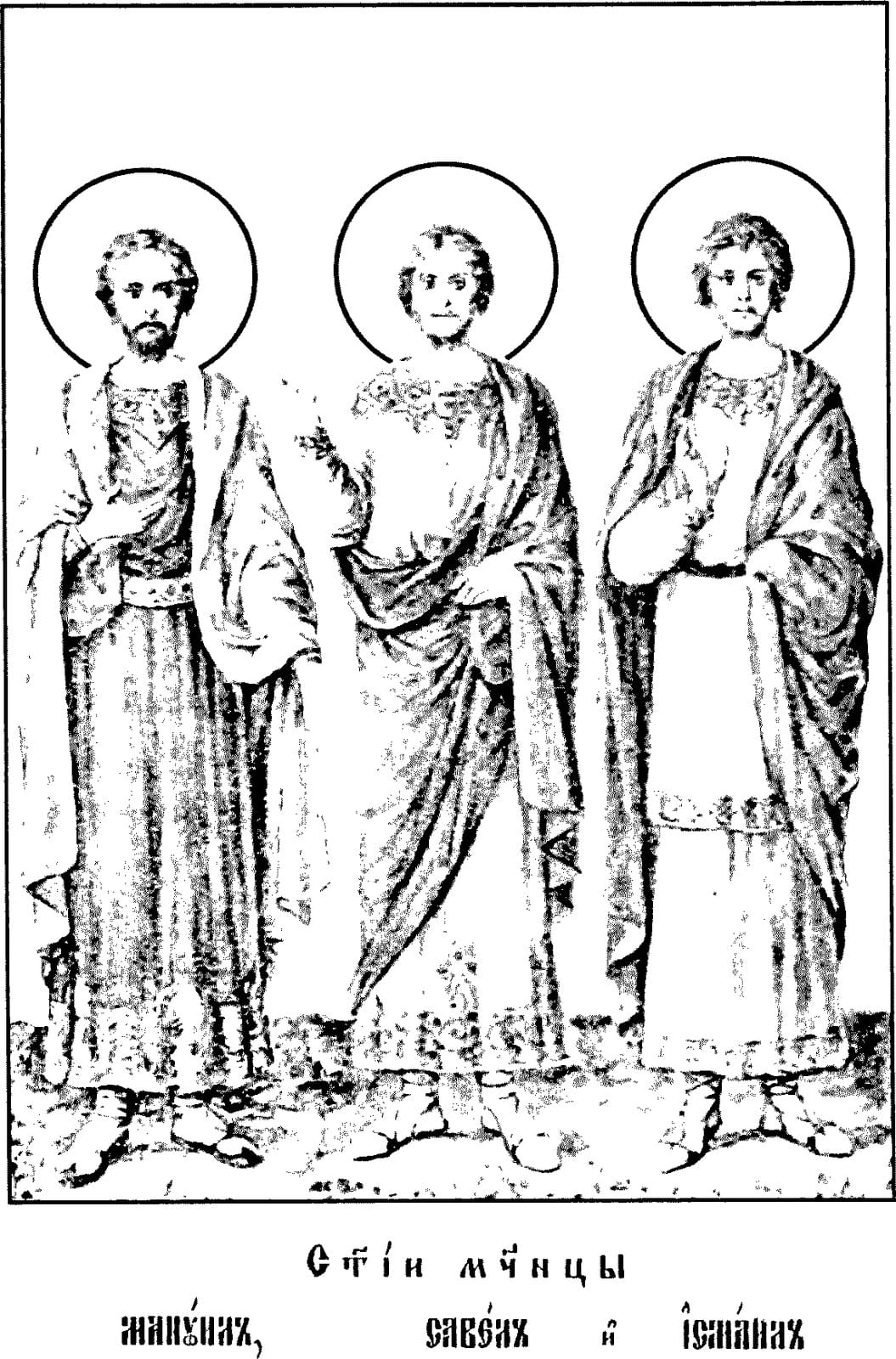
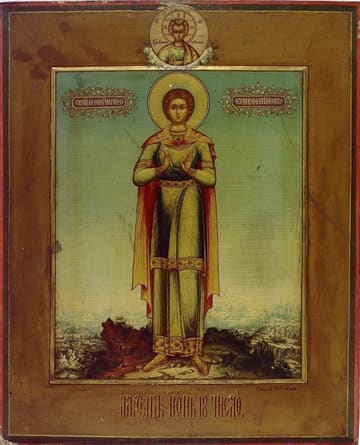
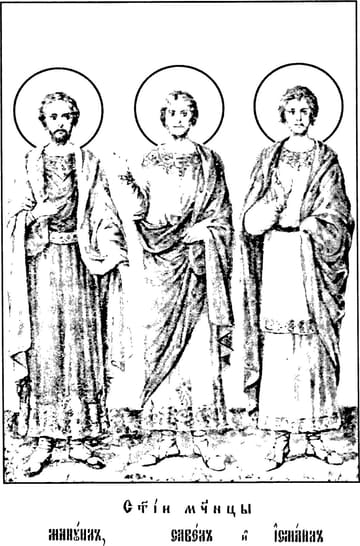
St. Manuel, St. Sabel and St. Ishmael
Brothers by birth, Persians, of a pagan father and a Christian mother. Raised in the Christian spirit and baptized. As Christians they held high offices under King Alamundar. They were sent to Emperor Julian the Apostate to conduct negotiations and establish peace between the Persian and Greco-Roman empires. The Apostate emperor organized a certain feast for the idols in Chalcedon. At that feast the emperor with his nobles offered sacrifices to the idols. The Persian envoys absented themselves from that feast. The emperor summoned them and ordered them to take part in the feast and offer sacrifices to the gods. Then they declared that they were foreign subjects, that they had come as envoys of the Persian king for the purpose of establishing peace between the two empires and for nothing else; that they were Christians and considered it unworthy to bow before dead idols and offer sacrifices to them. The emperor grew furious and cast them into prison. The next day he brought them out again and began to debate with them about the faith, but the holy brothers were unconquerable and unshakable. Then they were tied naked to trees and beaten and scraped with iron brushes. Throughout the tortures they prayed to God with gratitude: "O sweet Jesus, these torments are sweet to us because of Thy love!" An angel of God appeared to them, consoled them, and took away all their pain. Contrary to all international norms, the wicked Emperor Julian finally pronounced the sentence that these three brothers be beheaded with the sword. When they were beheaded, there was a great earthquake; the earth split open and received the bodies of the holy martyrs into itself, so that the pagans might not burn them by order of the emperor. The bodies of the martyrs were later cast up by the earth, so that Christians could find them and honorably bury them. When the Persian king heard how inhumanly Julian had put his delegates to death, he prepared an army against him. And Julian marched against the Persian kingdom, confident of his victory. But he was utterly routed, and he himself perished in shame, to the joy and laughter of the whole world.
From the Prologue from Ochrid, translated by Marcian Sakarya, OCHRID.COM. CC BY-SA 4.0.
Sources
- The Prologue from Ochrid, June 17, translated by Marcian Sakarya, OCHRID.COM (https://ochrid.com), CC BY-SA 4.0
No recorded sayings. Read the Life to meet this saint.
Troparion · Tone 1
Be moved, O Lord, by the torments that the saints suffered for You, and heal us of all our afflictions, O Lover of mankind, we pray.
Translated for Axios! from the Greek General Menaion (the common troparion of several martyrs)
Kontakion · Tone 2
Revealed as radiant lamps, O divine martyrs, you light up all creation with the brightness of miracles, loosing sicknesses and always chasing away the deep darkness, as you pray to Christ God without ceasing for us all.
Translated for Axios! from the Church Slavonic General Menaion (the common kontakion of several martyrs)
Saints around June 17
Get the full library
770+ saints, in your pocket
Their Lives, sayings and prayers, A to Z and by feast, with search. The Church calendar, the holy icons, and the saying of the day on your Home Screen. All in Axios! for iPhone, iPad and Android.