
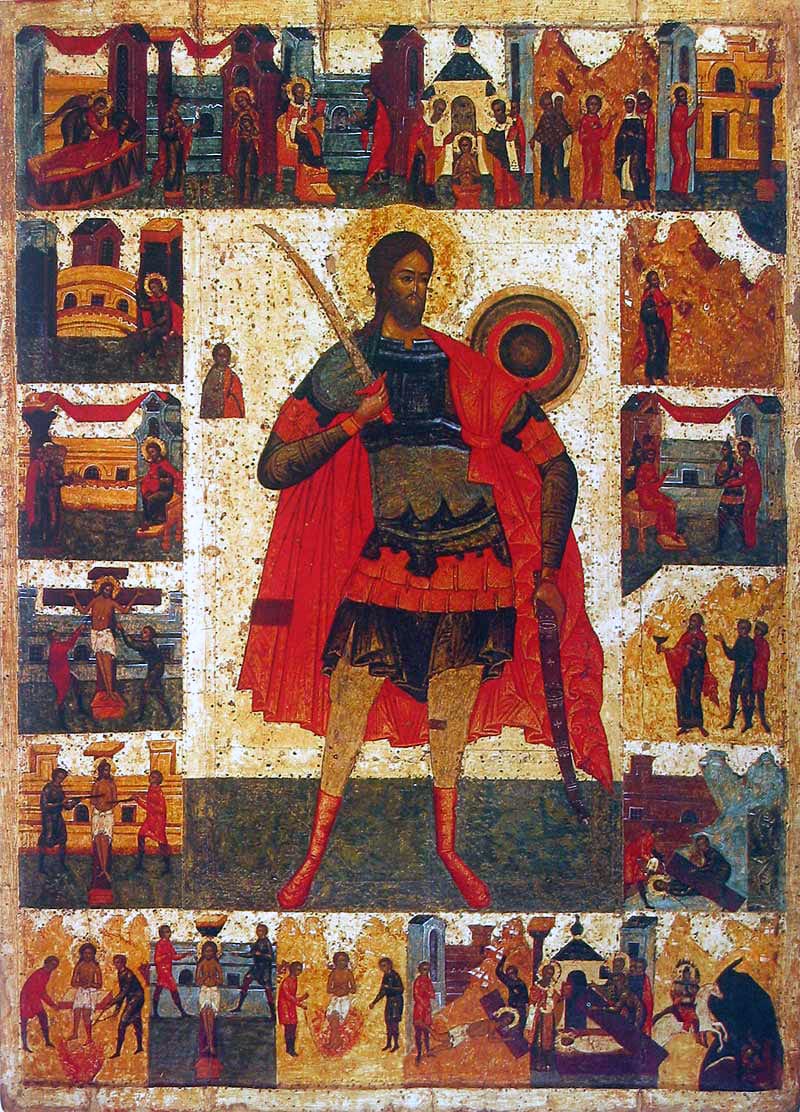
St. Nicetas the Great Martyr
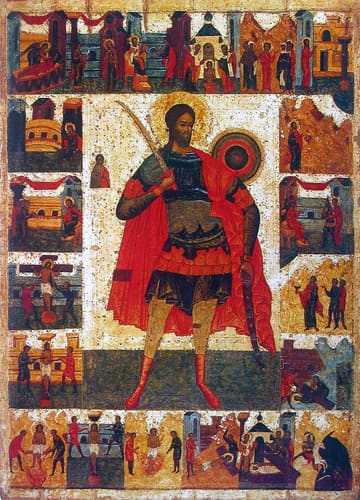
St. Nicetas the Goth is honored as a Great Martyr: a Christian of the Gothic people beyond the Danube who was burned for his faith in the persecution of the pagan chieftain Athanaric, by tradition about the year 372.
He is among the first fruits of the Gospel among the Germanic peoples, and his memory on September 15 falls in the afterfeast of the Exaltation of the Cross.
The setting of his life is well attested. The faith had reached the Goths north of the Danube early in the fourth century: their bishop Theophilus signed the Creed of the First Ecumenical Council at Nicaea in 325, and his disciple Ulfilas later gave the Goths an alphabet and the Scriptures in their own tongue, though he afterward accepted the Arian creed of 360. The Church historian Socrates relates that when the Goths split into two camps, Fritigern, with the help of Emperor Valens, defeated Athanaric, and many of Fritigern's people received the Christian faith.
Athanaric, holding it an insult to the gods of his fathers, then turned on the Christians, and many died as martyrs. St. Basil the Great wrote with wonder of the Gothic martyrs of those years.
His Passion, written at Mopsuestia in Cilicia toward the end of the fifth century, says little about Nicetas himself. Tradition holds that he was a Goth of noble birth, taught the faith by Bishop Theophilus, and that he won many of his countrymen for Christ. When Athanaric regained power, Nicetas would not keep silent; he was seized, tortured and thrown into the fire, together with many other Gothic Christians.
By night his friend Marianus, a Christian of Mopsuestia, searched for his remains, and a star, the Passion says, led him to the body, which the flames had not touched. Marianus carried it to Mopsuestia, where healings took place at the tomb and a church was built in his honor; there his feast was kept each year on September 15.
Part of his relics later came to Constantinople, where Russian pilgrims from about 1200 onward venerated them in the church of St. Romanos. A portion is said to have been given to the Visoki Dečani Monastery in Serbia, and relics honored as his rest in a chapel of the church of San Nicolò dei Mendicoli in Venice. Among the Slavs his story was blended with that of a legendary Nicetas of Nicomedia, and so many Russian icons show him beating a demon with a chain.
Sources
- Socrates, Church History II.41 and IV.33
- St. Basil the Great, Letters 164-165
- Passion of St. Nicetas (BHG 1339), ed. H. Delehaye (1912)
- Greek Menaion and Synaxarion, September 15
- Pravoslavnaya Entsiklopediya, 'Nikita'
- OCA, Lives of the Saints: Greatmartyr Niketas the Goth
No recorded sayings. Read the Life to meet this saint.
Troparion · Tone 4
Your martyr, O Lord, by his contest won from You, our God, the crown of incorruption; for, holding Your strength, he threw the tyrants down and shattered too the powerless audacity of demons. At his entreaties, O Christ God, save our souls.
Translated for Axios! from the Greek Menaion, September 15
Kontakion · Tone 2
By your steadfast stand you cut down the dominion of error, and by your contest you won the crown of victory; O glorious Nicetas, true to your name, you share the joy of the angels, interceding with them before Christ God without ceasing for us all.
Translated for Axios! from the Greek Menaion, September 15
Saints around September 15
Get the full library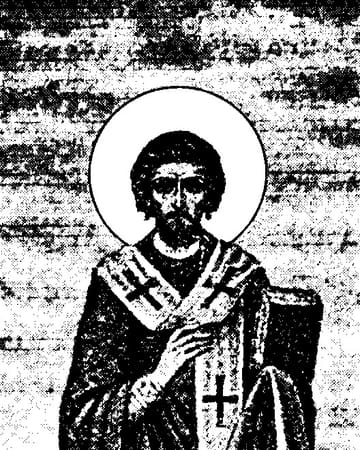
770+ saints, in your pocket
Their Lives, sayings and prayers, A to Z and by feast, with search. The Church calendar, the holy icons, and the saying of the day on your Home Screen. All in Axios! for iPhone, iPad and Android.