
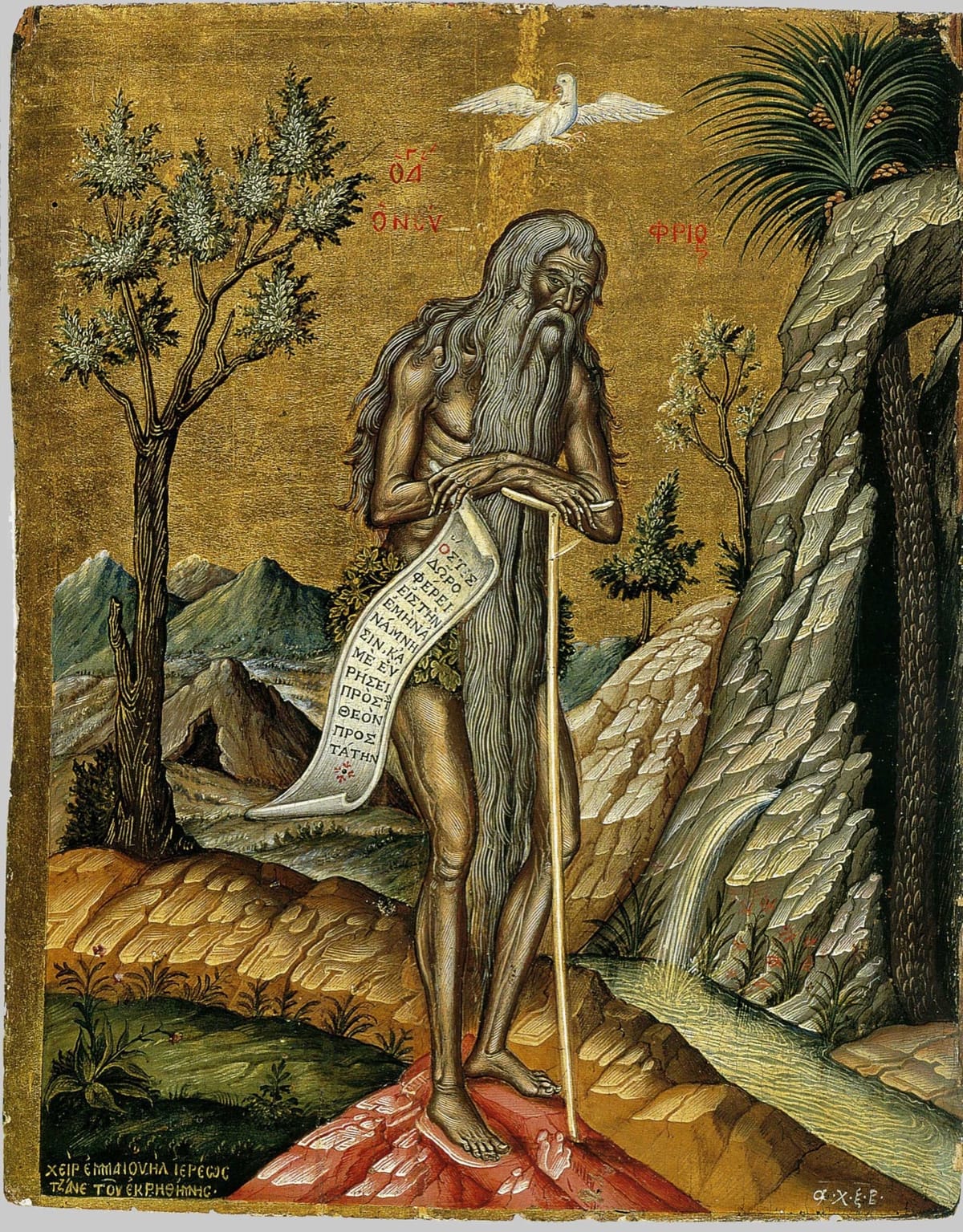
St. Onuphrius the Great
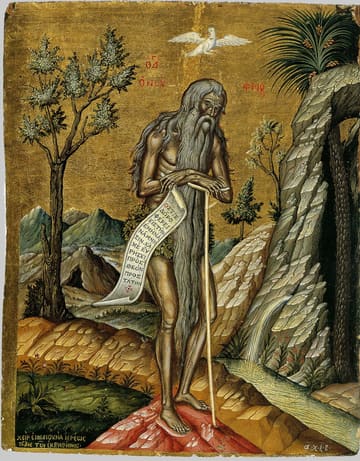
St. Onuphrius the Great is one of the best loved of the desert hermits: a monk of Egypt who lived some sixty years alone in the far desert, clothed only in his long hair and a girdle of leaves.
He is known through the account of Abba Paphnutius, a monk who went deep into the wilderness to see how God's hidden servants lived, and who met Onuphrius at the end of his life and buried him.
Paphnutius had walked for many days into the inner desert when he saw a figure covered with hair coming toward him, and he fled up a rock in fear until the old man called him down: he too, he said, was a man of the mountain, living in the desert because of his sins. He gave his name as Onuphrius and said that in sixty years he had seen no one.
According to the account, he had been raised in a monastery near Hermopolis in the Thebaid. Hearing the elders speak of the prophet Elijah and of St. John the Forerunner, who had lived in the wilderness, he longed to follow them, and he left by night, guided, he said, by his guardian angel. An old hermit taught him the ways of the desert for a time, then led him to a hut four days farther in and left him there. His first years brought hunger and thirst, scorching days and bitter nights, but God cared for him: a palm tree gave him dates through the year, the desert herbs became sweet to his taste, and an angel brought him Holy Communion on Saturdays and Sundays, as it did for the other hidden hermits.
The two spent the night in prayer. In the morning Paphnutius saw that the old man's face had changed and seemed to shine like fire. Onuphrius told him that the Lord had sent him to bury his body, asked that his memory be told to the brethren, and blessed him.
Then he prayed with tears, lay down on the ground and gave up his spirit. Paphnutius wrapped him in half of his own cloak and laid him in a cleft of the rock, and soon afterward the palm tree fell, a sign that he was not to stay. He returned to Egypt, and the brethren wrote his story down.
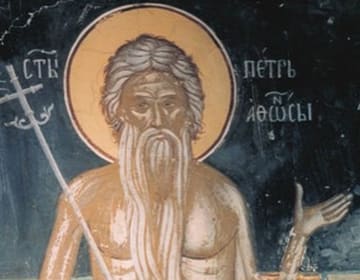
Onuphrius reposed around the end of the fourth century. His account survives in Coptic, Greek and other languages, with differing details, and it made him one of the most widely venerated and painted of the desert saints. The Greek and Slavic Menaia keep his feast on June 12, which the Greek Church shares with St. Peter the Athonite.
Sources
- Paphnutius, Life of Apa Onnophrios the Anchorite (Coptic), ed. and trans. E. A. Wallis Budge, Coptic Martyrdoms in the Dialect of Upper Egypt (1914)
- Greek Menaion and Synaxarion, June 12
- Great Synaxaristes, June 12: St. Onuphrius (synaxarion.gr)
- OCA, Lives of the Saints: Venerable Onuphrius the Great
No recorded sayings. Read the Life to meet this saint.
Troparion · Tone 1
Citizen of the desert, angel in the body, worker of wonders: so you were revealed, O our God-bearing father Onuphrius. Through fasting, vigils and prayer you received heavenly gifts, and you bring healing to the sick and to the souls of all who run to you in faith. Glory to the One who granted you strength! Glory to the One who crowned you! Glory to the One who works healings for all through you!
Translated for Axios! from the Greek Menaion, June 12
Kontakion · Tone 8
Receiving within your heart the spiritual and heavenly light, you were seen to be a vessel of the pure Trinity, O Onuphrius; and now you are counted among the angels, crying: Alleluia.
Translated for Axios! from the Greek Menaion, June 12
Saints around June 12
Get the full library
770+ saints, in your pocket
Their Lives, sayings and prayers, A to Z and by feast, with search. The Church calendar, the holy icons, and the saying of the day on your Home Screen. All in Axios! for iPhone, iPad and Android.