
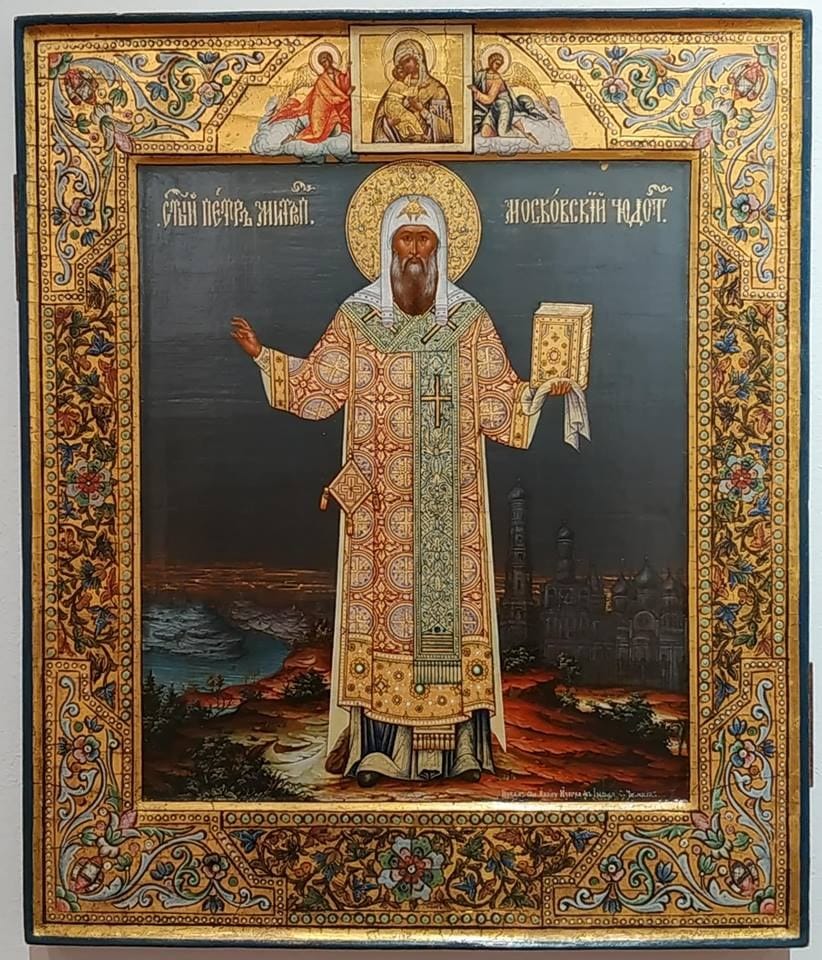
St. Peter of Moscow
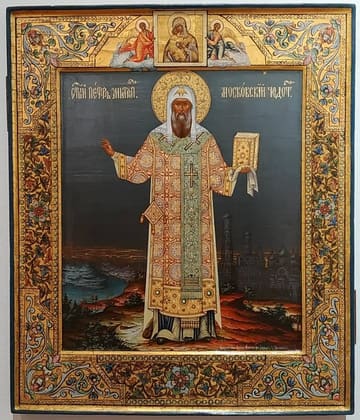
St. Peter of Moscow, Metropolitan of Kyiv and All Rus' from 1308 to 1326, is the first of the great Moscow hierarchs. By making Moscow his home and choosing to be buried there, he set a small princely town on the way to becoming the seat of the Russian Church, and Moscow honored him from the start as its heavenly protector.
He came from Galicia-Volhynia, the son of a man named Fyodor. His earliest Life, written within a year of his death, tells that his mother had a vision while she carried him: a lamb from which grew a flowering tree bearing a burning candle. Schooled from the age of seven, he entered a monastery at twelve, carried water and firewood for the brethren, and became a fine icon painter, giving his earnings to the poor.
On the river Rata near Belz he built a church of the Savior, around which a monastery grew with him as its abbot. Prince Yuri of Galicia sent him to Constantinople, and in 1308 Patriarch Athanasius I consecrated him metropolitan of all Rus' in place of Geronty, the candidate of Grand Prince Mikhail of Tver.
His first years were hard. At a council in Pereyaslavl about 1310, Bishop Andrew of Tver accused him, probably of taking money for ordinations, but the charges failed, and Peter forgave his accuser. He traveled through his vast see teaching the faith, took refuge in a church when Tatar troops sacked Bryansk, and received from Khan Tokhta a charter that freed the Church from tribute.
Drawn more and more to Moscow, he settled there and urged Prince Ivan Kalita to build a stone church of the Dormition; Metropolitan Cyprian's Life records his promise that the city and its princes would be glorified. On August 4, 1326, he took part in laying the foundations and prepared his own tomb in the wall near the altar with his own hands.
He reposed on December 20, 1326. His last words, to Archimandrite Theodore, whom he wished to succeed him, were "Peace to you; I wish to rest." He was buried in the unfinished cathedral, healings were soon reported at his tomb, and in 1339 Patriarch John XIV confirmed his veneration.
On August 24, 1479, his relics were translated into the new Dormition Cathedral of the Kremlin, where they rest today. The Church keeps his memory on December 21, the translation of his relics on August 24, and the Synaxis of the Moscow hierarchs on October 5.
Sources
- Earliest Life of St. Peter (1327), ascribed to St. Prokhor of Rostov
- Metropolitan Cyprian, Life of St. Peter (late 14th century)
- Pravoslavnaya Entsiklopediya, vol. 55, 'Petr'
- Church Slavonic Menaion, December 21
- OCA, Lives of the Saints, December 21: Repose of Saint Peter, Metropolitan of Moscow, Wonderworker of All Russia
Peace to you, child; it was not you who did this, but the devil.
His words to Bishop Andrew of Tver after the Council of Pereyaslavl, in the earliest Life of St. Peter (1327, ascribed to St. Prokhor of Rostov) (translated for Axios! from the Old Russian)
Peace to you; I wish to rest.
His last words, to Archimandrite Theodore, in the earliest Life of St. Peter (1327, ascribed to St. Prokhor of Rostov) (translated for Axios! from the Old Russian)
Troparion · Tone 4
O land once barren, rejoice now: for behold, Christ has shown forth in you a lamp, shining openly in the world and healing our infirmities and diseases. Therefore exult and rejoice with boldness, for he who works these wonders is a hierarch of the Most High.
Translated for Axios! from the Church Slavonic Menaion, December 21
Kontakion · Tone 8
To you, the champion and wondrous wonderworker of our land, we hasten today with love, weaving a song, O God-bearer: since you have boldness before the Lord, deliver us from troubles of every kind, that we may cry to you: Rejoice, strength of our city!
Translated for Axios! from the Church Slavonic Menaion, December 21
Saints around December 21
Get the full library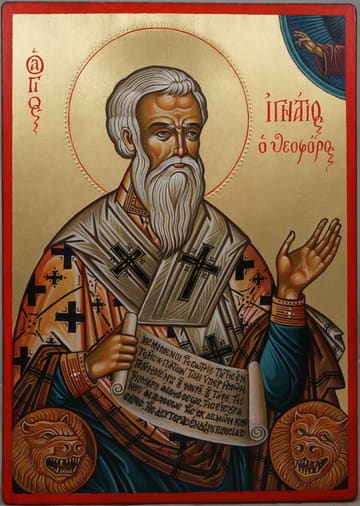
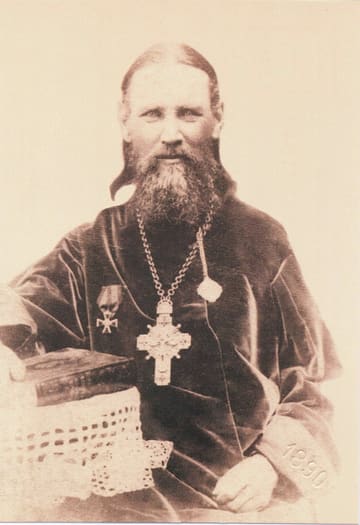
770+ saints, in your pocket
Their Lives, sayings and prayers, A to Z and by feast, with search. The Church calendar, the holy icons, and the saying of the day on your Home Screen. All in Axios! for iPhone, iPad and Android.