
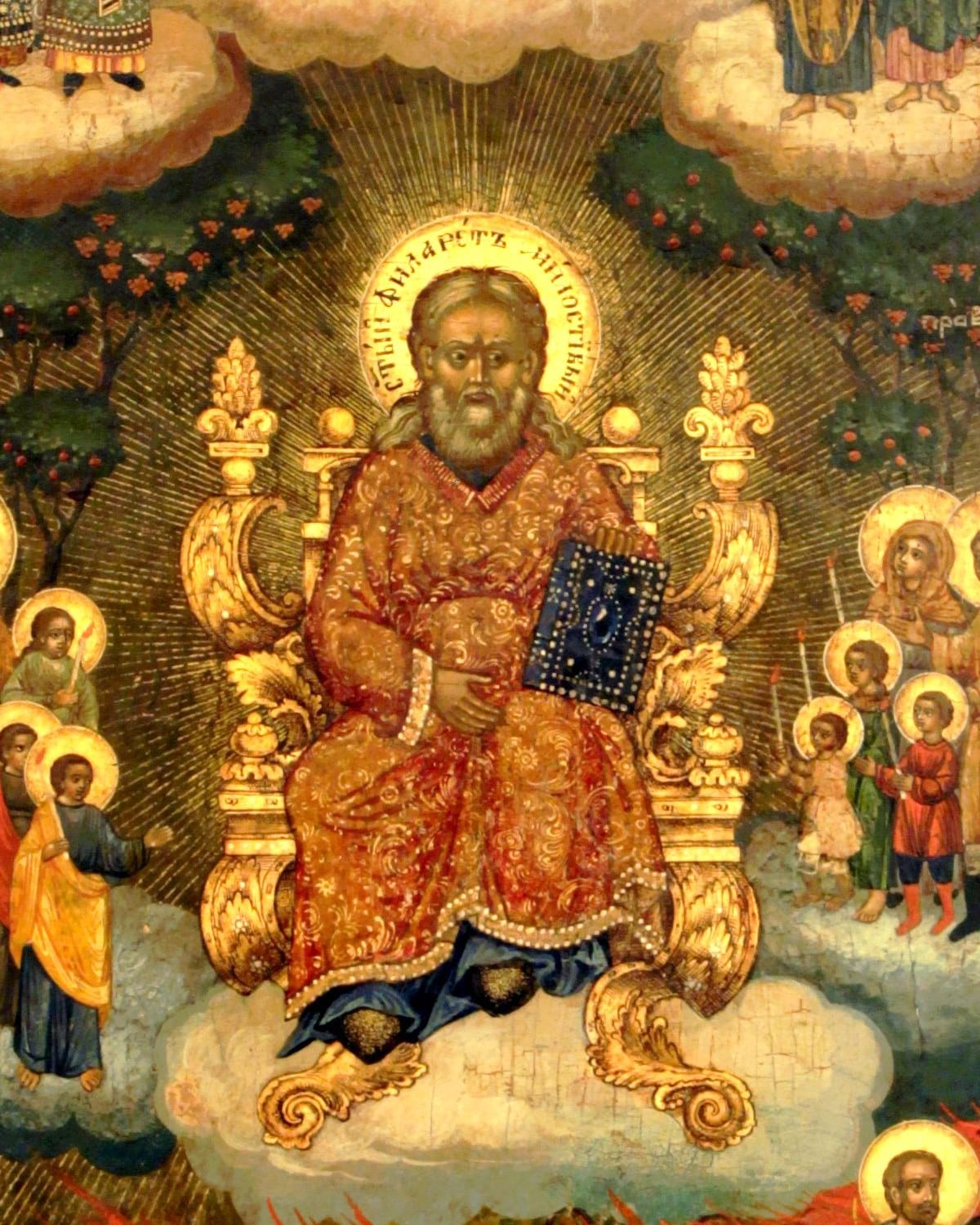
St. Philaret the Merciful
St. Philaret the Merciful, a landowner of Paphlagonia in Asia Minor, is the Church's great example of almsgiving. He gave away his wealth so freely that he became poor himself, and in poverty he stayed cheerful, sure that God would not abandon his family.
His Life was written in 821 or 822 by his grandson Niketas, about twenty-five years after his death.
He was born about 707 at Amnia in Paphlagonia, the son of George and Anna, and married Theoseba, with whom he had a son, John, and two daughters, Hypatia and Evanthia. Rich in herds and fields, he reasoned that what God had given him was meant for the poor, the widows, the orphans and the strangers, whom Christ calls His brothers. When Arab raiders carried off his flocks and neighbors seized his lands, he was left with his house, a field and a few animals, and these too he gave away: an ox to a farmer whose ox had died, a calf and then its mother, and in a famine the wheat he had just borrowed, together with the donkey that carried it. When his family complained, he told them he had a hidden treasure that would keep them for a hundred years.
According to his Life, in 788 envoys of Empress Irene, searching the empire for a bride for her son Constantine VI, came to Amnia and stayed in his house, and his neighbors brought food for the feast. The envoys chose his granddaughter Maria, who married the young emperor that November. Wealth returned to the family in Constantinople, and Philaret went on giving as before.
He kept bags of copper, silver and gold coins and let God guide his hand as he gave to each, and with his family he served the poor at table. He would take no high rank, only the modest dignity of hypatos, and was content to be known as the empress's grandfather.
Forewarned of his death, he went to a convent of nuns in the capital, known as Rodolphia or "the Judgment", gave the abbess gold, and asked to be buried there. When he fell ill he gathered his family and urged them to love hospitality, to defend widows and orphans, and to visit the sick and the imprisoned. He blessed his grandchildren, foretelling their lives, and while praying the Lord's Prayer he gave up his soul at the words "Your will be done", in 797, at the age of ninety.
A possessed man was healed at his burial, and his widow spent her wealth restoring churches in Paphlagonia. His head is venerated today at the Monastery of Agia Lavra near Kalavryta in Greece.
Sources
- Niketas of Amnia, Life of St. Philaretos the Merciful (written 821/822; ed. L. Rydén, 2002)
- St. Dimitri of Rostov, Lives of the Saints, December 1: Life of the Righteous Philaret the Merciful
- Synaxarion, December 1 (Greek Menaion)
- OCA, Lives of the Saints: Righteous Philaret the Merciful of Amnia
- Brockhaus and Efron Encyclopedic Dictionary, 'Filaret Milostivy'
Be at peace: in a place you do not know, I have so much wealth and so many treasures stored up that they would keep you for a hundred years, even if you did no work and had no cares at all.
His words to his family, from his Life as retold by St. Dimitri of Rostov, Lives of the Saints, December 1 (translated for Axios! from the Russian)
The riches the earthly king gave me I did not spend on earthly goods, but passed them on to the King of Heaven by the hands of the poor.
His last words to his family, from his Life as retold by St. Dimitri of Rostov, Lives of the Saints, December 1 (translated for Axios! from the Russian)
Do not prize wealth that quickly slips away, but send it on ahead to the place where I am now going ... Do not forget hospitality to strangers. Stand up for widows, help orphans, visit the sick and those shut up in prison.
His last words to his family, from his Life as retold by St. Dimitri of Rostov, Lives of the Saints, December 1 (translated for Axios! from the Russian)
Do not stay away from the fellowship of the Church. Do not take what belongs to others, wrong no one, speak evil of no one, and do not rejoice at the sorrows and misfortunes even of your enemies.
His last words to his family, from his Life as retold by St. Dimitri of Rostov, Lives of the Saints, December 1 (translated for Axios! from the Russian)
Troparion · Tone 2
Celebrating the commemoration of Your righteous one Philaret, O Lord, we implore You through him: Save our souls.
Translated for Axios! from the Greek Menaion (the troparion of the righteous, as sung for St. Job, May 6)
Saints around December 1
Get the full library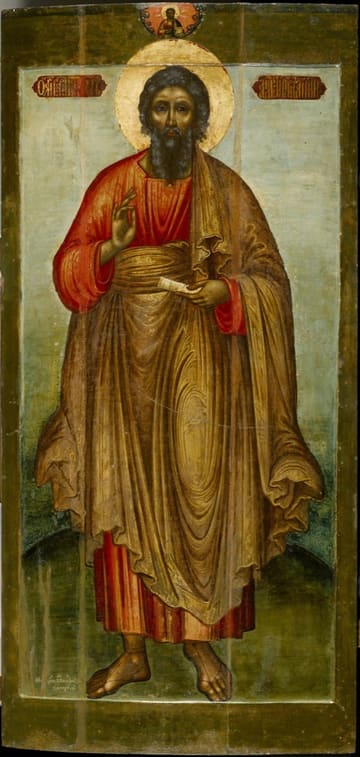
770+ saints, in your pocket
Their Lives, sayings and prayers, A to Z and by feast, with search. The Church calendar, the holy icons, and the saying of the day on your Home Screen. All in Axios! for iPhone, iPad and Android.