
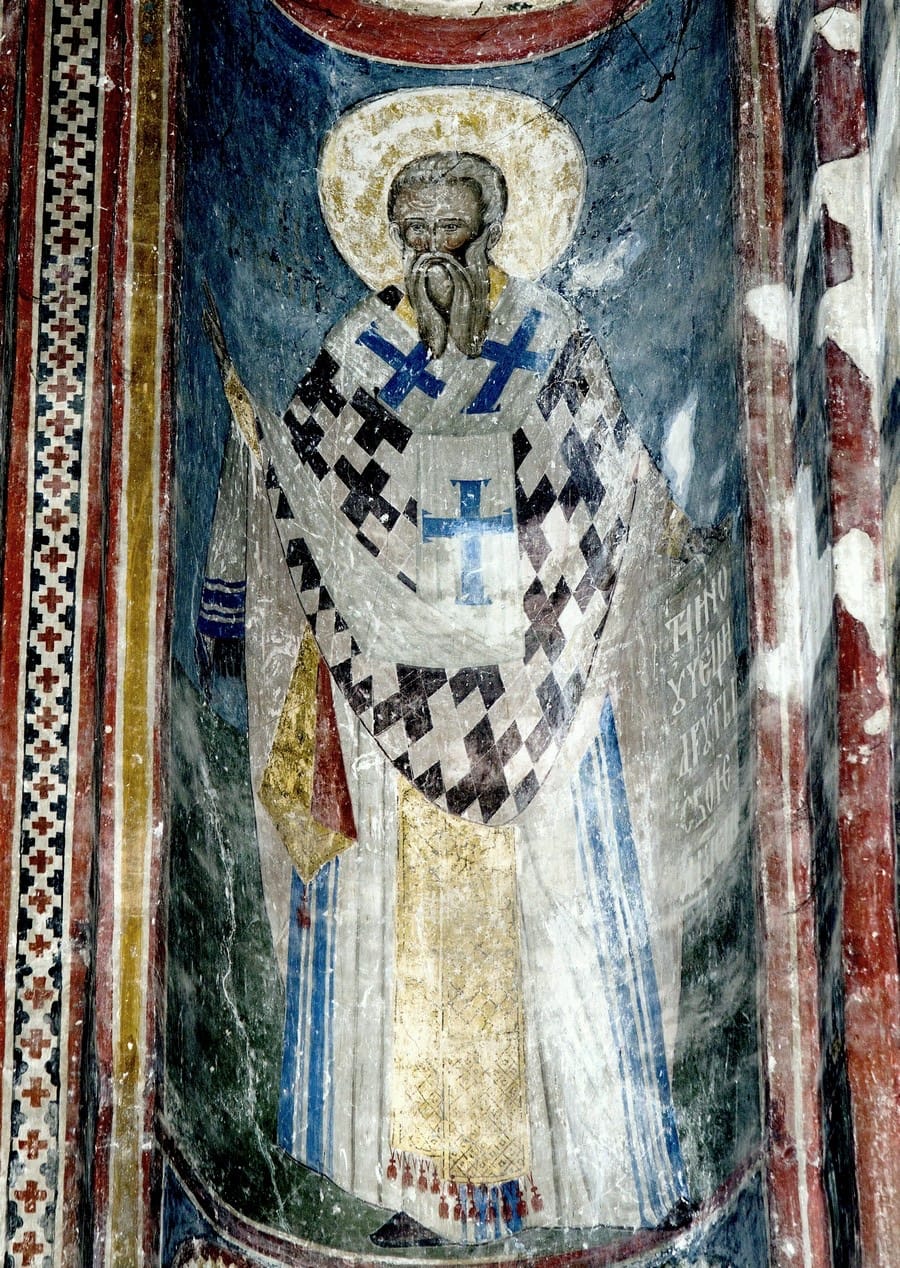
St. Sophronius of Jerusalem
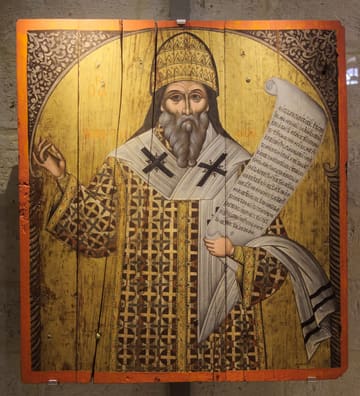
St. Sophronius, Patriarch of Jerusalem from 634 to 644, was the first great defender of Orthodoxy against the teaching that Christ has only one energy and one will, and the shepherd who surrendered the Holy City to the Arabs to spare its people.
Scholar, poet and monk, he was the friend of John Moschus and the spiritual father of St. Maximus the Confessor.
He was born in Damascus around 560 and was known as Sophronius the Sophist, a teacher of rhetoric. Seeking the true wisdom, he joined the monks of the monastery of St. Theodosius near Jerusalem and became the disciple of John Moschus. Together they visited the monks of Palestine, Egypt and Sinai, gathering the sayings and deeds that Moschus set down in the Spiritual Meadow, which he dedicated to Sophronius.
Fleeing the Persian invasion, they settled in Alexandria and helped Patriarch St. John the Merciful. There Sophronius was healed of a long disease of the eyes at the shrine of Sts. Cyrus and John, and in gratitude he wrote their praise and recorded seventy of their miracles. When Moschus died in Rome, Sophronius carried his body home to the monastery of St. Theodosius.
In 633 Patriarch Cyrus of Alexandria united with the Monophysites on the formula that Christ acts by one energy. Sophronius, by then an old monk, opposed it in Alexandria and then in Constantinople before Patriarch Sergius. Elected Patriarch of Jerusalem in 634, he sent out a Synodical Letter confessing that the one Christ works both as God and as man, with two natural energies; the Sixth Ecumenical Council later read it as a witness to the truth. He gathered some six hundred testimonies of the Fathers on the question and sent Bishop Stephen of Dor to Rome to seek the support of the pope.
In his Christmas sermon of 634 he lamented that the faithful could not go to Bethlehem, shut out by the Saracen sword as Adam was shut out of Paradise by the flaming sword. After a long siege he surrendered Jerusalem to Caliph Umar in 637 or 638, on terms meant to spare the people and the holy places, and he reposed in 644. His Anacreontic odes on the feasts survive; tradition also ascribes to him the Life of St. Mary of Egypt and prayers of the Great Blessing of the Waters, though scholars debate these attributions.
The Church keeps his feast on March 11.
Sources
- St. Sophronius, Miracles of Sts. Cyrus and John 70, Christmas Sermon and Anacreontica (PG 87/3)
- Pravoslavnaya Entsiklopediya, 'Ioann Moskh', 'Martin I' and 'Mariya Egipetskaya'
- Catholic Encyclopedia (1913), 'St. Sophronius'
- Greek Menaion, March 11; Church Slavonic Menaion, March 11
- OCA, Lives of the Saints: Saint Sophronius, Patriarch of Jerusalem
Let no one blame us if we wish to imitate the healed man of the Gospel, and to proclaim Cyrus and John, our benefactors after God, and to set down their gift in writing... Out of gratitude we will not hide our healing, but will become grateful heralds of the saints.
Miracles of Sts. Cyrus and John 70, on his own healing (PG 87/3, 3657-3660) (translated for Axios! from the Greek)
Bringing gifts to the newborn Christ, let the world follow with the star and the Magi. Now let us all run to Christ together with the Magi, gazing at the new star.
Anacreontica 3, On the Coming of the Magi (translated for Axios! from the Greek)
Christ, granting freedom to all, takes up the burden of the ordinances of Moses; He who sets the race of mortals free became a servant of the law.
Anacreontica 4, On the Meeting of the Lord (translated for Axios! from the Greek)
Christ goes into the city of Jerusalem to die as a ransom for mortals.
Anacreontica 7, On the Lord's Entry with Palms (translated for Axios! from the Greek)
Troparion · Tone 4
A rule of faith and an image of meekness, a teacher of self-restraint: so the truth of things showed you to your flock. Therefore by humility you won the heights, by poverty wealth. O Father and Hierarch Sophronius, intercede with Christ our God that our souls may be saved.
Translated for Axios! from the Greek Menaion, March 11
Kontakion · Tone 8
Moved by divine zeal, you opened your lips to proclaim true commandments; you gave lawful order to the foundations of the Church and handed it on to the monastic communities there, O Sophronius, most wise among the patriarchs of Jerusalem. You brought most wise words to light, and guided by them we cry to you: Rejoice, radiant glory of the Orthodox.
Translated for Axios! from the Church Slavonic Menaion, March 11
Saints around March 11
Get the full library
770+ saints, in your pocket
Their Lives, sayings and prayers, A to Z and by feast, with search. The Church calendar, the holy icons, and the saying of the day on your Home Screen. All in Axios! for iPhone, iPad and Android.