
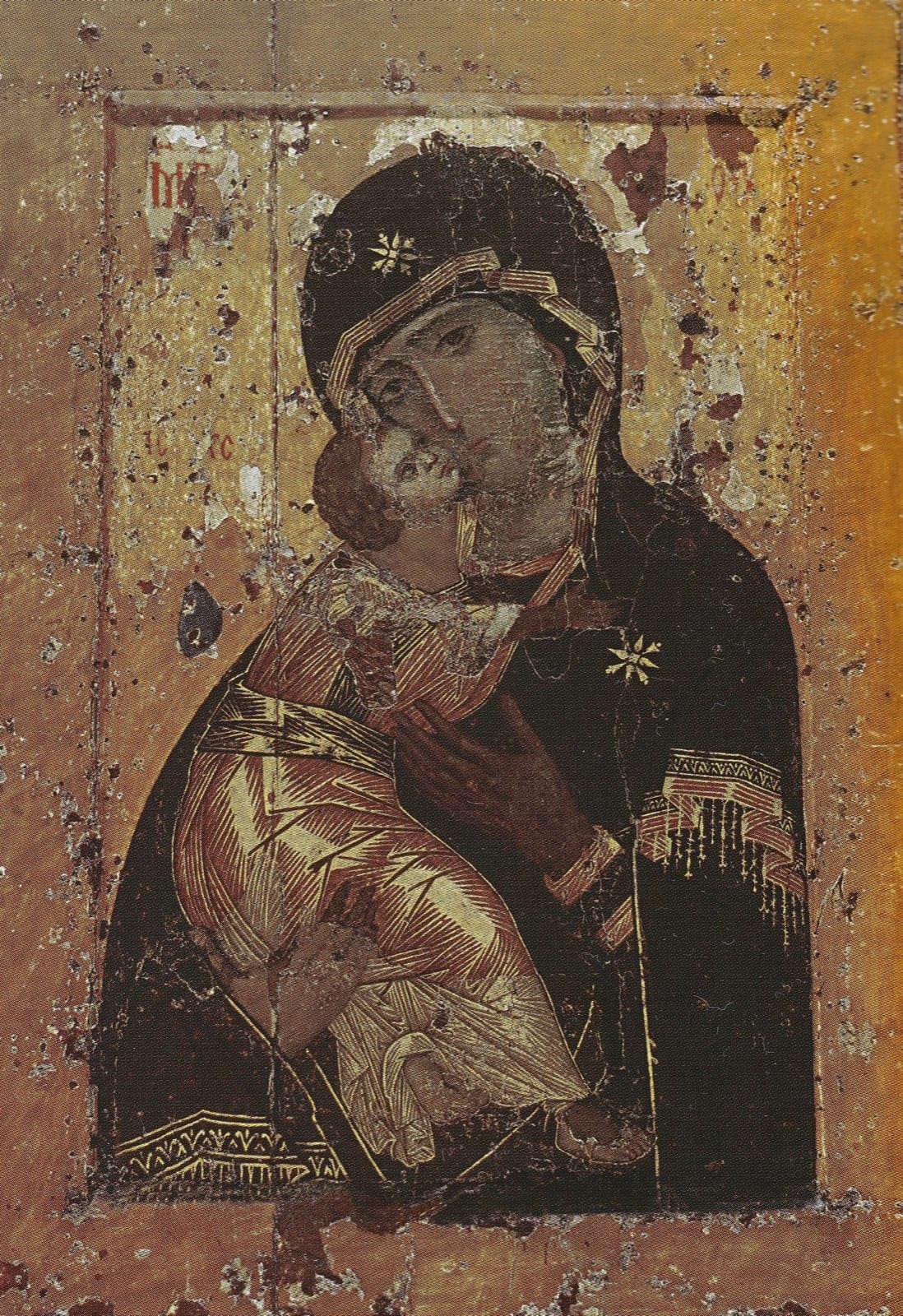
The Most Holy Theotokos
Also commemorated
- September 8The Nativity of the Theotokos
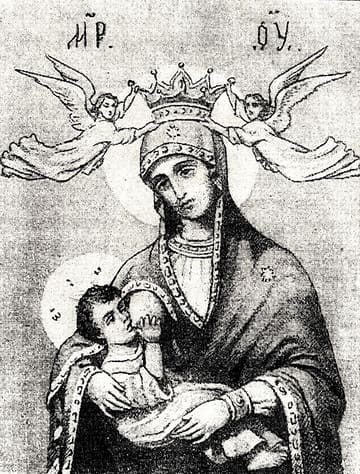
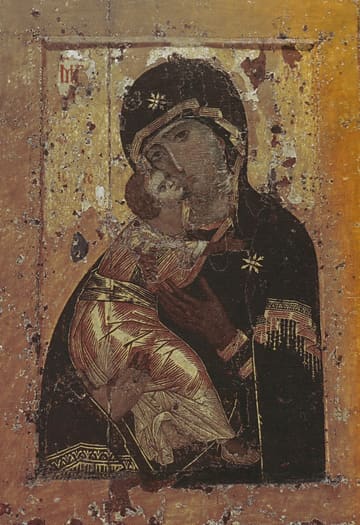
The Most Holy Theotokos, the Virgin Mary, is the Mother of our Lord Jesus Christ. Because the Son of God took flesh from her and was born of her, the Church calls her Theotokos, "the one who gave birth to God," and honors her above all the saints as "more honorable than the cherubim and beyond compare more glorious than the seraphim."
The Gospels tell how the Archangel Gabriel came to a virgin of Nazareth betrothed to Joseph, of the house of David, and announced that she would conceive the Son of the Most High by the Holy Spirit. She asked how this could be, then consented: "Behold, the servant of the Lord." Greeted by Elizabeth as "the mother of my Lord," she sang, "My soul magnifies the Lord."
She gave birth to Christ in Bethlehem, kept all these things in her heart, and at Cana told the servants, "Whatever he says to you, do it." At the Cross her Son entrusted her to St. John the Theologian.
Holy Tradition, above all the second-century Protoevangelium of James, which is not Scripture but which the Church's hymns echo, tells that she was the long-awaited child of St. Joachim and St. Anna, brought to the Temple at three and entrusted at twelve to Joseph, an elderly widower, as guardian of her virginity. Tradition also holds that she reposed in Jerusalem among the apostles and was buried at Gethsemane. When her tomb was opened three days later for St. Thomas, who came late, it was empty, and the Church believes that her Son took her body to heaven.
In 431 the Third Ecumenical Council at Ephesus, under St. Cyril of Alexandria, condemned Nestorius, who called her only the Mother of Christ, and upheld the title Theotokos, for her Son is the one Person of God the Word made flesh. The Church confesses her ever-virgin, before, in and after giving birth, as the Fifth Ecumenical Council called her in 553; the three stars on her veil in icons recall this. She is not worshiped, for worship belongs to God alone, but honored and asked to pray for us.
The Church year's first great feast is her Nativity on September 8, followed by her Entry into the Temple on November 21 and the Annunciation on March 25. The last is her Dormition on August 15, prepared by a two-week fast and, according to the historian Nikephoros Kallistos, made a feast of the whole empire by Emperor Maurice (582-602). The Synaxis of the Theotokos follows Christmas on December 26, and in Slavic use her Protection on October 1 recalls St. Andrew the Fool-for-Christ's vision of her spreading her veil over the faithful at Blachernae in Constantinople.
Sources
- Gospels of Luke 1-2 and John 2 and 19; Acts 1:14
- Protoevangelium of James 1-9 (ANF vol. 8, trans. Walker)
- Council of Ephesus (431) and Second Council of Constantinople (553), Anathemas 2 and 6 (NPNF II/14)
- St. John of Damascus, Homilies on the Dormition
- Menaion and Synaxarion, August 15
- OCA, Lives of the Saints: The Dormition of the Theotokos
How can this be, seeing I am a virgin?
Luke 1:34 (WEBBE)
Behold, the servant of the Lord; let it be done to me according to your word.
Luke 1:38 (WEBBE)
My soul magnifies the Lord. My spirit has rejoiced in God my Savior, for he has looked at the humble state of his servant. For behold, from now on, all generations will call me blessed.
Luke 1:46-48 (WEBBE)
For he who is mighty has done great things for me. Holy is his name. His mercy is for generations and generations on those who fear him.
Luke 1:49-50 (WEBBE)
He has shown strength with his arm. He has scattered the proud in the imagination of their hearts. He has put down princes from their thrones, and has exalted the lowly. He has filled the hungry with good things. He has sent the rich away empty.
Luke 1:51-53 (WEBBE)
He has given help to Israel, his servant, that he might remember mercy, as he spoke to our fathers, to Abraham and his offspring forever.
Luke 1:54-55 (WEBBE)
Whatever he says to you, do it.
John 2:5 (WEBBE)
Troparion of the Dormition of the Theotokos (Tone 1)
When you gave birth, you kept your virginity; when you fell asleep, you did not leave the world, O Theotokos. You passed over into life, for you are the Mother of Life, and through your intercessions you redeem our souls from death.
Translated for Axios! from the Greek Menaion, August 15
Kontakion of the Dormition of the Theotokos (Tone 6)
The Theotokos, who never sleeps in her intercessions, the unshaken hope in her protection, neither tomb nor death could hold; for as the Mother of Life she was brought over into life by Him who dwelt in her ever-virgin womb.
Translated for Axios! from the Greek Menaion, August 15
It Is Truly Right (Axion Estin)
It is truly right to call you blessed, O Theotokos, ever-blessed and all-blameless, and the Mother of our God. More honorable than the cherubim and beyond compare more glorious than the seraphim, you who without corruption gave birth to God the Word, true Theotokos, we magnify you.
Translated for Axios! from the Greek of the Divine Liturgy (hymn to the Theotokos)
Saints around August 15
Get the full library
770+ saints, in your pocket
Their Lives, sayings and prayers, A to Z and by feast, with search. The Church calendar, the holy icons, and the saying of the day on your Home Screen. All in Axios! for iPhone, iPad and Android.