
September 9
Saints of the day
Also commemorated
Commemoration of the Third Ecumenical Council
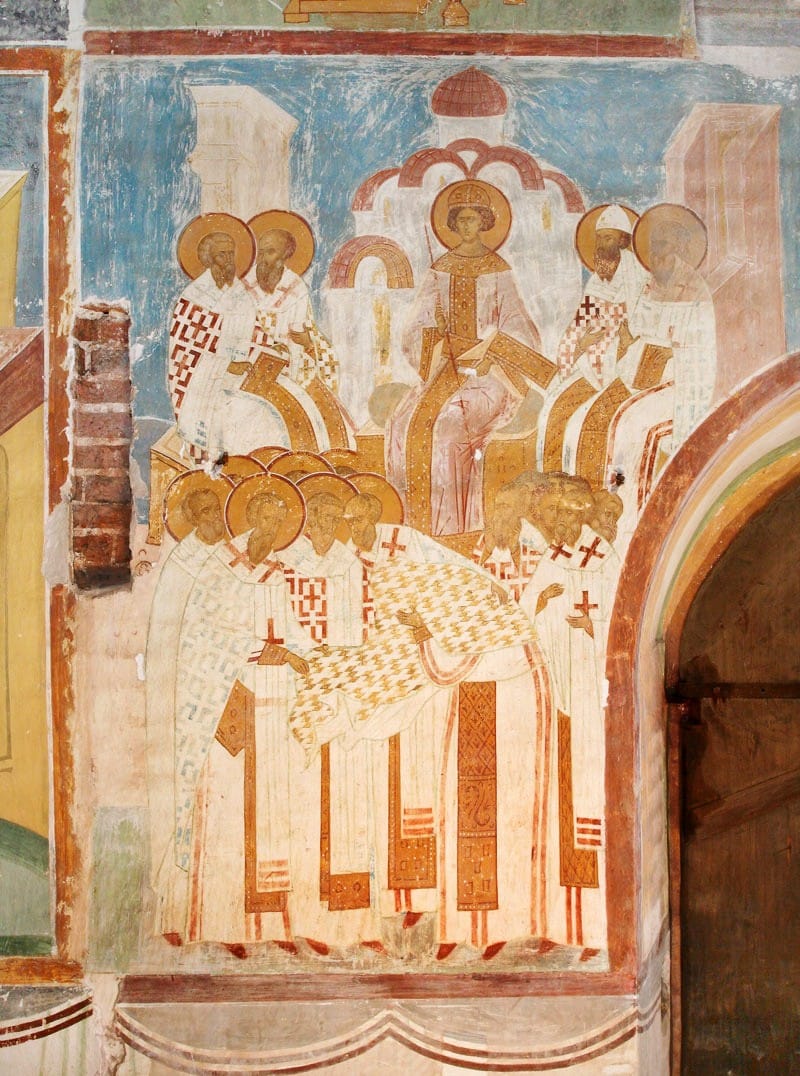
This Council assembled in the year 431 in Ephesus, during the time of Emperor Theodosius the Younger. Two hundred holy Fathers were at the Council. This Council condemned Nestorius, Patriarch of Constantinople, for his heretical teaching about the most holy Virgin Mary and the birth of the Lord. Namely: Nestorius would not call the Holy Virgin the Theotokos but the Christotokos. The holy Fathers, having condemned the teaching of Nestorius, affirmed that the Holy Virgin is to be called the Theotokos. Besides this they confirmed the decisions of the First and Second Ecumenical Councils, especially the Nicene-Constantinopolitan Creed, commanding that no one may either subtract anything from this Creed or add anything to it.
Hymn of Praise
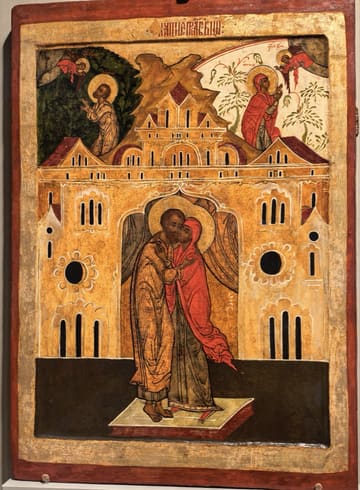
Rejoice, O barren one,
Rejoice, O aged Anna!
Thou shalt conceive and bear
A child wondrous, chosen.
As once the aged Sarah,
As the mother of Samson,
As the mother of Samuel,
As the mother of John,
More glorious shalt thou be than all,
For thou shalt bear from thy loins
A wondrous maiden, unique,
A wondrous mother of the King Most High.
Rejoice, O Joachim,
Father of the mother unseen,
For this the whole Church of saints
Shall clothe the unseen one.
The law loses its power
When God wills and where God wills,
Who will argue with God,
Argue with God, who will?
Not by caprice but by love
God changes His laws,
Before love all laws
Stand as though they exist not.
When people hunger, the Lord
Makes the dry field fruitful,
For the spiritual hunger of the world
He makes the barren one fertile.
For the salvation of mankind the Lord
Arranges all that is best.
She whom the Creator wills to glorify
Cries out to Him: Glory! Glory!
Reflection
Alms should not be given with pride but with humility, considering the one to whom alms are given as better than oneself. Did not the Lord Himself say: "Inasmuch as ye have done it unto one of the least of these, ye have done it unto Me" (Matthew 25:40)? Theophanes the Confessor, even as a boy, had a mind enlightened by the light of Christ. Once he was walking along the street and saw an unclothed child freezing in the open. He quickly took off his own clothes and dressed that child. And so he warmed it and restored it to life. He himself went home naked. His astonished parents asked him where his clothes were. To which Theophanes answered: "I clothed Christ." Therefore the grace of Christ was added to him, and he later became a great ascetic, sufferer for the faith, and wonderworker. If, therefore, we give alms in anyone else's name, or in our own name, we cannot avoid pride, which as soon as it appears in the heart destroys all the good deeds done. And when we give to a beggar as to a beggar and not as to Christ, we cannot avoid either pride or contempt. And what is the use of showing a man charity while being proud of oneself and despising the man? Virtue is not virtue when it is mixed with sin, just as milk is not milk when it is mixed with kerosene or vinegar.
Contemplation
Contemplate the wisdom of Solomon (I Kings 3), namely:
- How two women argued over one child, each claiming it was hers;
- How Solomon commanded that the child be cut in two and one half given to each woman;
- How the true mother cried out for the child, and so it was known that the child was hers.
Homily
On God's witness about God
If I bear witness of Myself, My witness is not true
John 5:31
Thus spoke the Lord to a false and lying generation. These words He said to the elders of the Jews not as instruction but as rebuke. They did not believe one man when he spoke about himself, but demanded two witnesses. Do not even think, brethren, that what the Lord Jesus says about Himself is not true, but rather that the Jews did not consider it true. Hence, according to the interpretation of our holy Fathers, the words "My witness is not true" must be understood to mean that this witness was not true in the eyes of the Jews. And that every word which the Lord Jesus spoke about Himself is true, He Himself stated in another place, saying: "Though I bear record of Myself, yet My record is true" (John 8:14). Here the Lord teaches, there He rebukes; here He affirms how the matter is, there, how the matter appeared to the Jews. The Jews did not believe His witness about Himself, but demanded other witnesses. And He cited to them three enormous witnesses: first, the witness of His own works: "the works which the Father hath given Me to finish, the same works that I do, bear witness of Me" (5:36); second, the witness of His heavenly Father, who testified to Him as His Son at the Jordan and on Tabor: "the Father Himself, which hath sent Me, hath borne witness of Me" (5:37); and finally third, the witness of Holy Scripture: "Search the Scriptures... they are they which testify of Me" (5:39). What further witnesses would a man of any reason need? But in the elders of the Jews reason was darkened to such a degree that they could see nothing and understand nothing. When the Lord, the Lover of mankind, had done all that was needed to save even the elders of the Jews, and when they rejected all witnesses about Him, and thereby rejected their own salvation, then He said to them: "Though I bear record of Myself, yet My record is true." O my brethren, let us not be of stony heart like those blinded elders, and let us not reject our only salvation. Let us seek no other testimonies, but let us believe what the Lord Jesus Himself tells us about Himself. He said of Himself that He is the Truth. And by this Truth we are nourished and saved.
O Lord Jesus, Living Truth, Eternal Truth, depart not from us, but enlighten us and save us. To Thee be glory and praise forever. Amen.
From the Prologue from Ochrid, translated by Marcian Sakarya, OCHRID.COM. CC BY-SA 4.0.
The Prologue, every day
Axios! brings the day’s Hymn of Praise, Reflection, Contemplation and Homily to Today, with the saints, the feasts and the saying of the day, on iPhone, iPad and Android.