
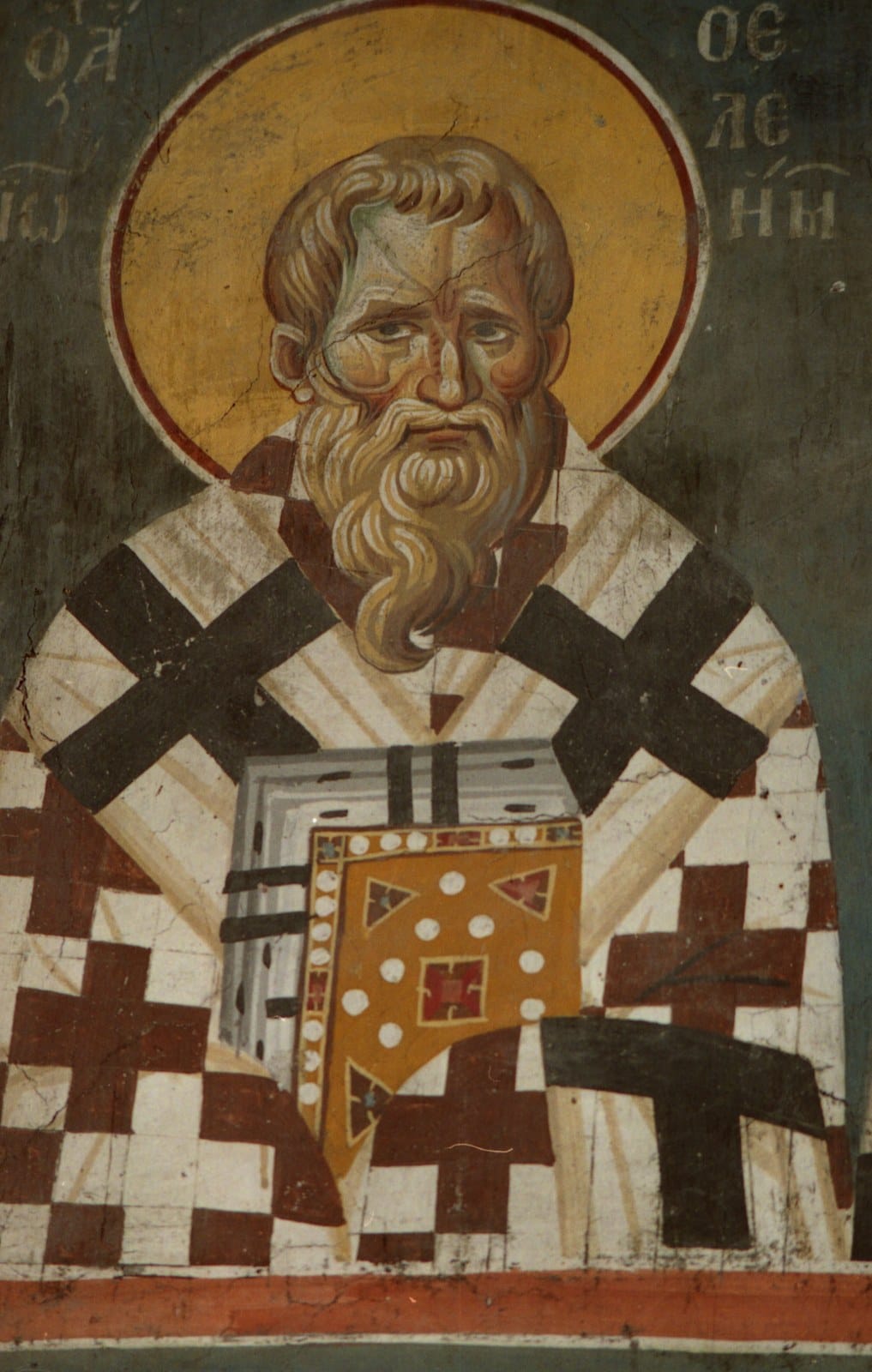
St. John the Merciful
St. John the Merciful, patriarch of Alexandria from 610 to about 620, is honored by the Church as a model of almsgiving.
He called the poor his masters, spent the wealth of the Church on the hungry, the sick, the refugees and the captives, and lived himself in poverty. His Life was written about twenty years after his death by Leontius of Neapolis, a fellow Cypriot, who tells it from the memories of his steward Menas; an earlier Life by John Moschus and St. Sophronius is lost. The Church keeps his memory on November 12.
He was born at Amathus on Cyprus, the son of a high official named Epiphanius. According to his Life, at fifteen he saw a radiant maiden crowned with olive who called herself the first of the King's daughters, and he understood her to be Compassion; from then on he never refused anyone in need. He married at his father's wish, and when his wife and children died he became a monk. In 610 Emperor Heraclius, at the request of the patrician Nicetas, who governed Egypt, made him patriarch of Alexandria.
His first act was to send his stewards through the city to write down all his masters, explaining that those whom they called poor and beggars were his masters and helpers; more than seven thousand were enrolled and fed. He fixed honest weights and measures for the markets, sat outside the church every Wednesday and Friday to hear anyone in need, and maintained hospices and hospitals. When the Persians sacked Jerusalem in 614 he ransomed captives and sent grain, money and workmen to the ruined city. He upheld the faith of Chalcedon against the Monophysites, yet he won hearts above all by gentleness: once, remembering during the Liturgy a cleric he had disciplined, he left the altar to kneel before him and ask forgiveness.
When the Persians invaded Egypt in 619, he left Alexandria with Nicetas for Constantinople, but, warned in a vision that his end was near, he turned back to Cyprus. He reposed at Amathus on November 11, 619 or 620, the feast of St. Menas, which is why his own feast falls on the next day; in his testament he thanked God that he was leaving nothing behind but a single small coin. He was buried in the basilica of St. Tychon, and his relics were later taken to Constantinople. Since the sixteenth century they have been venerated in Bratislava, where St. Martin's Cathedral keeps them in a chapel built in his honor.
Sources
- Leontius of Neapolis, Life of St. John the Merciful (ed. H. Gelzer, 1893)
- Greek Menaion and Synaxarion, November 12
- Pravoslavnaya Entsiklopediya, 'Ioann V (III) Milostivy'
- OCA, Lives of the Saints: Saint John the Merciful, Patriarch of Alexandria
It is not right, brothers, for us to care for anything before Christ.
Leontius of Neapolis, Life of St. John the Merciful 2 (ed. Gelzer 1893, p. 8; translated for Axios! from the Greek)
Those whom you call poor and beggars, these I proclaim my masters and helpers. For they alone are truly able to help us and to grant us the kingdom of heaven.
Leontius of Neapolis, Life of St. John the Merciful 2 (ed. Gelzer 1893, p. 8; translated for Axios! from the Greek)
If you wish to be the almoners of humble John, or rather of Christ, obey without prying the divine command that says: Give to everyone who asks you.
Leontius of Neapolis, Life of St. John the Merciful 7 (ed. Gelzer 1893, p. 14; translated for Axios! from the Greek)
Who will say that humble John is covered by a blanket worth thirty-six gold coins while the brothers of Christ are freezing with cold? How many are there now grinding their teeth from the frost?
Leontius of Neapolis, Life of St. John the Merciful 21 (ed. Gelzer 1893, p. 38; translated for Axios! from the Greek)
If, then, we are equal before Christ, let us become equal toward one another as well; for Christ took the form of a servant to teach us not to be proud toward our fellow servants.
Leontius of Neapolis, Life of St. John the Merciful 33 (ed. Gelzer 1893, p. 65; translated for Axios! from the Greek)
Gathering my mind into myself and knowing that all these things belong to the Master of all, I made it my care to give to God the things of God.
Leontius of Neapolis, Life of St. John the Merciful 45 (ed. Gelzer 1893, p. 93; translated for Axios! from the Greek)
Troparion · Tone 8
In your patience you gained your reward, O holy Father, persevering unceasingly in prayer, loving the poor and providing for them. Intercede, then, with Christ our God, O blessed John the Merciful, that our souls may be saved.
Translated for Axios! from the Greek Menaion, November 12
Kontakion · Tone 2
Your wealth you scattered among the poor, and the wealth of heaven you have now received, O all-wise John; therefore we all honor you as we celebrate your memory, O you who are named for mercy.
Translated for Axios! from the Greek Menaion, November 12
Saints around November 12
Get the full library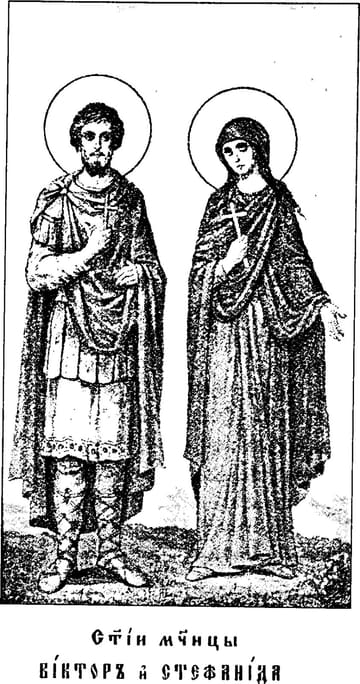
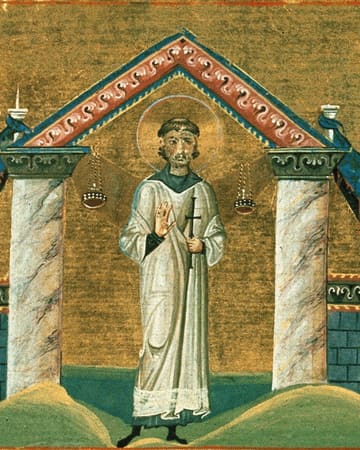
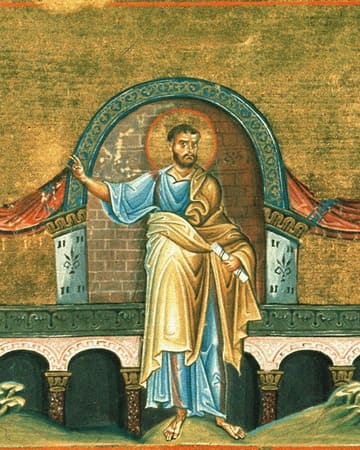
770+ saints, in your pocket
Their Lives, sayings and prayers, A to Z and by feast, with search. The Church calendar, the holy icons, and the saying of the day on your Home Screen. All in Axios! for iPhone, iPad and Android.