
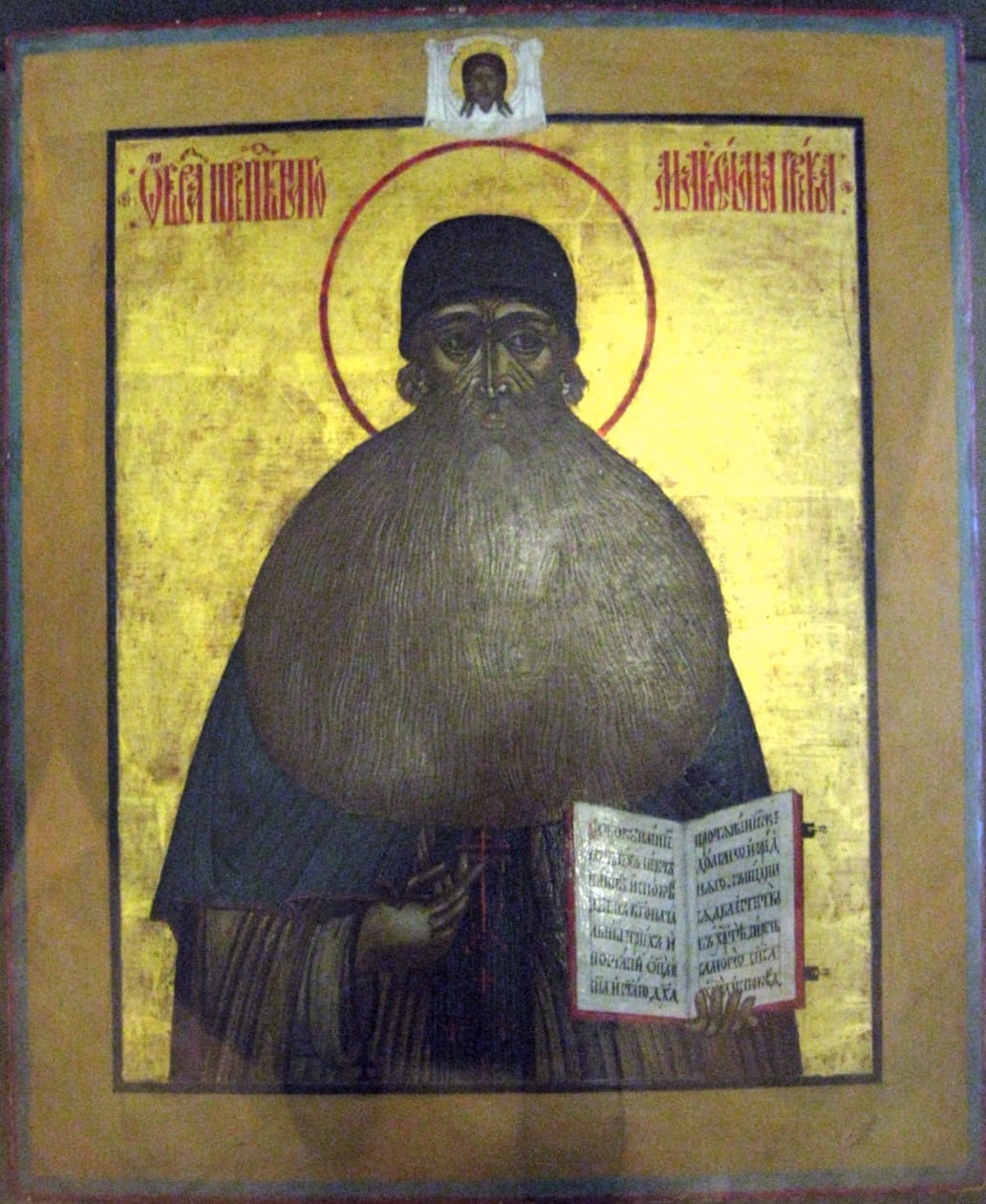
St. Maximus the Greek
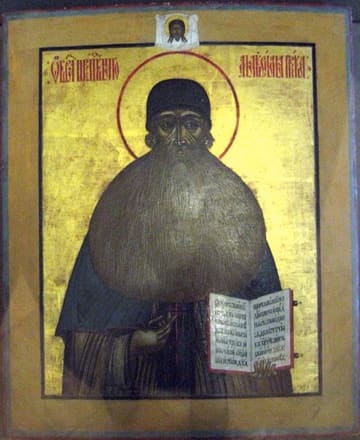
St. Maximus the Greek was a learned monk of Mount Athos who was called to Moscow to translate and correct the church books, suffered twenty-two years of confinement under false charges, and became one of the great teachers of the Russian Church.
He is not St. Maximus the Confessor, the 7th-century theologian whose memory falls on the same day, January 21; the two share a name and a feast, nine centuries apart.
He was born Michael Trivolis about 1470 at Arta in Epirus, to educated parents, Manuel and Irene. As a young man he went to Italy, studying and copying manuscripts in Florence, Padua and Venice, where he worked with the printer Aldus Manutius. Moved by the preaching of Savonarola, he spent some months as a novice in the Dominican house of San Marco in Florence, but in 1506 he returned to the Orthodox East and became a monk at the monastery of Vatopedi on Athos, taking the name Maximus.
In 1516 Grand Prince Vasily III asked the Holy Mountain for a translator, and Maximus reached Moscow in 1518. He translated the commentaries on the Psalter and on Acts and the homilies of St. John Chrysostom, and he corrected errors in the liturgical books. His corrections and his outspokenness made enemies. In 1525 a council under Metropolitan Daniel condemned him, chiefly for supposedly corrupting the sacred books, and sent him to the Monastery of St. Joseph of Volokolamsk, where he was denied Holy Communion; a second trial followed in 1531.
Moved to the Otroch Monastery in Tver, he was allowed to write again. According to tradition he wrote a canon to the Holy Spirit on the wall of his cell in charcoal. He answered every charge in writing and left a large body of theology, letters and spiritual counsel.
Released after twenty-two years, he spent his last years at the Trinity-St. Sergius Lavra, where he reposed in 1556 (by tradition on January 21) and was buried beside the Church of the Holy Spirit. His name entered the Russian calendar in the 17th century, and the Local Council of the Russian Church glorified him in 1988. His relics were uncovered in 1996 and rest in the Lavra; the Church also keeps that finding on June 21.
Sources
- Pravoslavnaya Entsiklopediya, 'Maksim Grek'
- OCA, Lives of the Saints: Venerable Maximus the Greek
- Archbishop Dimitry (Sambikin), Mesyatseslov svyatykh, January 21 (1890s)
- N. P. Barsukov, Istochniki russkoi agiografii (1882), 'Maksim Grek'
- Works of St. Maximus the Greek (Kazan, 1859-1862; Russian translation, Trinity-St. Sergius Lavra, 1910-1911)
Give thanks to your Master; praise and glorify Him with understanding, for in this present life He has counted you worthy to repay through small and passing sorrows, and more than in full, your whole debt and the great talents you owed Him.
Word 49, written to console himself in prison (Sochineniya prepodobnogo Maksima Greka v russkom perevode, Trinity-St. Sergius Lavra, 1910, part 1; translated for Axios! from the Russian)
See that you do not count this time a time of mourning, but rather a time of divine joy, lest you, wretched soul, suffer a double loss through ingratitude.
Word 49, written to console himself in prison (Sochineniya prepodobnogo Maksima Greka v russkom perevode, Trinity-St. Sergius Lavra, 1910, part 1; translated for Axios! from the Russian)
Be glad and rejoice with godly wisdom, striving always to live humbly, with thanksgiving, good hope and integrity; by these the kingdom of heaven is readily seized, and nothing that exists can compare with it.
Word 49, written to console himself in prison (Sochineniya prepodobnogo Maksima Greka v russkom perevode, Trinity-St. Sergius Lavra, 1910, part 1; translated for Axios! from the Russian)
No one who has come into this world, even if he has risen to the very height of prosperity, can pass through this painful life without any sorrows.
Word 35, a letter of consolation to Prince Dimitry on patience in sorrows (Sochineniya prepodobnogo Maksima Greka v russkom perevode, Trinity-St. Sergius Lavra, 1910, part 1; translated for Axios! from the Russian)
I know and am firmly convinced that He cares for the salvation of all of us who believe in Him and arranges everything for the good of our souls. Let us not, then, grieve beyond measure or despair.
Word 35, a letter of consolation to Prince Dimitry on patience in sorrows (Sochineniya prepodobnogo Maksima Greka v russkom perevode, Trinity-St. Sergius Lavra, 1910, part 1; translated for Axios! from the Russian)
Troparion · Tone 8
In you, O Father, God's image was preserved to perfection; for you took the cross upon yourself and followed Christ, and in your conduct you taught that one should think little of the flesh, for it is fleeting, and take care of the soul, a thing that does not die. And so, O venerable Maximus, your spirit exults together with the angels.
Translated for Axios! from the Church Slavonic General Menaion (the common troparion of a venerable father)
Kontakion · Tone 8
By the God-inspired Scriptures and the preaching of theology you exposed the vain wisdom of unbelievers, O all-rich one; and still more, setting them right in Orthodoxy, you guided them onto the path of true knowledge. Like a pipe sounding with the voice of God you delight the minds of those who hear and gladden them unceasingly, O most wondrous Maximus. Therefore we pray you: entreat Christ God to send down forgiveness of sins to those who sing with faith of your all-holy repose, O Maximus our father.
Translated for Axios! from the Church Slavonic Menaion, January 21
Saints around January 21
Get the full library
770+ saints, in your pocket
Their Lives, sayings and prayers, A to Z and by feast, with search. The Church calendar, the holy icons, and the saying of the day on your Home Screen. All in Axios! for iPhone, iPad and Android.