
The Divine Liturgy, Explained
The Divine Liturgy is the main service of the Orthodox Church, where the faithful hear the Gospel and receive Holy Communion. On most Sundays the Church serves the Liturgy of St. John Chrysostom. This guide follows it from the preparation of the bread and wine to the final blessing.
What the Divine Liturgy Is
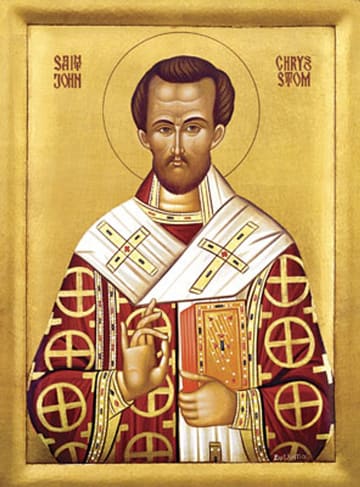
Liturgy comes from a Greek word for a public work, done on behalf of all. Fr. Thomas Hopko called it the common work of the whole Church, never a private act. This Liturgy bears the name of St. John Chrysostom, Archbishop of Constantinople (died 407), because its central prayer is traditionally his, though the service around it grew over later centuries.
It has three parts: the Proskomedia, where the gifts are prepared; the Liturgy of the Word, centered on Scripture; and the Liturgy of the Faithful, the Eucharist (“thanksgiving”) itself. Quotations below follow Isabel Hapgood’s Service Book of 1906.
The Proskomedia: Preparing the Gifts
Before the service, often during Matins (the morning service) or the Hours (short psalm services), the priest prepares the gifts in the altar, the sanctuary behind the iconostasis, or icon screen. This is the Proskomedia, from the Greek for “offering.”
The bread is prosphora (“offering”), leavened loaves stamped IC XC NIKA, “Jesus Christ conquers.” Slavic parishes use five small loaves; Greek and Antiochian parishes usually use one large loaf. From the seal the priest cuts a cube called the Lamb, which will become the Body of Christ, and pours wine mixed with water into the chalice.
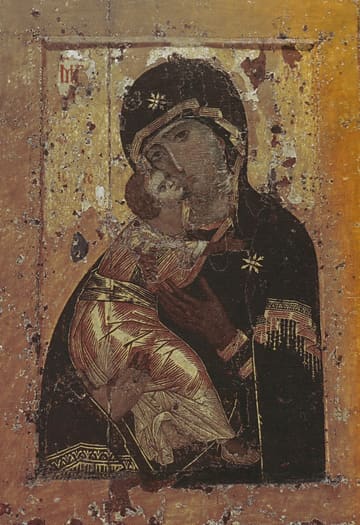
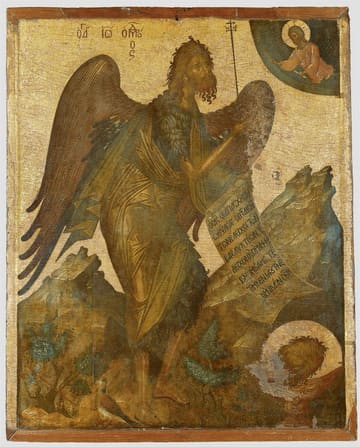
Around the Lamb he places particles for the Theotokos (the Virgin Mary; the title means “God-bearer”), for nine ranks of saints beginning with St. John the Forerunner (the Baptist), and for the living and the departed, often from lists of names given by parishioners. The whole Church gathers around Christ on one plate.
The Liturgy of the Word
The priest begins by blessing the Kingdom of the Father, the Son and the Holy Spirit. Fr. Alexander Schmemann of St. Vladimir’s Seminary taught that the whole Liturgy is the Church’s entrance into that Kingdom.
The Great Litany
A litany is a chain of short petitions, usually led by a deacon. The Great Litany begins “In peace let us pray to the Lord,” and the people answer each petition “Lord, have mercy.” Many English-speaking parishes still sometimes sing it in Greek (Kyrie eleison), Slavonic (Gospodi pomilui) or Arabic.
The Antiphons
Three antiphons, psalm verses sung in turn, follow. On ordinary Sundays Slavic parishes sing Psalms 103 and 146 (102 and 145 in the Greek numbering) and the Beatitudes, while Greek and Antiochian parishes sing psalm verses with short refrains to the Theotokos and the risen Christ. All sing “Only-begotten Son,” a hymn ascribed to Emperor Justinian.
The Little Entrance and the Trisagion
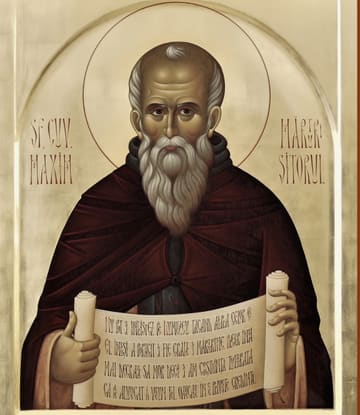
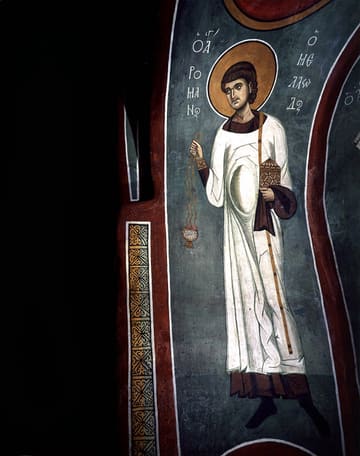
The clergy carry the Gospel book out the north door and back through the central Royal Doors. Lifting it, the deacon calls “Wisdom!” and bids all stand upright. St. Maximus the Confessor saw in this entrance Christ’s coming into the world. The hymns of the day follow, among them the kontakion, a short hymn whose form St. Romanos the Melodist made famous.
Then all sing the Trisagion (“Thrice-Holy”): “O Holy God, Holy Mighty, Holy Immortal One, have mercy upon us.” On feasts tied to baptism, such as Christmas and Pascha (Easter), Galatians 3:27 takes its place.
The Epistle and the Gospel
A reader chants the Epistle, from Acts or the apostles’ letters. After the Alleluia, the deacon or priest reads the Gospel while all stand, and the sermon usually follows. Litanies for particular needs, for the departed and for the catechumens (those preparing for baptism) close this part. No visitor is asked to leave.
The Liturgy of the Faithful
The Cherubic Hymn and the Great Entrance
The choir sings the Cherubic Hymn, which invites the faithful to lay aside every earthly care, while the clergy carry the bread and wine from the table of preparation, through the nave and in by the Royal Doors to the Holy Table, the altar table. This is the Great Entrance. The priest prays that the Lord remember all present in His Kingdom.
The Kiss of Peace and the Creed
The deacon calls all to love one another and confess the Holy Trinity with one mind. The clergy exchange the kiss of peace, as the people do in some parishes. After the call “The Doors! The Doors!” all recite the Nicene Creed.
The Anaphora and the Epiclesis
The Anaphora (“lifting up”) is the great prayer of thanksgiving. The priest gives thanks for creation and salvation, the people join the angels’ song, “Holy, holy, holy,” and he recalls the Last Supper, the Cross, the Resurrection and the Second Coming. Lifting the gifts, he says: “Thine own, of thine own, we offer unto thee.”
Then comes the epiclesis (“calling down”). The priest asks the Father to send the Holy Spirit upon the people and the gifts, then blesses them: “And make this bread the precious Body of thy Christ,” and the cup His Blood. Orthodox Christians believe they truly become the Body and Blood of Christ. St. Nicholas Cabasilas called this change the heart of the Liturgy, and the sanctification of the faithful its purpose.
The Church then remembers the saints, the departed and the living, above all the Theotokos, with the hymn Axion estin (“It is truly worthy”).
The Lord’s Prayer and Holy Communion
All pray the Lord’s Prayer. The priest lifts the Lamb: “Holy things unto the Holy.” The people answer that One alone is holy, the Lord Jesus Christ. He breaks the Lamb, places a portion in the chalice and adds a little hot water, a sign of the living, risen Christ.
After the clergy commune, the deacon calls: “In the fear of God and with faith draw near.” Communicants receive the Body and Blood together from a spoon. Afterward they take blessed bread and, in many Slavic parishes, warm wine and water.
Communion is given to Orthodox Christians, infants included; adults prepare with prayer, fasting and confession as their priest directs. Visitors are welcome to pray with the congregation and to come forward at the end.
The Dismissal and the Antidoron
After a litany of thanksgiving, the priest bids all depart in peace. The dismissal asks the prayers of the Theotokos, the saints of the day and St. John Chrysostom, and all come forward to kiss the cross.
The priest then gives out the antidoron (“instead of the gifts”): the rest of the prosphora, blessed but not consecrated. Once given only to those who had not received Communion, it is now taken by nearly all. Most parishes gladly offer it to visitors; a few keep it for the Orthodox faithful.
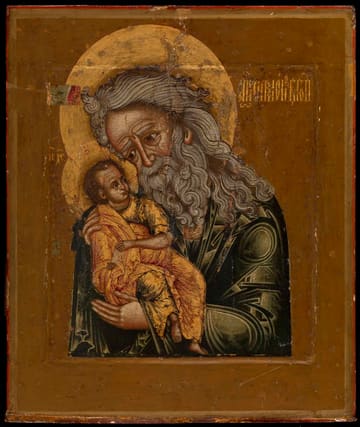
The prayers of thanksgiving after Communion end with the song of St. Symeon the God-Receiver, who held the infant Christ in the Temple (Luke 2:29–32).
The Other Liturgies
The Liturgy of St. Basil the Great
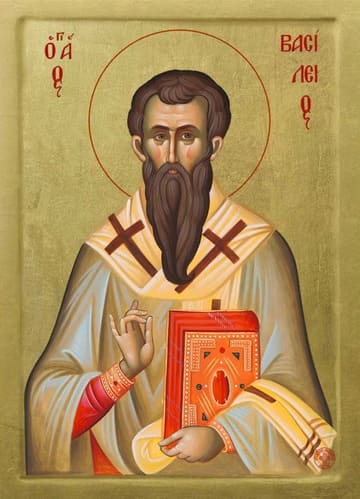
St. Basil the Great, Archbishop of Caesarea (died 379), gives his name to a Liturgy with the same outline but longer prayers, above all the anaphora. It is served ten times a year: the first five Sundays of Great Lent, Holy Thursday and Holy Saturday, the eves of Christmas and Theophany (or the feasts themselves when they fall on a Sunday or Monday), and St. Basil’s day, January 1 (January 14 by the civil calendar on the Old, or Julian, Calendar).
The Liturgy of the Presanctified Gifts
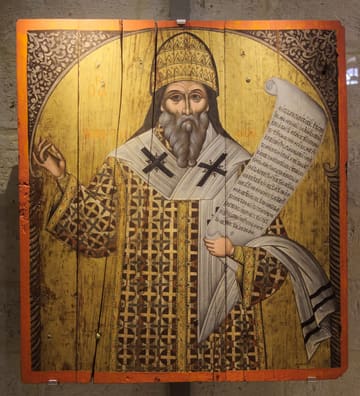
On Lenten weekdays, instead of the festal Liturgy, the Church joins Vespers to Communion from gifts consecrated (“presanctified”) at an earlier Liturgy; there is no anaphora. Tradition names St. Gregory the Dialogist, Pope of Rome (died 604), though the service is older. It is appointed for Wednesdays and Fridays of Lent, the Thursday of the fifth week and the first three days of Holy Week, usually in the evening. Many parishes serve it less often.
The Liturgy of St. James
This Liturgy comes from Jerusalem, probably in the late fourth century, and bears the name of St. James, the Brother of the Lord. It is kept above all in the Patriarchate of Jerusalem. Elsewhere some parishes serve it on his feast, October 23, or the Sunday after Christmas.
If You Are Visiting
- Arriving. Come a little early, since Matins (Orthros) may be under way. If late, wait at the back during the Entrances, readings and sermon.
- Standing. People stand for most of the service. Sit when you need to, and stand if you can for the Gospel and Communion.
- Crossing oneself. Orthodox Christians join the right thumb and first two fingers and touch the forehead, chest, right shoulder, then left. Join in or simply stand quietly.
- Icons and candles. Many kiss the icons on arrival; a bow is a fine greeting from a guest. Anyone may light a candle, usually with a small donation.
- Communion and antidoron. Communion is for Orthodox Christians who have prepared. All may come forward at the end to kiss the cross and, in most parishes, receive the blessed bread.
- Dress. Dress modestly; men remove hats. Many women in Slavic parishes cover their heads, fewer in Greek and Antiochian parishes. A scarf is always appropriate.
- Ask the priest. Introduce yourself afterward. Questions are welcome.
Questions
How long is the Divine Liturgy?
Usually 75 to 90 minutes, including the sermon. Many parishes serve Matins (Orthros) for about an hour before it, and the Liturgy of St. Basil runs a little longer.
Can non-Orthodox Christians receive Communion in an Orthodox church?
No. Holy Communion is for Orthodox Christians who have prepared under their priest’s guidance, since receiving it expresses one shared faith and life in the Church. Visitors are warmly welcome to pray, kiss the cross at the end and, in most parishes, receive the blessed bread.
What is antidoron?
Antidoron (“instead of the gifts”) is bread blessed at the Liturgy but not consecrated, cut from the same loaves as the bread for Communion. Most parishes offer it to everyone at the end, visitors included.
Why do Orthodox Christians stand during the Liturgy?
Standing is the traditional posture of Orthodox prayer, a sign of attention before God. Anyone who needs to sit may do so, and some churches have pews.
What language is the Divine Liturgy in?
The Church serves in the language of the people, keeping older languages in many places. Many North American parishes serve mainly in English; others mix in Greek, Church Slavonic, Arabic, Romanian or other languages.
How do Orthodox Christians prepare for Communion?
Through prayer, fasting and confession, guided by their priest. Most fast from food and drink from the night before, often from midnight, and read the prayers before Communion. Some parishes ask for confession before every Communion, others for regular confession.
Saints of This Page
Sources
- Isabel F. Hapgood, trans., Service Book of the Holy Orthodox-Catholic Apostolic (Greco-Russian) Church (1906)
- St. Maximus the Confessor, On the Ecclesiastical Mystagogy (St. Vladimir’s Seminary Press)
- St. Nicholas Cabasilas, A Commentary on the Divine Liturgy (St. Vladimir’s Seminary Press)
- Fr. Alexander Schmemann, The Eucharist: Sacrament of the Kingdom (St. Vladimir’s Seminary Press)
- Fr. Thomas Hopko, The Orthodox Faith, Vol. II, “The Divine Liturgy” (OCA)
- OCA, “Prothesis”
- OCA, “Epiklesis”
- OCA, “Communion”
- Holy Synod of the OCA, “On Confession and Communion” (1972)
- Fr. Thomas Hopko, “Introduction to The Divine Liturgy” (Antiochian Archdiocese)
- Frederica Mathewes-Green, “First Visit to an Orthodox Church” (Antiochian Archdiocese)
- A Guide to Church Etiquette (Antiochian Archdiocese)
- Holy Trinity Greek Orthodox Church, “An Orthodox FAQ”
- Assumption Greek Orthodox Church, “A Visitor’s Guide to the Divine Liturgy”
- Holy Annunciation Church, Berwick (OCA), on the Liturgy of St. James