
Inside an Orthodox Church
An Orthodox church is built to be read, from the door in the west to the altar in the east. Every part, from the candle stand to the dome, speaks of God’s Kingdom and the way into it. This guide walks through the building in that order.
A Heaven on Earth
St. Germanus of Constantinople, writing in the eighth century, called the church a heaven on earth, where God dwells and walks among His people. A century earlier St. Maximus the Confessor saw it as an image of creation: the sanctuary stands for the spiritual world and the nave for the visible one, two parts of a single church. Many churches are laid out as a cross or as a ship, the ark of salvation.
The Narthex
The narthex is the entrance hall at the west end. In the early Church, catechumens (those preparing for baptism) and penitents prayed here, and some services still begin here, such as the first prayers of baptism. It is a threshold between the world and the Kingdom. Most people pause here to light a candle, venerate an icon and quiet their thoughts.
The Solea and the Ambo
Before the icon screen the floor rises to the solea, a raised platform that extends the altar area into the nave. Its center, before the Royal Doors, is the ambo, where the deacon leads the litanies, the Gospel is often read, the sermon is given and Communion is offered. In Slavic churches the ambo is the rounded center of the solea; many Greek churches also keep a raised pulpit at the side. St. Germanus likened the ambo to the stone on which the angel sat at the empty tomb.
The Iconostasis
The iconostasis (“icon stand”) is the wall of icons between the nave and the altar. It grew from the low chancel barrier of early Byzantine churches. It does not shut God away; it shows who worships with us: Christ, His Mother, the angels and the saints. It has three doors.
The Royal Doors
The central doors, called the Royal Doors or the Beautiful Gate, usually show the Annunciation and the four Evangelists. Only clergy pass through them, carrying the Gospel book and the Holy Gifts. Above them hangs the Mystical Supper, Christ’s last meal with His disciples.
The Deacons’ Doors
The north and south doors are the deacons’ doors, used by deacons and altar servers. They often show archangels such as Michael and Gabriel, or holy deacons such as St. Stephen the Protomartyr.
The Great Icons
Facing the screen, Christ is to the right of the Royal Doors and the Theotokos (the Virgin Mary; the title means “God-bearer”) holding the Christ Child is to the left. In Greek and Antiochian churches St. John the Forerunner (the Baptist) usually stands beside Christ, and the church’s patron saint or feast beside the Theotokos. In Russian practice the patron’s icon is often placed on Christ’s side instead. Larger screens add other saints, such as St. Nicholas.
The Upper Rows
Greek screens usually have one upper row of the great feasts. Russian screens can rise in several tiers: the feasts, the apostles turned toward Christ in prayer, the prophets and the forefathers, all crowned by the cross. St. Andrei Rublev painted for such screens in Moscow and Vladimir in the early 1400s.
The Altar
Beyond the iconostasis lies the sanctuary, called the altar in Slavic usage and the holy bema in Greek. It is entered only by clergy and those blessed to serve there.
The Holy Table
At its center stands the Holy Table, called the Throne in Slavic usage. Consecrated by a bishop, it usually holds relics of a saint, recalling the first Christians who served the Eucharist on martyrs’ tombs. St. Germanus saw it as both Christ’s tomb and God’s throne.
On it rest the Gospel book; the antimension, a cloth whose name means “instead of the table,” showing Christ laid in the tomb and signed by the bishop, without which the Liturgy is not served; and the tabernacle, which keeps Communion for the sick. A seven-branched candlestand usually stands behind it.
The Table of Preparation and the High Place
On the north side is the table of preparation (prothesis), where the bread and wine are prepared before the Liturgy; on the south is the diakonikon, for vestments and books. Against the east wall stands the high place, a seat for the bishop with seats for priests on either side, an image of Christ among His apostles.
The Dome and the Apse
Many churches are crowned with a dome, an image of heaven. From its height Christ the Pantokrator (“Ruler of All”) looks down holding the Gospel, often with prophets in the drum beneath Him and the four Evangelists in the corners below.
In the curved apse above the altar is the Theotokos “Platytera,” arms raised in prayer, with Christ shown before her. The name means wider: a hymn of St. Basil’s Liturgy calls her womb “more spacious than the heavens,” for she carried the One the heavens cannot contain. Beneath her many churches show Christ giving Communion to the apostles, and holy bishops such as St. Basil the Great and St. John Chrysostom serving the Liturgy.
Candles, Lamps, Incense and Bread
A lit candle is a small prayer. The Antiochian Archdiocese’s guide calls it a sign of our prayers rising to heaven and of the light of Christ among us. Anyone may light one, usually with a small donation, though not during the Entrances, readings or sermon. Oil lamps burn before the main icons; wax and olive oil have long been chosen as pure offerings.
The censer, often hung with twelve bells for the apostles, carries incense to the icons and the people, as in Psalm 141 (140): prayer rising like incense before God. Isabel Hapgood’s 1906 Service Book says censing the people signifies the Holy Spirit’s grace poured out on all.
The prosphora, leavened loaves stamped IC XC NIKA (“Jesus Christ conquers”), are often baked by parishioners and offered with names of the living and the departed. What remains after the priest cuts out the Lamb, the portion for Communion, is shared at the end as antidoron (“instead of the gifts”).
Why Orthodox Christians Venerate Icons
Orthodox Christians venerate icons, honoring them with a bow or a kiss, and worship God alone; the honor passes to the person shown. Because the invisible God became visible in Christ, He can be painted. St. John of Damascus defended icons on this ground in the eighth century, and St. Theodore the Studite after him. The Seventh Ecumenical Council (787) upheld their veneration. In 843 Empress Theodora and Patriarch Methodius restored them for good, a victory still kept as the Triumph of Orthodoxy on the first Sunday of Great Lent.
Why Churches Face East
Wherever the site allows, the altar is built at the east end, and the faithful pray facing east. St. John of Damascus gave the reasons in his Exact Exposition of the Orthodox Faith (Book 4, chapter 12). Christ is the “Sun of righteousness” (Malachi 4:2). Paradise was planted “eastward in Eden” (Genesis 2:8), so we turn toward our first home. And Christ will come again like lightning from the east (Matthew 24:27). St. John adds that this is an unwritten tradition handed down from the apostles.
If You Are Visiting
- Arriving. Come a little early and pause in the narthex. If a service is under way, wait at the back during the Entrances, readings and sermon.
- Standing. Stand with the congregation and sit when you need to.
- Crossing oneself. Orthodox Christians join the right thumb and first two fingers and touch the forehead, chest, right shoulder, then left. Join in or simply stand quietly.
- Venerating icons. Many cross themselves and kiss an icon, usually on the hand or feet of the figure. A bow is a respectful greeting from a guest.
- Lighting a candle. Anyone may light one, usually with a small donation.
- The altar. Do not go behind the iconostasis, and avoid crossing in front of the Royal Doors.
- Communion and antidoron. Communion is for Orthodox Christians who have prepared. All may kiss the cross at the end and, in most parishes, receive the blessed bread. The Divine Liturgy, explained follows the service step by step.
- Dress. Dress modestly; men remove hats. Many women in Slavic parishes cover their heads, fewer in Greek and Antiochian parishes.
- Ask the priest. Questions about the church are welcome after the service.
Questions
What is an iconostasis?
The wall or screen of icons between the nave and the altar of an Orthodox church. It has three doors, the central Royal Doors and two deacons’ doors, with Christ to the right of the center and the Theotokos to the left.
Can visitors go behind the iconostasis?
No. Only clergy and those blessed to serve there enter the altar, and only clergy use the central doors. Visitors are welcome everywhere else and may ask the priest about the altar afterward.
Do Orthodox Christians worship icons?
No. Orthodox Christians worship God alone. They venerate, or honor, icons, and that honor passes to the person shown, as the Seventh Ecumenical Council taught in 787.
Why do Orthodox churches face east?
The east is where the sun rises, and Christ is called the Sun of righteousness. St. John of Damascus also pointed to Paradise, planted in the east, and to Christ’s return, which He compared to lightning from the east.
Why do Orthodox churches have domes?
A dome is an image of heaven over the earth, usually with Christ the Pantokrator at its top. Popular piety adds that one dome stands for Christ, three for the Holy Trinity and five for Christ and the four Evangelists.
Do Orthodox churches have pews?
Some do and some do not. Standing is the traditional posture of prayer, so many churches have only a few seats, while many North American parishes have pews. Anyone may sit when needed.
Do women need to cover their heads in an Orthodox church?
Customs vary. In many Russian and other Slavic parishes women cover their heads, and scarves are sometimes offered at the door. In many Greek and Antiochian parishes few women do. Modest dress is expected everywhere.
Saints of This Page
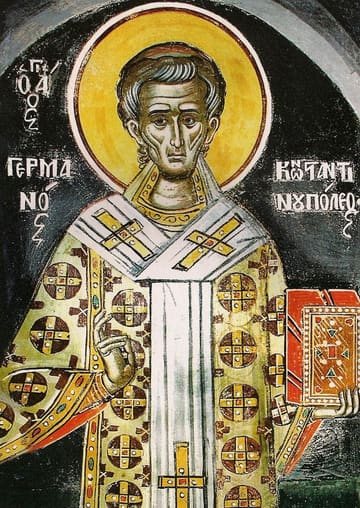 St. Germanus of Constantinople
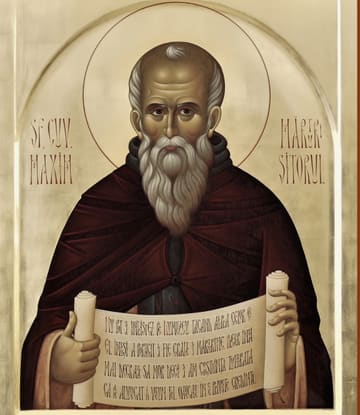 St. Maximus the Confessor
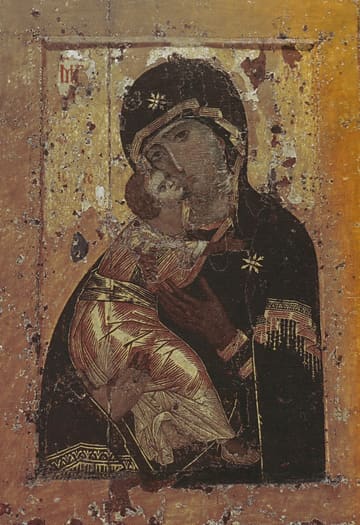 The Most Holy Theotokos
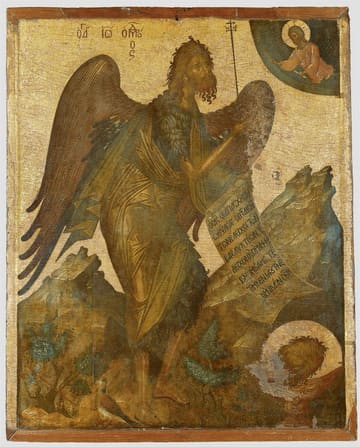 St. John the Forerunner
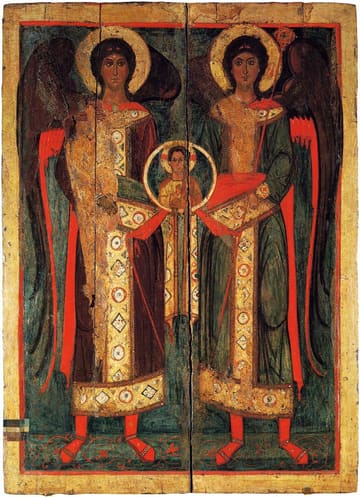 The Holy Archangels Michael and Gabriel
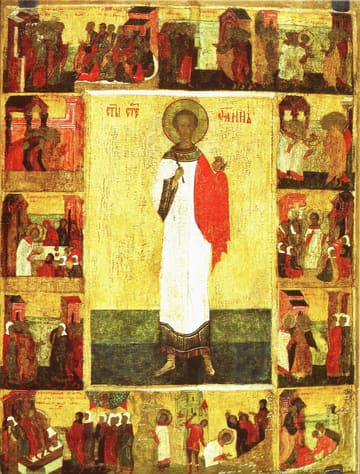 St. Stephen the Protomartyr
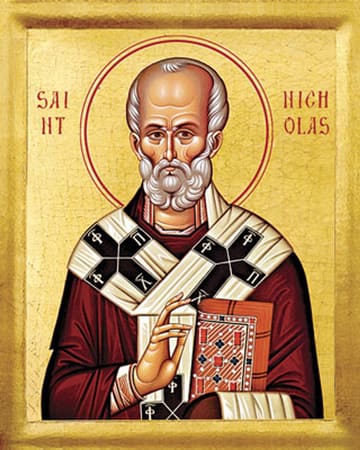 St. Nicholas of Myra
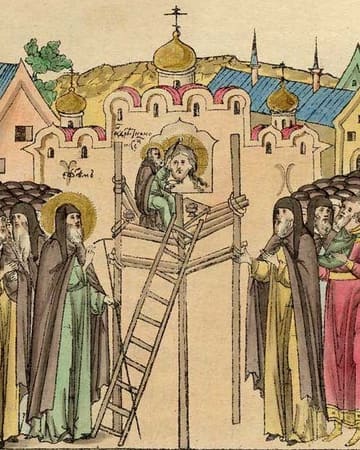 St. Andrei Rublev
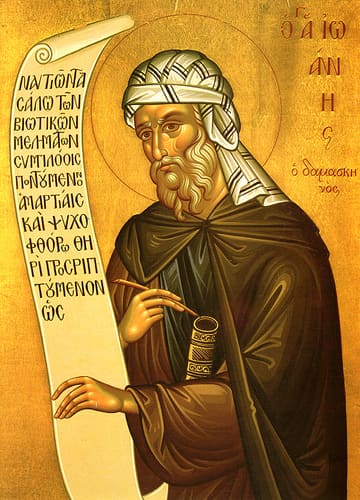 St. John of Damascus
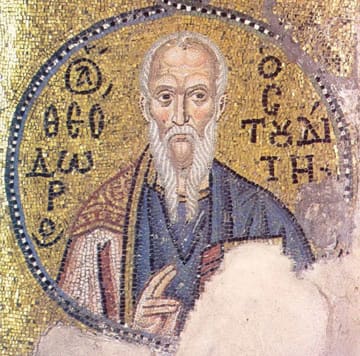 St. Theodore the Studite
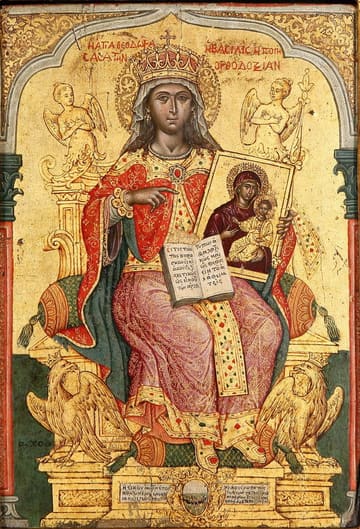 St. Theodora the Empress
 St. Methodius of Constantinople
Sources
- St. Germanus of Constantinople, On the Divine Liturgy (St. Vladimir’s Seminary Press)
- St. Maximus the Confessor, On the Ecclesiastical Mystagogy (St. Vladimir’s Seminary Press)
- St. John of Damascus, An Exact Exposition of the Orthodox Faith, Book 4, ch. 12
- St. John of Damascus, Three Treatises on the Divine Images (St. Vladimir’s Seminary Press)
- Isabel F. Hapgood, trans., Service Book of the Holy Orthodox-Catholic Apostolic (Greco-Russian) Church (1906)
- Fr. Thomas Hopko, The Orthodox Faith, Vol. II, “The Church Building” (OCA)
- OCA, “Altar Table”
- OCA, “Icons”
- OCA, “Church Architecture & Orthodox Theology”
- OCA, “The End of Iconoclasm”
- A Guide to Church Etiquette (Antiochian Archdiocese)
- Fr. Jack N. Sparks, “No Graven Image: Icons” (Antiochian Archdiocese)
- Constantine Cavarnos, “Iconographic Decoration in the Orthodox Church” (Apostoliki Diakonia)
- Orthodox History Society, “Pews (or lack thereof) in early Orthodox churches”
- Holy Trinity Greek Orthodox Church, “An Orthodox FAQ”